Sweet Potato, Kohlrabi, and Peanut Stew

DSC03750

Over the last couple of years, our diet has slowly shifted away from meat. At first, our meals featured chicken a lot more than red meat. At some point, I found myself ordering fish from Fresh Direct and Good Eggs more and more often, until I cooked some kind of seafood at least three times a week. And in the last few months, I have found myself making a completely vegetarian meal for us at least once a week, sometimes twice. It helps that we have access to great vegetables from both local farmers (thank you Good Eggs and farmers’ markets) and far away ones (thank you Whole Foods and Fresh Direct).

Our go-to vegetarian meal has been my mom’s lentil recipe (sometimes with the addition of a little smoked fish, so…vegetarianish). But I have also cooked beans a few times, boiled in water with potatoes and carrots, that we ate with lots of olive oil and lemon juice (my favorite bean dish as a kid). So for Christmas, I gave Steve a 5lb box of five different kinds of dried beans from Rancho Gordo (isn’t it such a romantic gift? <insert fart joke here>). I’ve been cooking beans once a week since then, experimenting with different ways of preparing them.

DSC03743

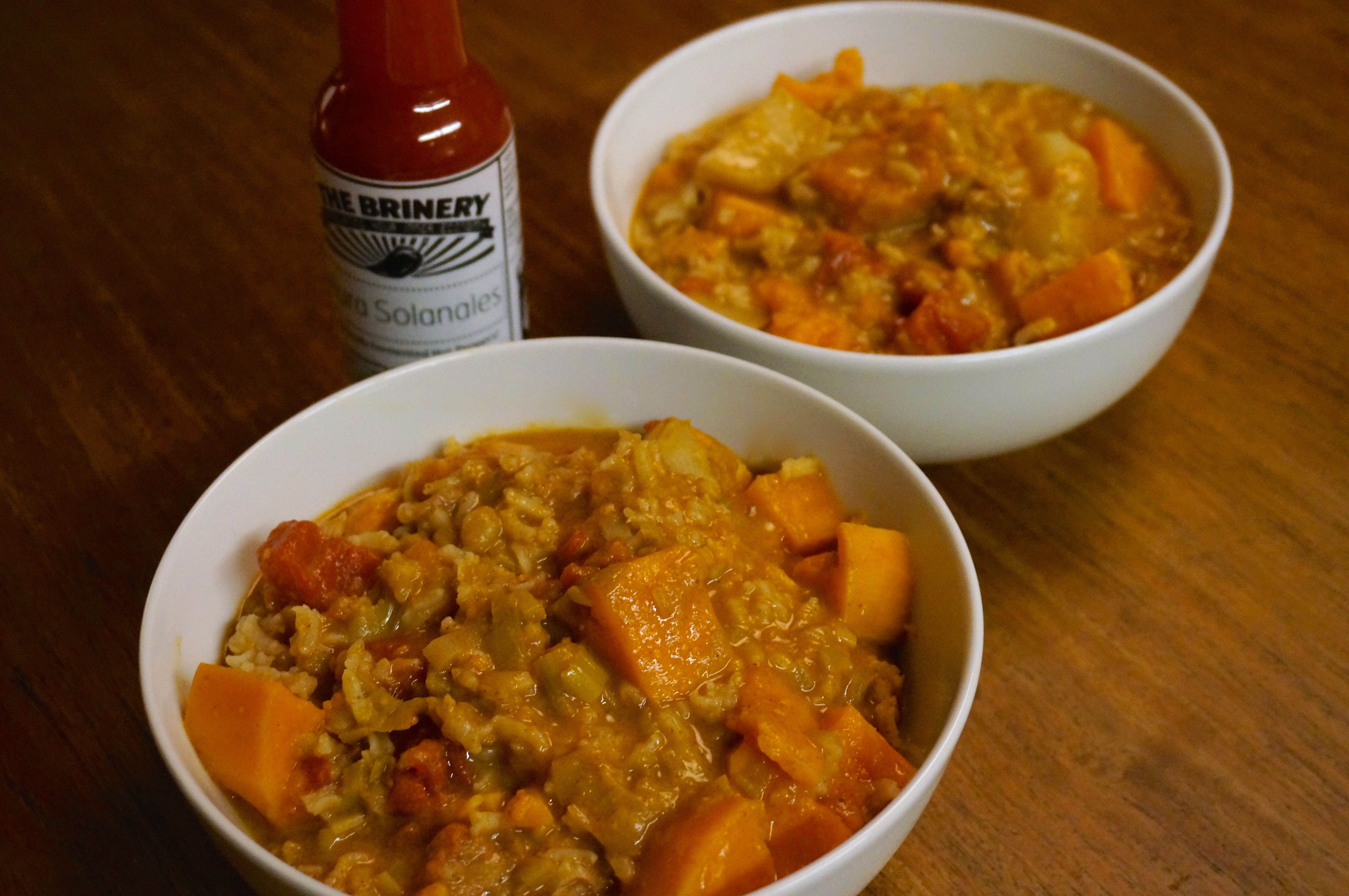
Today’s recipe does not have beens in it, but it’s vegetarian. In fact, it’s vegan. It’s the result of needing to use up a bunch of veggies I bought in preparation for the giant snowstorm that never came last week. I had leeks, kohlrabi, and sweet potatoes. Not an obvious combination of ingredients. For some reason, however, I remembered a stew I used to make many years ago, that was based on a West African dish made with peanuts. I no longer had that recipe but I figured I could make one up myself. And I did. The result was a thick, rich, vegetarian stew that was perfect for a cold winter night. And a nice addition to our list of vegetarian meals.

DSC03745Sweet Potato, Kohlrabi, and Peanut Stew

Note: I’ve noticed that some people have identified that this is a paleo recipe as well, though I thought that peanuts were not paleo. In any case, if you are a paleo enthusiast but you still eat peanuts, this is for you.

Makes 5-6 servings

Ingredients:

2 tablespoons olive oil
3 leeks, dark green parts discarded, white parts sliced thinly crosswise
1/2 tablespoon cinnamon
1/2 tablespoon paprika
3 cloves garlic, finely chopped
5 cups vegetable stock
2 medium sized kohlrabi, peeled and cut into 1″ cubes
2 sweet potatoes, peeled and cut into 1″ cubes
1 14oz can of dice tomatoes
2 bay leaves
1 teaspoon salt
freshly ground black pepper
1/2 cup natural-style (no sugar added) peanut butter (smooth or chunky)
1/2 cup basmati or jasmine rice
hot sauce (optional)

Directions:

Place peanut butter in a medium-sized heat-proof bowl and set aside.

In a large heavy pot, heat oil over medium-high heat. Add leeks and sauté stirring frequently until soft, about 5 minutes. Add cinnamon, paprika, and garlic. Continue to cook, stirring constantly for about 30-45 seconds. Add stock, kohlrabi, potato, tomatoes with their juices, bay leaves, salt and pepper. Bring to a boil, lower heat to medium-low, cover pot and cook for 10 minutes.

Uncover pot and add some of the hot liquid in the bowl with the peanut butter. Use a spoon or whisk to help the peanut butter dissolve. Pour dissolved peanut butter back into pot and add rice. Raise heat to medium-high and bring back to a low boil. Lower heat to medium-low and cook uncovered, stirring occasionally, for about 20 minutes, or until rice and potatoes are fully cooked (kohlrabi will still have a slight crunch). Adjust salt if necessary. Remove and discard bay leaves.

Serve immediately, topped with your favorite hot sauce.

Clementine and Almond Syrup Cake

DSC02324The warnings started early last weekend and escalated in severity with every few hours. “Snowstorm predicted for next week.” “Snow blizzard expected.” “Brace for three feet of snow!” “Snowmaggedon!” “Snowpocalypse!!” “It’s the end of the world!!!” Ok, I made that last one up. In all seriousness, it sounded like we were due for a whopper of a snowstorm, so on Sunday morning, I decided to go to the grocery store in our neighborhood and get some basics, like milk and fruit. I walked through the sliding doors of the store and I started laughing. You’d think that the world really was ending. People were piling up enough food in their carts to feed their family for a couple of weeks. I guess it’s better to be prepared than sorry.
DSC03707

I bought just a few things for us (I have enough food in the house, at all times, to feed a small army), including some beautiful tangerines. They (and all their cousins, like mandarines, clementines, and tangelos) are probably my favorite citrus fruit. There is something beguiling about them, a seductive streak to their sweet tartness with that tinge of bitterness. And they are so easy to carry and peel, giving bananas a real run for the most convenient fruit snack.

This recipe comes from Jerusalem: A Cookbook, which remains one of my all-time favorite cookbooks. It’s a cake soaked in clementine syrup. I love syrup cakes. They are really common in Middle Eastern cuisines, so they are familiar to me from my childhood.

Oh, and that historic blizzard that would bury us in snow? As you probably already know, it never materialized here in New York city. We barely got eight inches of snow. There’s still time this winter, though, for the world to end in a blizzard of snow.DSC02328Clementine and Almond Syrup Cake – Slightly adapted from Jerusalem: A Cookbook

Ingredients:

14 tablespoons (200 g) unsalted butter, at room temperature
scant 2 cups (380 g) sugar, separated
grated zest and juice of 4 clementines
grated zest and juice of 1 lemon
2½ cups (280 g) ground almonds
5 large eggs, beaten
¾ cup plus 1 tablespoon (100 g) all-purpose flour
pinch of salt

Directions:

Preheat the oven to 350° F. Lightly grease a 9½-inch springform pan with butter and line the bottom with parchment paper (if you can, line the sides as well).

In a mixer, beat the butter, 1½ cups (300 g) of the sugar, and both zests on low speed just until everything is well combined. Don’t beat it too much or incorporate a lot of air in it. Add half the ground almonds and continue mixing until combined.

With the mixer running, add the eggs one at a time, stopping the scrape the bottom and sides of the bowl as necessary. Add the remaining ground almonds, the flour, and the salt and but until completely smooth.

Pour the batter into the pan and level it with an offset spatula. Bake for 50 to 60 minutes until a cake tester inserted in the middle comes out just a little bit moist.

When the cake is still in the oven and almost done, place the remaining sugar and the citrus juices in a small saucepan and bring to a boil. As soon as the syrup boils, remove it from the heat.

As soon as you take the cake out of the oven, brush it with the boiling syrup (use all the syrup), making sure that all the syrup is soaked in. L

Thai-style Squash Soup

DSC03675

You know you married the right person when, on a Friday night, he turns to you and says “This weekend, we should go get beef bones to make stock.”

And you know you live in the right neighborhood, when on Saturday you can just walk 10 minutes to the local butcher shop, where there are two butchers breaking down whole cuts of beef and pork, and you ask one of them for beef bones, and she, young, probably in her late 20s, her blond hair tied in a pony tail, puts down her knife, wipes her hands on her blood smeared apron, disappears in the walk-in refrigerator and comes back carrying a big box filled with 3-foot long beef bones. “How much do you want? I can cut them up for you,” she says.

DSC03656

Sure, our apartment smelled like roast beef for days afterwards but in the end we were left with a beautiful beef stock, with a delicate meaty flavor, surprising really, given the heady, almost overwhelming smell of cooked meat the bones gave off while they were roasting in the oven, before we simmered them away in a large pot filled with water, carrots, onions, celery, bay leaves, and peppercorns. The stock is now in the freezer, in one-cup portions, ready to be used for any recipe that calls for stock.

DSC03663

Like today’s Thai-style soup. The squash season is almost at an end, but you can still find butternut squash in the stores. This is an easy recipe to make, similar to the roasted butternut and coconut soup that I’ve posted here before, but without the coconut and with a much stronger Thai character, thanks to the lime juice, fish sauce, rice vinegar, and thai chili pepper used in it. Use any stock you have in hand (chicken, beef, or vegetable). Or go find some bones and make your own. It’s worth it.

DSC03667Thai-style Squash Soup

Ingredients:

6 cups peeled, cubed butternut squash, cut into 1½”-2″ cubes (from about one 2½ lbs squash)
1½ tablespoon vegetable oil
1/2 teaspoon kosher salt
1/2 teaspoon freshly ground black pepper
3 cups stock (chicken, beef, or vegetable)
1½ tablespoons fish sauce
1 tablespoon water
½ tablespoon rice vinegar
½ tablespoon freshly squeezed lime juice
1 tablespoon sugar
1 small garlic clove pressed in garlic press or grated on microplane zester
1 small Thai red chili (red bird’s eye chili), thinly sliced

Directions:

Preheat oven to 425° F. In a large bowl, toss together squash, oil, salt, and pepper. Spread on large baking sheet and roast in oven for about 45-50 minutes, until squash is cooked through and edges are dark brown. Let squash cool slightly.

In a blender, add roasted squash and all of the remaining ingredients. Blend until completely combined and smooth. Pour in a medium sized pot and warm over medium heat. Serve in bowls on its own, or topped with a dollop of crème fraîche or sour cream.

Apple Cider Salted Caramels

DSC03615

Happy new year everyone. I took some time off from the blog during the holidays because I was traveling quite a lot and wasn’t really up to writing up stories and recipes while packing and unpacking my suitcase.

The last three weeks included six different flights, two continents, three countries, and a lot of eating. One of those flights was probably the scariest one I’ve had so far. We were flying from Athens to Paris when the captain came on to tell us there was some turbulence over the Alps, “nothing major,” he said. Five minutes later, the plane is swaying left and right, up and down, like a leaf caught in a windstorm. My hands sweated so much from my anxiety, that the iPad I had been gripping was crusted over with salt from dried sweat.

DSC03584

But there were also fun times and good food. There were the Christmas coffee cakes that Steve’s sister (and their mom before her) always makes. They are variations on Kulich, a yeasted sweet bread, studded with raisins and topped with a sugar glaze and colorful decorative sugar. Sliced, toasted, and slathered with butter, they make the perfect holiday breakfast. There were also tons of chocolates from Puyricard that we ate with our friends in Pressac, France, where we spent 6 days living in a house in the middle of a small farm with nothing around it but fields and animals. We celebrated New Year’s eve there, during which we ate fresh oysters, foie gras, and roast veal and cauliflower. The following week, in Cyprus, I had kolokotes for breakfast, traditional pumpkin turnovers that are filled with sweet pumpkin, raisins, and bulgur wheat. And my mom made koupepia, stuffed grape leaves. They were so good, I had them for three meals in a row. And I got to eat loukoumades, traditional fried dough balls that are soaked in honey syrup.

DSC03591

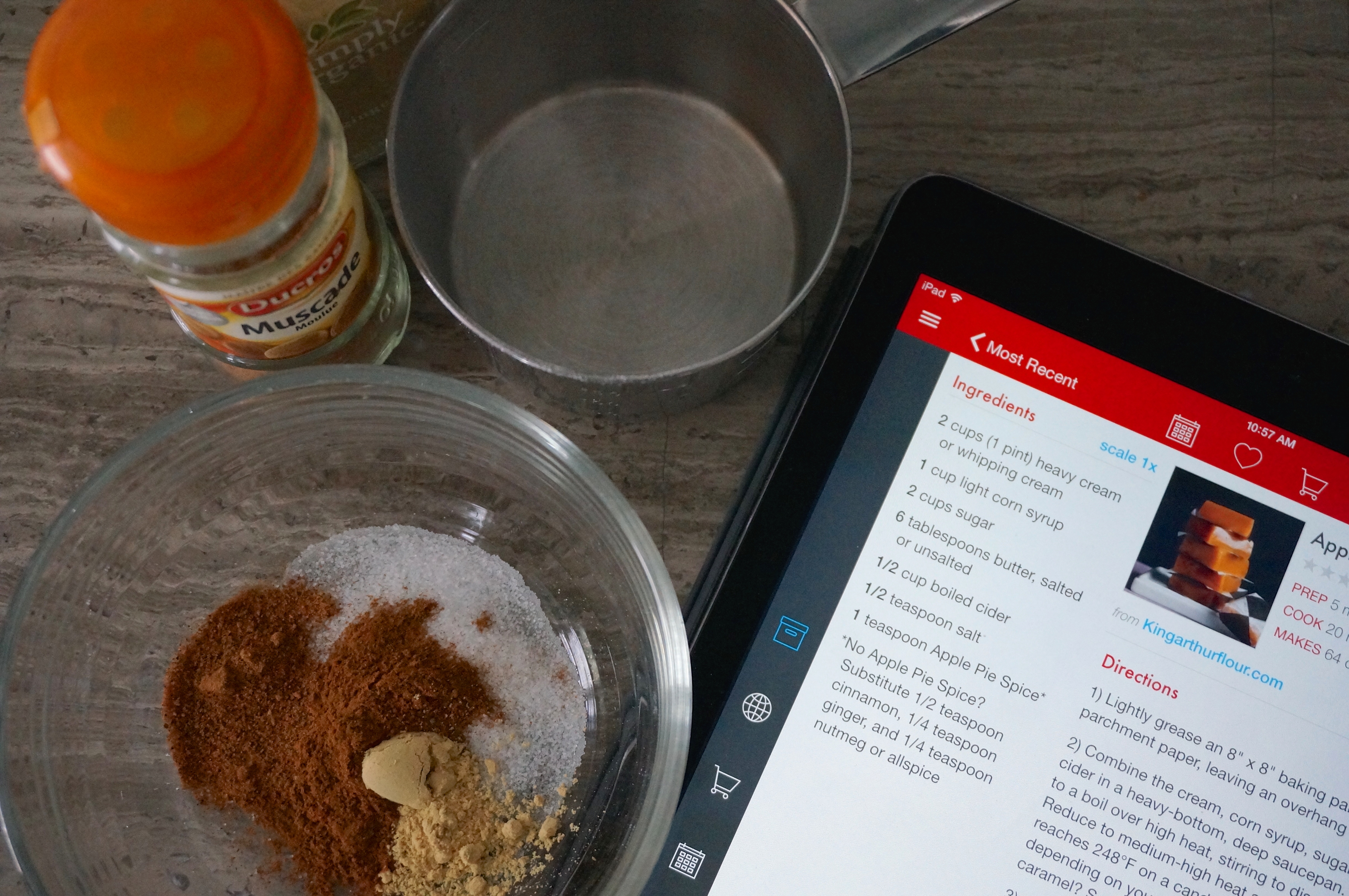
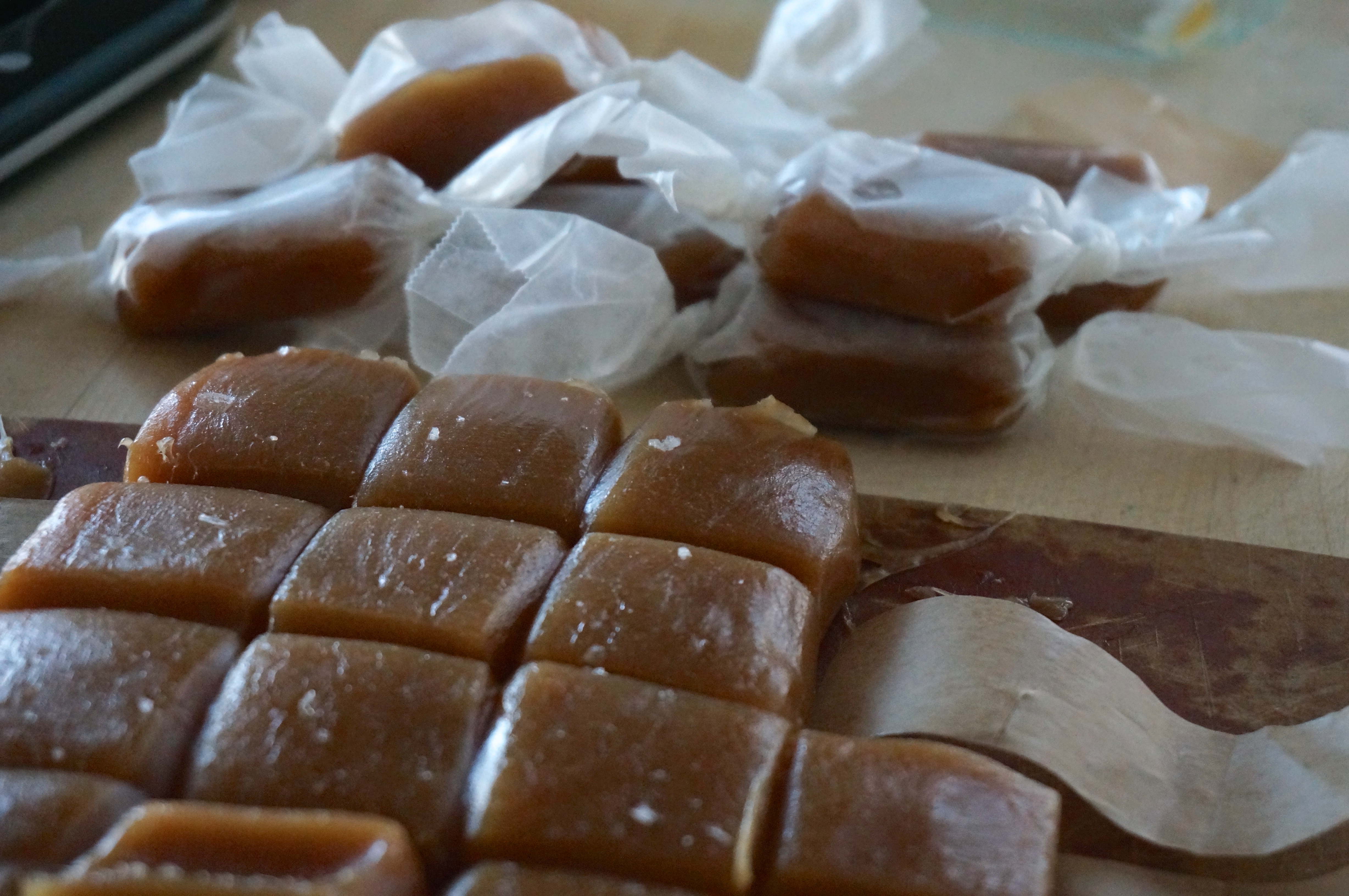
Now I’m back and getting ready for the next 2-3 months of cold weather and meager offerings at the market and the stores. This is the season for making things that have no season, using ingredients that are either available year-round or are preserved from the spring or summer. It’s also a good time to discover something new, that maybe you’ve never used before. Like this boiled cider that I bought from King Arthur Flour and which I’ve used in everything from oatmeal to quick breads to salad dressings, and these amazing caramels that I took with us on our trips over the holidays (Steve’s family loved them. Our French friends were not as thrilled with them, given their dislike for cinnamon in desserts). The boiled cider has the viscosity of maple syrup and is wonderfully sweet and tangy. The caramels I made with it are soft and slightly chewy, with a distinct apple flavor, sort of like a caramel apple, but smaller and less messy.

DSC03604Apple Cider Salted Caramels – Slightly adapted from King Arthur Flour

Ingredients:

2 cups (1 pint) heavy cream or whipping cream
1 cup light corn syrup
2 cups sugar
6 tablespoons unsalted butter
1/2 cup boiled cider
1/2 teaspoon salt
1/2 teaspoon cinnamon
1/4 teaspoon ginger
1/4 teaspoon nutmeg or allspice
flaky sea salt (like Maldon) for top

Directions:

Lightly grease an 8″ x 8″ baking pan and line with parchment paper, leaving an overhang on opposite sides.

Combine the cream, corn syrup, sugar, butter, and boiled cider in a heavy-bottom, deep saucepan. Bring the mixture to a boil over high heat, stirring to dissolve the sugar. Reduce to medium-high heat and cook, without stirring, until the mixture reaches 244°F-245°F on a candy thermometer, 20 to 30 minutes, depending on your particular stove. (If you prefer hard caramels, boil to 248°F.)

Remove the pan from the heat; stir in the salt and spices.

Pour the hot mixture into the prepared pan. Let it cool completely. If you’re making soft caramels, put pan in the fridge for 20-25 minutes before cutting into 1″ squares. If you are making hard caramels, you can cut them without refrigerating them first.

Wrap caramels in parchment paper or wax paper. Place one caramel in the center of each square; wrap the opposite edges of the paper around the caramel and twist the exposed edges to close.

Malted Hot Chocolate Mix

DSC03571

For my sister and I, Christmas and New Year’s, were pretty close to being the best time of the year when we were growing up. Much of how we celebrated was similar to how people celebrate in the U.S. We had a tree (always a fake one; nobody had a real tree) that we decorated with ornaments. But our favorite part was always hanging the dangling, silver tinsel. Or more like throwing it on the tree, in an attempt to make it look “natural,” with the result always resembling clumps of shiny hair stuck on the plastic green branches. We had a nativity scene that we put under the tree, surrounded always by cotton balls, to simulate snow, because we all know how much snow falls in the winter in Bethlehem.

And then there were the gifts. Our tradition for those deviated slightly from the American version. Santa Claus (the same one, with the white beard and red uniform) didn’t come on Christmas eve but on New Year’s eve. On that night, we’d always be at a party of some friends of my parents and right at midnight, at the end of the countdown, an adult who had sneaked away secretly, would pull down the main circuit board so that all the lights in the house would go out. As soon as the year turned, he or she would turn them back on. The reason, we were told in all seriousness by our parents, was so that Santa could come in without being seen. Never mind that the presents never showed up under the tree until the next day. So I would keep my eyes wide open, trying to catch a glimpse of this elusive, jolly gift-bearer. But alas, the dark would always hide him well.

So, the next day, the first day of the new year, my sister and I would wake up and jump out of bed. We knew the routine. Behind our headboards there was one wrapped gift for each of us. This was the gift from our parents. We’d open it and then run to the Christmas tree, where right next to the snowy nativity scene there were two more wrapped gifts, one for each of us. These were from Santa. Minutes later, we’d be sitting at the table, sipping the hot cocoa my mom made for us, talking excitedly about what we got. “How did Santa come into our house if we don’t have a chimney?” I asked my dad one year. My dad must have panicked, because his immediate answer was “he comes through the keyhole.” It was a statement that puzzled my young brain for years, until I learned the truth about Santa.
DSC03580

 Malted Hot Chocolate Mix – Slightly adapted from Cook’s Illustrated

Note: This makes a thick, rich, and dark hot chocolate. It’s not very sweet at all. If you want it sweeter, you can add sugar to each mug to taste.

Ingredients

1 cup (7 oz) sugar
6 oz unsweetened chocolate, finely chopped
1 cup (3 oz) unsweetened cocoa powder
1/2 cup (1.5 oz) malted milk powder (substitute nonfat dry milk for a non-malted version)
5 teaspoons cornstarch
1 teaspoon vanilla extract
3/4 teaspoon kosher salt

Directions:

Process all ingredients in a food processor until ground to powder, 30 to 60 seconds. Transfer to airtight container and store at room temperature for up to 2 months (longer in the freezer).

To make a cup of malted hot chocolate, heat 1 cup of milk in a small saucepan over medium heat just until small bubbles start to appear at the edge of the saucepan. Add 1/4 cup of the hot chocolate mix and continue to heat, whisking constantly, for about 2-3 minutes longer, until the mixture just starts to simmer. Pour in a mug and serve.

Chestnut and Apple Soup

DSC03528

When I was a kid, I remember my mom telling me that as she got older, she started remembering things from her childhood that she had thought she had completely forgotten. It seemed that some memories were like fermented foods, stored away and left to mature over time by themselves until the time was right to unveil them again.

As a kid, this didn’t really make a lot of sense to me. But now that I am doing my own older-getting, I understand what she meant. Flashes of memory will pop into my head unexpectedly. They are often little things. Unremarkable events and ordinary days from many years ago. And sometimes these memories carry their own smells.
DSC03548

Like the smell of charred corn on the cob, for example. It’s always tied to my memories of trips we took to see my aunt’s family, who lived closer to the sea. As we drove back in the evening with our windows rolled down, the car would fill with the smoky, sweet smell of corn cooking on coals. There were always vendors selling it on the sidewalks and sometimes, my dad would stop the car and buy some for us. I burned my tongue many times on that corn. It was impossible to wait for it to cool down.

Roasting chestnuts is another one. I grew up without central heating. We had one portable gas heater that we huddled around in the evenings as we watched TV in the living room. Sometimes, my parents would buy fresh chestnuts and bring them home. I remember my dad would score the tops with an X and then put them on the top of the heater. Their smell as they roasted would fill the room and my sister and I would wait breathlessly for my parents to take them off the heater, blow on them to cool them down, and peel them for us. The sweet and nutty flesh was as good as candy.
DSC03551Chestnut and Apple Soup – Slightly adapted from Epicurious.com

Ingredients:

2 tablespoons (1/4 stick) butter
1 1/2 cups chopped onion
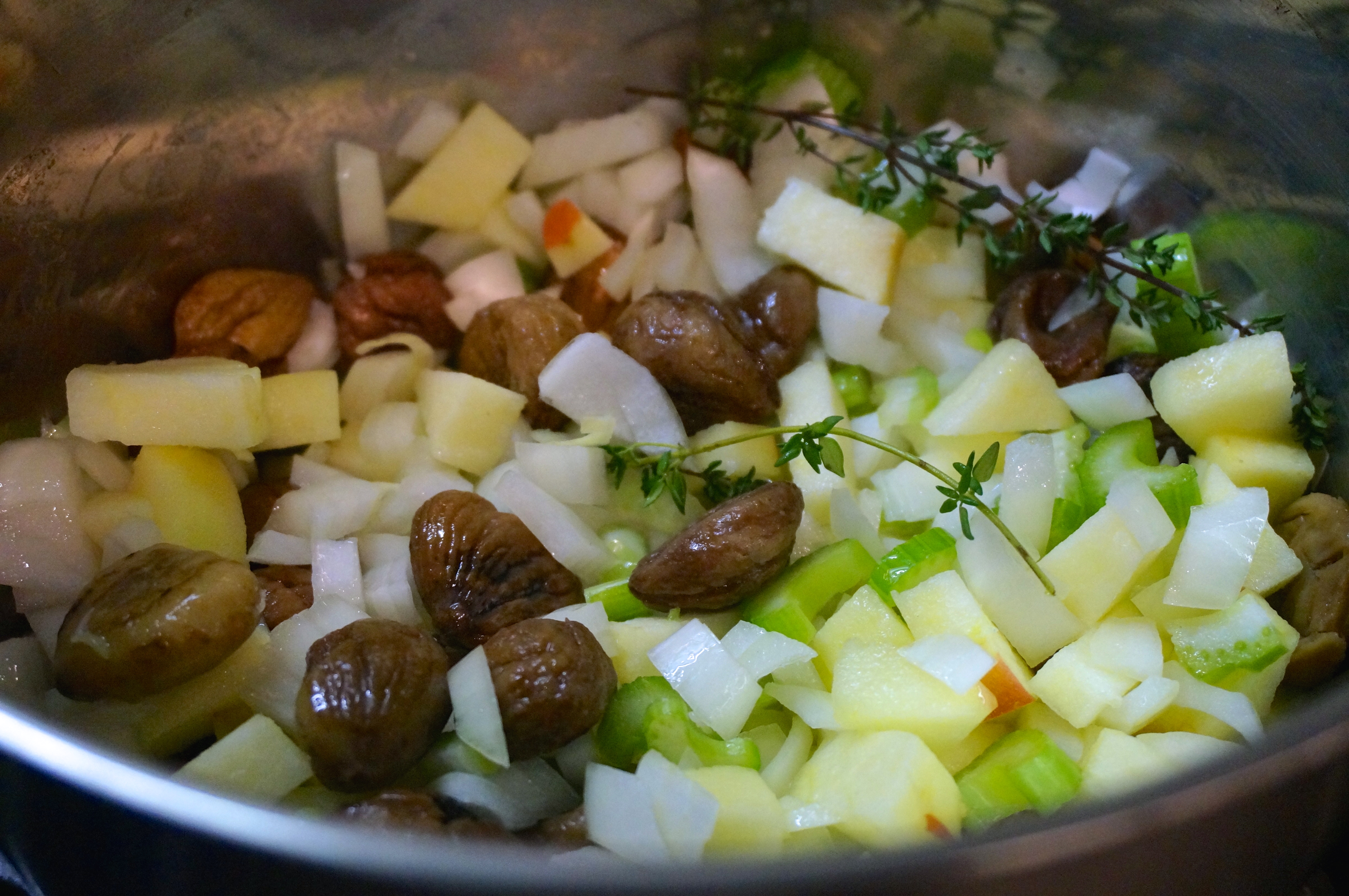
1 small Golden Delicious (or other sweet variety) apple, peeled, cored, cut into 1/2-inch cubes
1 7.41-oz jar vacuum-packed chestnuts
1 large celery stalk, chopped
3 small fresh thyme sprigs
3 tablespoons brandy
3 cups (or more) chicken broth (use vegetable broth for vegetarian version)
1/4 cup crème fraîche
pumpkin seed oil, for garnish (you can also use hazelnut oil, or simply olive oil)

Directions:

Melt butter in heavy large saucepan over medium heat. Add onion, apple, chestnuts, celery, and thyme sprigs. Sauté until onion is soft and translucent, about 7 minutes. Add brandy; stir until liquid is absorbed, about 1-2 minutes. Add 3 cups broth and bring to boil. Reduce heat to medium and simmer until chestnuts are soft, about 15 minutes; cool slightly. Remove and discard thyme sprigs.

Working in batches, puree soup in blender until very smooth. Return soup to pan and cook until heated through, adding more chicken broth by tablespoonfuls to thin as needed and stirring often, about 2 minutes. Season with salt and pepper.

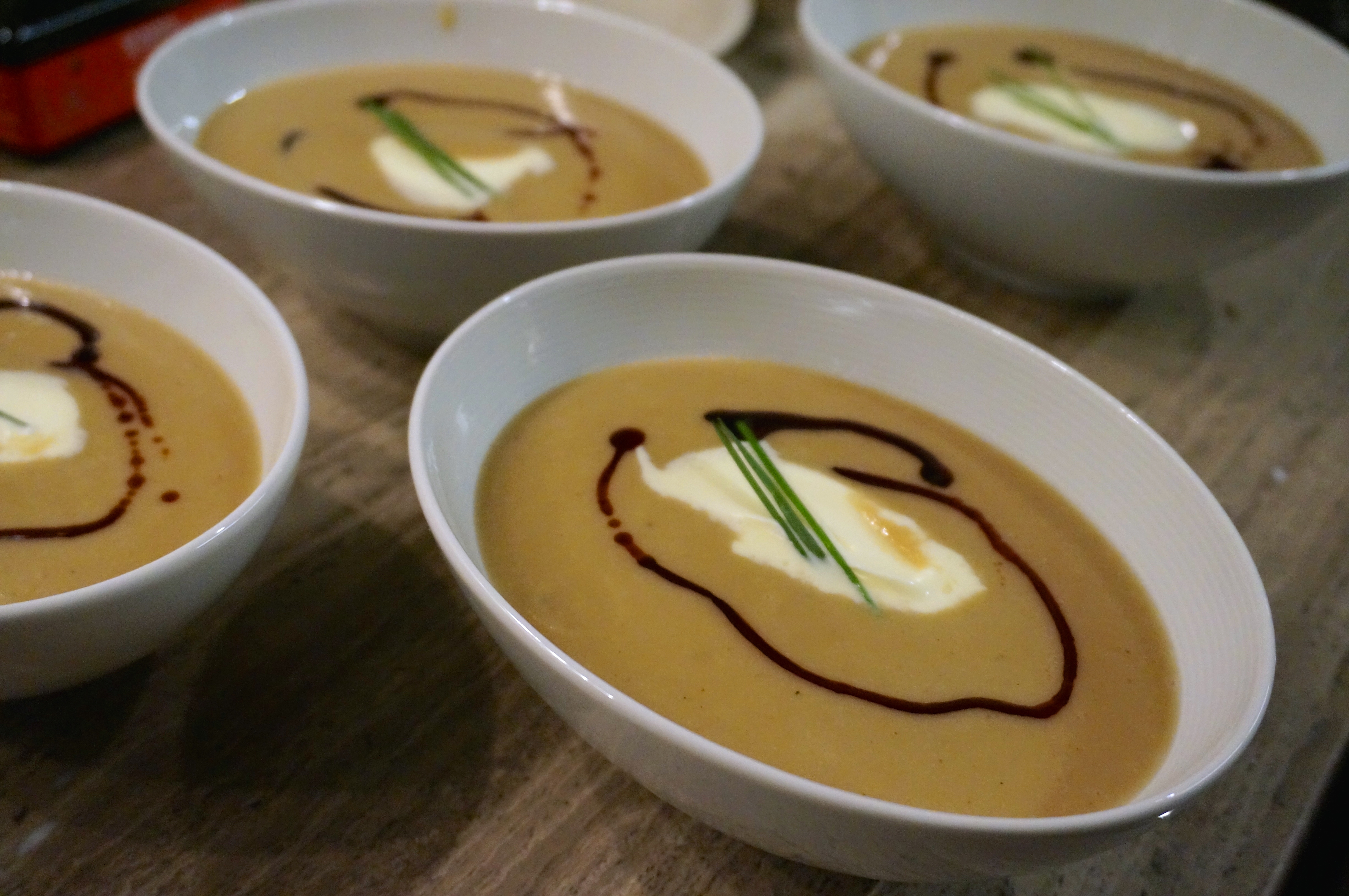
Divide soup among bowls. Top with dollop of crème fraîche and drizzle with pumpkin seed oil. Serve immediately.

Vegan Pear Caramel Ice Cream

DSC03409

When my friend Lisa told me a few years ago that she had decided to go vegan, I was devastated. She was someone that enjoyed food, all food, just as much as I did. She ate everything and really savored new food experiences. I remember one night when she and I were having dinner with another friend at Le Villaret in Paris. It was a tasting menu and we were probably on our third or fourth course. The food was exquisite, the wine superb. The three of us took a bite of what was impossibly even better than the courses that preceded it and we looked up at each other amazed. Lisa had tears in her eyes. So did I.

So you get the idea. Lisa has always been one of my most precious food buddies. An indomitable eater. A loyal gustatory companion.DSC03418

I reacted to her news of going vegan much like some parents react to their kids coming out to them. “Why?” was the first thing I asked. “Are you sure this is what you want?” Followed by “What about me?” and inevitably “I don’t understand this but I love you and I will support you, no matter what.”

Ok, maybe it wasn’t so dramatic. She did make this decision for valid reasons. She no longer trusted the food supply system (watching “Food Inc.” had done a number on her) and cutting out all meat products was a way for her to regain some control over what she ate. So, I took it in stride and accepted it as a new challenge: every time she visits me, I strive to “veganize” a recipe I like. Sometimes it works well (like with the pain d’épices that comes out great). Sometimes it’s tougher.

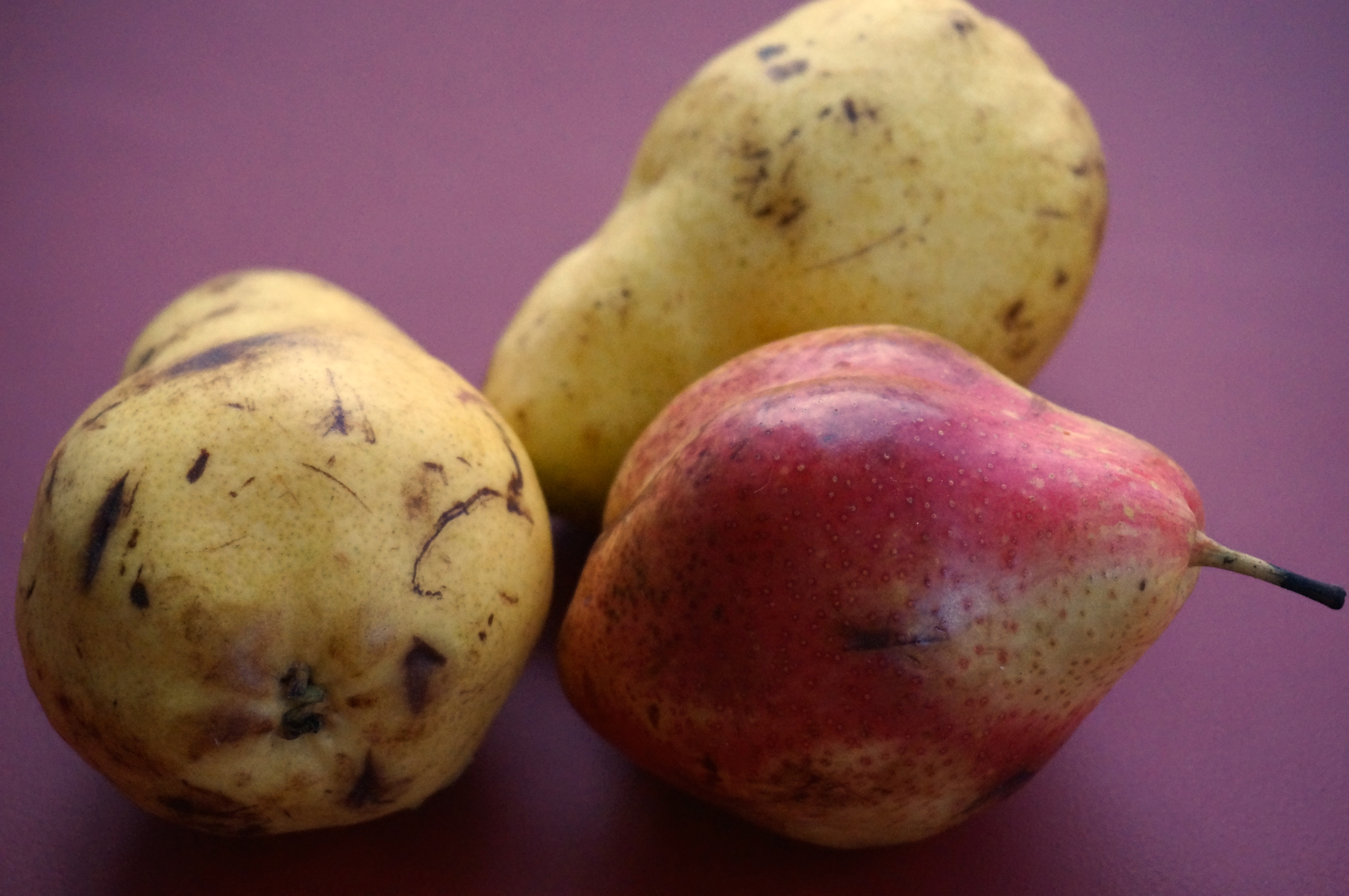
For her last visit, I wanted to make some pear ice cream, since pears were in season. I adapted my favorite pear ice cream recipe from David Lebovitz and the result was actually pretty good. Personally, I’d much rather have it made with heavy cream, but the vegan version is still creamy, with a strong pear flavor and a slight burn from the caramel. And it made Lisa happy, which made losing the heavy cream worth it.

DSC03424Vegan Pear Caramel Ice Cream – Adapted from Perfect Scoop: Ice Creams, Sorbets, Granitas, and Sweet Accompaniments

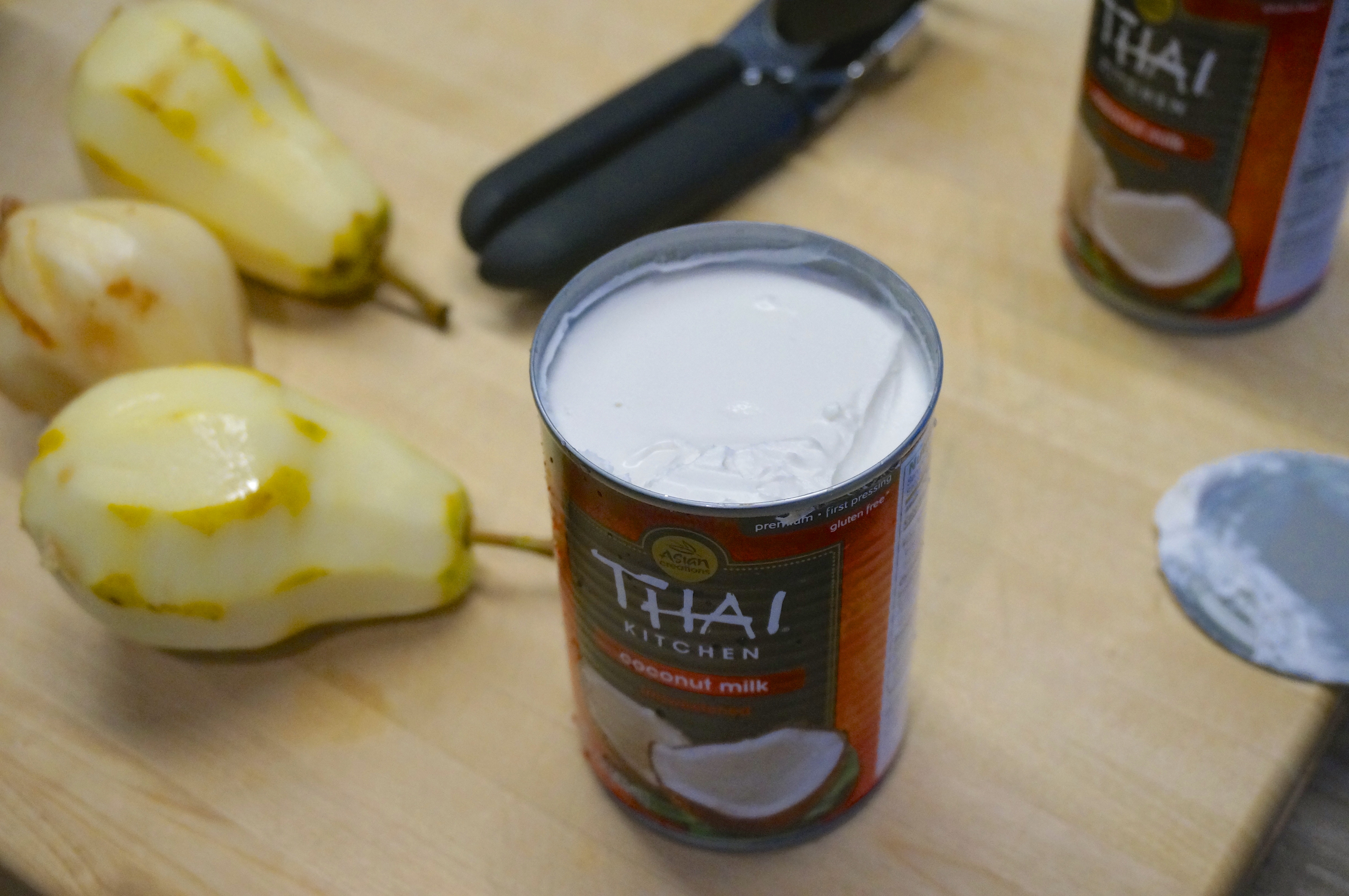
Note: The trick to this is to separate the cream from the water in the coconut milk. I used the Thai Kitchen brand of coconut milk. The cream had already separated to the top of the can. Whatever brand you use, make sure not to shake the can before opening it, other wise the cream will mix with the water. Some people refrigerate the cans first for the cream to separate. I didn’t have to but it may work for you.

Ingredients:

2 14 oz cans of coconut milk (unsweetened, not the lite version; do not shake the cans)
3 medium-sized ripe pears, peeled and cored
3/4 cup + 2 tablespoons sugar
heavy pinch of salt
a few drops of fresh lemon juice
1 tablespoon pear-flavored eau de vie or kirsch (optional)

Directions:

Using a can opener, remove the top of the two cans completely. The coconut cream should be at the top. Using a spoon remove the cream until you reach the coconut water at the bottom of the can (discard it or use it for something else, like smoothies). You should have about 2 cups of coconut cream from the two cans.

Dice the pears into 1/4-inch pieces.

Spread the sugar in a large, heavy saucepan. Cook over medium heat, carefully watching and stirring occasionally with a heatproof spatula until melted. When the sugar is a deep amber, stir in the pears. The caramel will seize, but continue cooking and stirring occasionally (again with a heat-proof spatula) for about ten minutes, until the pears have cooked through and the sugar has dissolved.

Remove from the heat and stir in 1/2 cup of the coconut cream, then mix in the rest of the cream, salt, lemon juice, and eau de vie/kirsch (if using).

Cool to room temp, and then puree in a blender until smooth. If you want, you can press it through a strainer. I prefer that it has a little bit of the pear texture.

Chill in the refrigerator and churn in ice-cream maker according to manufacturer’s instructions.