Lemon Olive Oil Cake

DSC03779

Spring is (sort of) finally here! Temperatures are above freezing and we have actual continuous periods of sunshine. Sure, it’s raining today, but I don’t care. Because Steve and I are taking off for a weeklong trip to Cyprus with three of our friends. We’ll visit my family and drive around the island in search of poppy covered mountainsides, turquoise blue seas, orange blossom scented villages, and lots and lots of good food. DSC03763

No two ingredients say “Meditteranean!” better than olive oil and lemons. They are at the very core of the soul of the people that have lived for millennia around this beautiful sea, with its temperate climate (though not always as warm or friendly as most people think) and plentiful fish (which are currently endangered from overfishing and pollution).

So, in honor of our Mediterranean adventure, I give you my favorite version of a lemon olive oil cake. You gotta love a cake that has a total of five ingredients. All things you probably have at home right now. With these humble ingredients you can have a cake that is not overly sweet and incredibly tender, making it an equally good option for afternoon tea or breakfast. Top it off with a dollop of lemon curd or sweetened whipped cream and you have a great dessert. This is a cake that in every bite, you can taste what it’s made of: the taste of eggs is right there, cut through by the acidity of the lemons, while everything is smoothed out by the mild grassiness of the olive oil.DSC03775Lemon Olive Oil Cake – Slightly adapted from Epicurious.com

Ingredients:

3/4 cup olive oil (extra-virgin if desired), plus additional for greasing pan
1 lemon (preferably organic/unsprayed)
1 cup cake flour (not self-rising) (see here for instructions on how to make your own cake flour)
5 large eggs, separated, reserving 1 white for another use
3/4 cup plus 1 tablespoon sugar

Directions:

Put oven rack in middle position and preheat oven to 350°F. Grease a 9-inch (24-cm) springform pan with some oil, then line bottom with a round of parchment paper. Oil parchment.

Finely grate enough all the lemon zest and whisk it together with flour. Halve lemon, then squeeze and reserve 1 1/2 tablespoons fresh lemon juice.

Beat together yolks and 1/2 cup sugar in a large bowl with an electric mixer at high speed until thick and pale, about 3 minutes. Reduce speed to medium and add olive oil (3/4 cup) and reserved lemon juice, beating until just combined (mixture may appear separated). Using a wooden spoon, stir in flour mixture (do not beat) until just combined.

Beat egg whites (from 4 eggs) with 1/2 teaspoon salt in another large bowl with cleaned beaters at medium-high speed until foamy, then add 1/4 cup sugar a little at a time, beating, and continue to beat until egg whites just hold soft peaks, about 3 minutes.

Gently fold one third of whites into yolk mixture to lighten, then fold in remaining whites gently but thoroughly.

Transfer batter to springform pan and gently rap against work surface once or twice to release any air bubbles. Sprinkle top evenly with remaining 1 tablespoon sugar. Bake until puffed and golden and a wooden pick or skewer inserted in center of cake comes out clean, about 45 minutes. Cool cake in pan on a rack 10 minutes, then run a thin knife around edge of pan and remove side of pan. Cool cake to room temperature, about 1 1/4 hours. Remove bottom of pan and peel off parchment, then transfer cake to a serving plate.

Lemon Olive Oil Custard

DSC02526

A couple of years ago, we finally got rid of our rickety old blender, the one I had had since my early days in New York, when I threw big parties in my 400 sq ft studio apartment, telling friends and acquaintances to bring their own friends (“especially if they are cute, wink, wink”) and ending up with 100 people squeezed in that tiny space, my bed disassembled and the mattress leaning on the wall on its side to make room, and the white kitchen tile floor turning sticky and charcoal grey from spilled drinks stepped over many times by city worn shoes.

DSC02551

What was I talking about? Oh yeah, the blender. Many a frozen drink were prepared in that little blender. Did we care that the drinks were always too icy instead of smooth, with the all too frequent stubborn chunks of frozen fruit chocking our straws? No, we didn’t care. We were too drunk, too young, too happy to care.

But the time came to give up youthful blenders and chunky cocktails. So we splurged and bought a Vitamix blender. We never looked back (like with so many things from our younger days). This thing will blend anything in seconds. Give it a few minutes at full speed and it will actually heat up whatever you’re blending, enough to cook it. Which is convenient, when you’re trying to make a cooked custard in a blender. This recipe is genius (it comes in fact from Genius Recipes at Food52.com). Use good olive oil and substitute regular lemons for Meyer lemons if you can’t find them.

And when you’re done, eat it with a spoon (it’s spreadable, more like a curd) and reminisce about your partying days of yore.

DSC02533


Lemon Olive Oil Custard – Slightly adapted from Food52.com

Notes: This recipe was tested with a Vitamix Professional Series blender. Set the blender at its top speed and run for a total process time of 5 minutes 45 seconds. Any other blender will most likely not cook the custard and will leave it raw. If you don’t have a high speed blender, simply blend until smooth and frothy in step 2, stream in the olive oil with the motor running, then pour into a double boiler or bowl set over gently simmering water on the stovetop, stirring until it thickens up (it should reach 160 degrees for fully cooked eggs, or hold at 140 degrees for 3 1/2 minutes).

Ingredients:

3 whole eggs, room temperature
1/2 cup sugar
1/2 cup Meyer lemon juice (or regular lemon juice)
2 tablespoons Meyer lemon zest (or regular lemon zest)
1/2 teaspoon vanilla extract
1/2 cup very good quality extra virgin olive oil

Directions:

1. Place all ingredients but the olive oil in a high-speed blender (capable of generating frictional heat above 160 F). If you don’t have a high-speed blender, see note above.

2. Turn the blender on to its highest setting and process for 4 minutes.

3. While continuing to run on high speed, pour in the olive oil and blend for an additional 90 to 105 seconds until you can see the custard firming up on the sides.

4. The custard can be refrigerated for up to three days or frozen for longer storage. When defrosted, it will return to the same creamy consistency as when fresh.

Vodka Rosemary Lemonade Fizz

DSC02589

Steve and I took a short vacation last week, hence the lack of post over the weekend. We visited our friends in California and the four of us rented a house in Palm Springs for three days. We did nothing but eat and drink and be lazy. It was hot and mostly sunny there, perfect weather for an ice cold cocktail, so we made one of our favorites: vodka rosemary lemonade fizz. The first time we made this was a few years back for a party we had. We thought it would be a bust, that people would find it too simple or the herbal taste of rosemary too strong. But it was a huge hit and the recipe has been passed around from friend to friend ever since. It’s a simple recipe, really. Basically a rosemary infused lemonade, mixed with vodka, and topped with club soda. Pour yourself a glass and toast the arrival of spring.

Vodka Rosemary Lemonade Fizz – From Epicurious.com

Makes 8 8oz drinks

Ingredients:

1 cup fresh lemon juice
1 cup sugar
2 (8-inch) rosemary sprigs
unflavored vodka
Chilled club soda or seltzer
Garnish: 8 (3-inch) rosemary sprigs

Directions:

Bring lemon juice, sugar, and rosemary to a boil in a small saucepan, stirring until sugar has dissolved, then reduce heat and simmer 2 minutes. Cool completely, about 1 hour. Discard rosemary sprigs.

Fill 8 (8-ounces) glasses halfway with ice. Divide syrup (about 2 tablespoons each) among glasses and add vodka (1-2 tablespoons each, depending on how strong you want it). Top off with club soda.

Zucchini with Eggs (Kolokouthkia me t’afka / Κολοκουθκια με τ’αφκα)

DSC02100

We had arrived a couple of days earlier. It was Steve’s first time in my hometown and I was driving him around, showing him the places where I grew up. It was a beautiful, sunny spring day and we were walking around the old part of the city. It had gone through many transformations, from the bustling commercial center of town to a neglected ghost of its past glory, until several years ago it was turned into a pedestrian-only zone. There was a lot of complaining from the store owners, that the lack of cars would kill the little business they had left. Instead, the area transformed itself. Old buildings were restored. Restaurants and coffee shops opened everywhere. People rediscovered the joy of walking, unencumbered by cars. Retro became cool and the area blossomed.

DSC02103

So there we were, walking along the “main” street (what used to be a narrow, single-lane road, but the “main” one nevertheless) when we decided to look for a place to eat. We passed by a few places, with tables out on the street, awash in sunshine, but we decided to keep looking. We turned the corner into a little side street when Steve spotted it. It was not much. An old (really old), low building in the back of an alley, with a concrete floor yard, covered with thatched straw, providing a welcome shade for us. It was a small restaurant that opened for lunch and sold just a few homemade dishes, simple and traditional, enough to feed the motley crew of locals that were hanging out outside. We took a table and ordered.

DSC02120

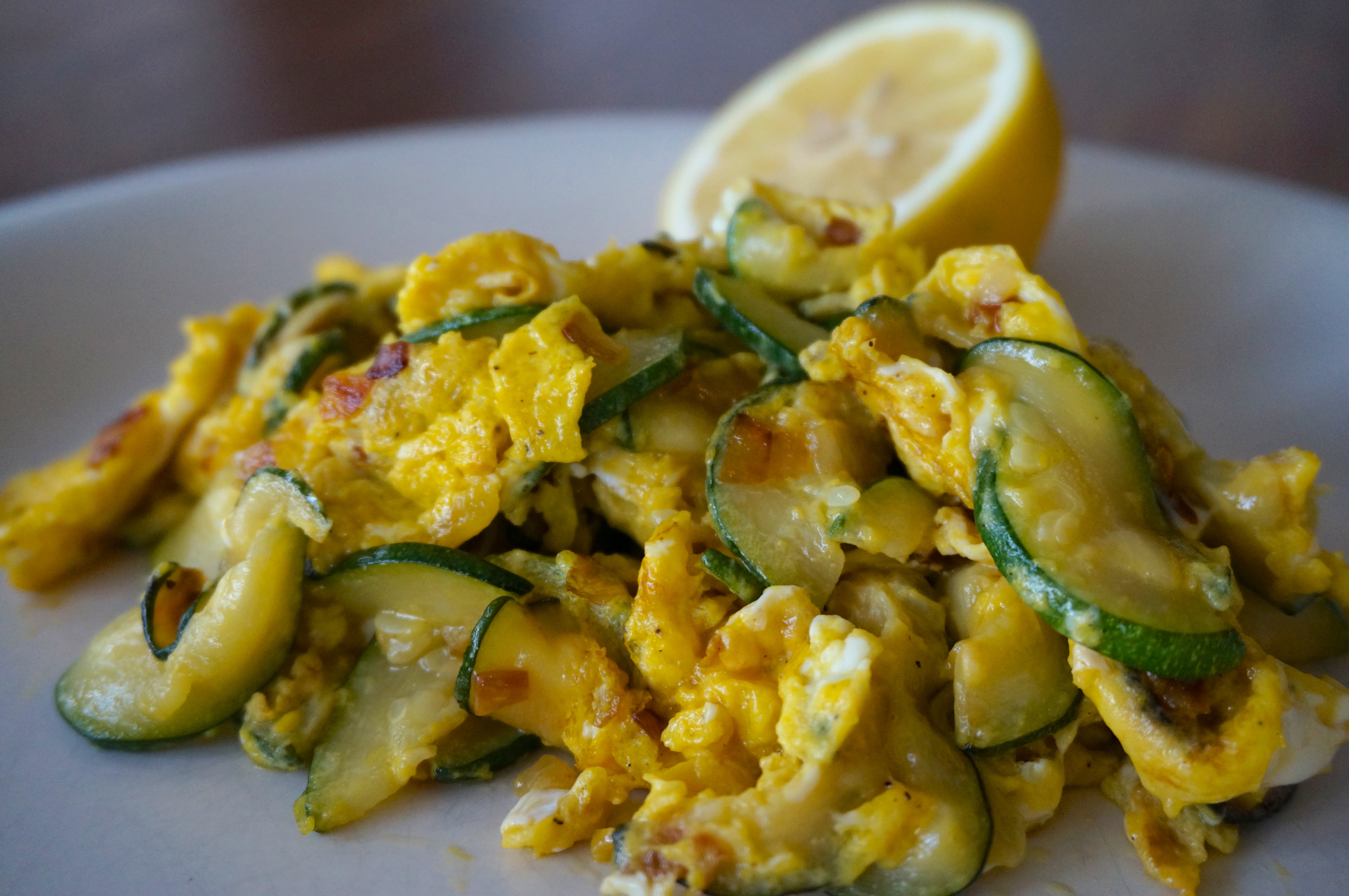
I don’t remember what else we ate there. But I do remember that we ordered kolokouthkia me t’afka (zucchini with eggs). It seemed an unremarkable choice for me. It was something I grew up with, a quick solution for a meal when my mom was pressed for time. But I also remember Steve’s face when he took his first taste. His eyes lit up with that look of amazement and discovery we both get when we taste something remarkable. “Why have we not had this before?” he said. Truth was, I had forgotten about it. Needless to say, we have had this dish many times every since.

There were a lot of memories made on that trip. There were the drives through villages redolent with the aroma of orange blossoms. There was the lunch on top of a rock overlooking the Mediterranean Sea as we watched a storm approach. But before all of those there was this, the simple meal of zucchini with eggs, cooked in olive oil and showered with fresh lemon juice.

Zucchini with Eggs (Kolokouthkia me t’afka)

Makes 2 servings

Ingredients:

Half a medium onion, chopped
1 large zucchini (about 10oz-12oz/280gr-340gr)
4 large eggs
1/4 cup olive oil
1 lemon
salt and pepper

Directions:

Cut the zucchini in half lengthwise and then slice crosswise very thin (about 1/8″) using a very sharp knife or a mandolin. Whisk eggs in a small bowl with some salt and pepper and set aside.

Heat olive oil in a large sauté pan over medium heat. Add chopped onion and cook for about 2 minutes until onion just begins to soften but hasn’t started to brown yet. Increase heat to medium-high and add the zucchini. Season with salt and pepper. Cook, stirring often, until zucchini is cooked and lightly browned at the edges (about 15-17 minutes).

Reduce heat to medium and add eggs. Cook, stirring often, until eggs are cooked through, about 2-4 minutes.

Serve immediately with lots of fresh lemon juice squeezed on top (we use the juice of an entire lemon for two servings).

Lemon Cornmeal Pistachio Muffins

DSC00098

Every now and then, I’ll see a recipe title and I will know, instantly, that not only will I make that recipe, but that I will love the end result. That is exactly what happened with these muffins. Their recipe comes from Baked Elements: The Importance of Being Baked in 10 Favorite Ingredients, the amazing cookbook by Matt Lewis and Renato Poliafito. The first time I leafed through the book, as soon as I saw the words “lemon,” “cornmeal,” and “pistachio” together in the title, I immediately bookmarked it.

DSC00089

If I remember correctly, it was the first recipe I tried from that cookbook and I wasn’t mistaken. The end result was indeed as great as I thought it would be. These are not super sweet muffins. They are not giant, moist, cakey muffins, like those you’ll find at your grocery store. They are almost hearty. They are slightly tangy, with a satisfying crunch from the cornmeal and a finishing nuttiness from the pistachios on top. They make a great breakfast but an even better snack in the afternoon with some hot tea.

DSC00085

Lemon Cornmeal Pistachio Muffins – From Baked Elements: The Importance of Being Baked in 10 Favorite Ingredients

Makes 12 muffins

Ingredients:

1/2 cup shelled pistachios
2 large eggs
3/4 cup sour cream
2 teaspoons lemon juice
zest of 1/2 lemon
3 oz unsalted butter (3/4 stick), melted and cooled
3/4 cup all-purpose flour
1 1/4 cups yellow cornmeal
1 cup sugar
1 teaspoon salt
2 teaspoons baking powder

Directions:

In a food processor, pulse the pistachios until they are coarsely chopped. Remove 1/4 cup of the chopped pistachios and set aside. Continue to process the remaining pistachios in the food processor until they are almost powdery.

Preheat the oven to 400º F. Lightly grease a 12-cup muffin pan (or use paper cups to line it).

In a medium bowl, lightly whisk the eggs. Add the sour cream, the lemon juice, the zest and the butter and whisk them until they are combined.

In a large bowl, whisk together the flour cornmeal, sugar, salt, the powdery pistachios, and the baking powder. Make a well in the middle of the dry ingredients and pour the wet ingredients in it. Fold everything together until just mixed. Don’t overmix them.

Fill each muffin cup about 3/4 full and sprinkle the tops with the coarsely chopped pistachios. Bake for about 12-15 minutes until the tops are golden brown and a toothpick inserted in the middle comes out clean.

Transfer the pan on a wire rack and let it cool for 10 minutes. Take the muffins out and serve immediately or let them cool completely and store them in an airtight container or wrapped in plastic wrap for 2 days. They also freeze very well.

Agrumato Lemon Extra Virgin Olive Oil

DSC01421

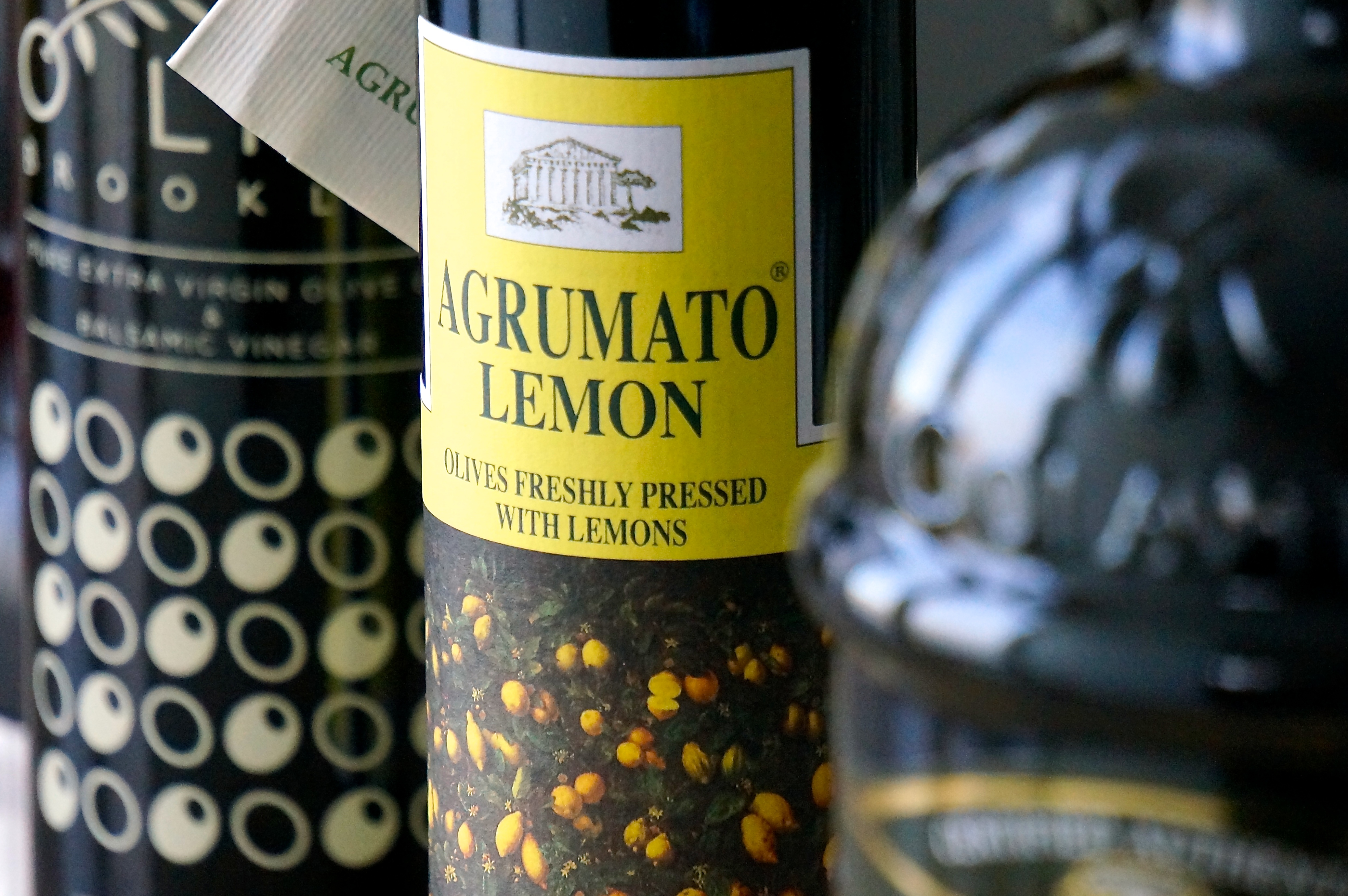
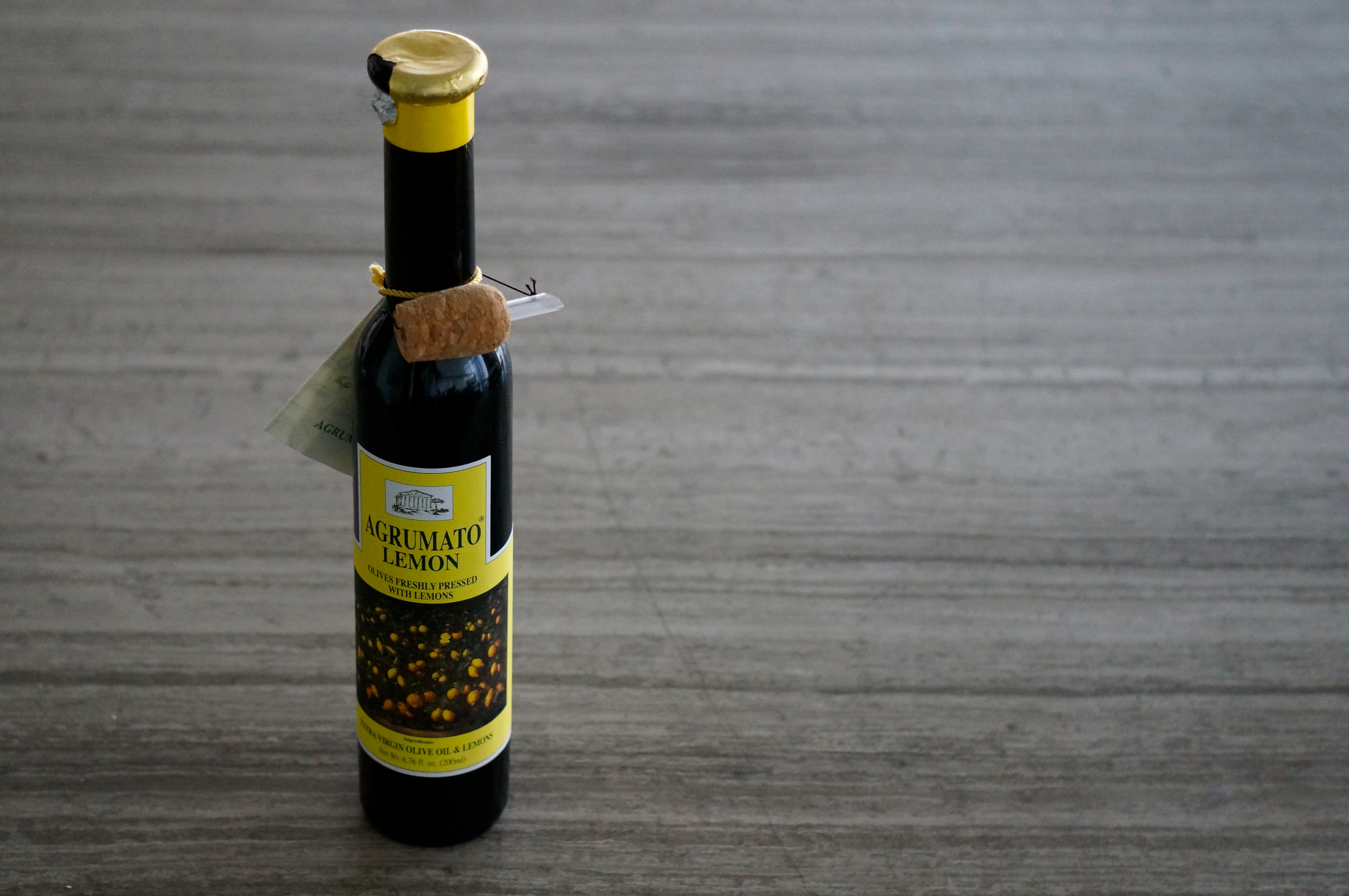
Due to the Thanksgiving holiday, I didn’t have a post for you last weekend. I do have something coming up for next weekend, but for now I wanted to share with you this amazing olive oil. It’s called Agrumato Lemon and it’s an olive oil that is actually pressed with lemons. The result is a classic flavor combination: grassy, smooth olive oil with sharp, zippy lemon.
DSC01426

The first time I got this (Steve gave it to me as a gift), I was skeptical. I thought it would taste artificial or that the lemon would be overpowering. But in fact it’s neither. This isn’t cooking oil. It’s a condiment, as good olive oil is supposed to be used. Drizzle it over roasted veggies or make a simple vinaigrette with it. Our favorite way to use it is to drizzle it over grilled chicken breasts and then top them with some fresh or dried oregano.

You can buy it on Amazon or at Zingerman’s.

Oven Poached Fish in Olive Oil

I’ve always loved cooking for people. I rarely cook just for myself. This is partly because cooking is an activity with a very specific end result. When I cook, I create something. And that’s something I want to share. Often it’s something I want to show off. I’ll be the first to admit that humility is not an ingredient in my cooking.

DSC01275

So, I’ve always loved having dinner parties. Even when I lived in apartments with impossibly small kitchens, I’d have friends over for dinner. Out of a half size oven and a workspace the size of school desk, I have produced multi course meals for eight people. When Steve and I met, we found our love for food was mutual. So, the dinner parties continued and became more elaborate. We started pairing wines with every course. We printed menus.

DSC01269

The only problem with such extravagant affairs has been that at times we ended up spending more time in the kitchen than at the table with our friends. So, over the last few years I’ve adjusted our menus, opting for dishes that can be prepared ahead of time and served easily and quickly. This recipe is one of our favorites. It takes 15 minutes to put together but the result is delicious and impressive.

DSC01265

Fish is especially difficult for dinner parties. It so often requires cooking right before eaten, it smells up the kitchen, and it can easily be overcooked. By poaching it gently in the oven in olive oil, this recipe takes care of all of those problems. In fact, I’ve often left it in the oven for 30 minutes past what the recipe says and I’ve never had any problems with it. The fish always comes out tender, moist, and flavorful.

If you are worried about the amount of olive oil, don’t be. The fish absorbs almost none of it. And in the end, you can strain the olive oil and keep it in the fridge. Use it whenever you cook anything with seafood. It will have only the slightest hint of the fish, capers, and lemons.

DSC01286

Oven Poached Fish in Olive Oil – Slightly adapted from Epicurious.com

Makes 4 servings

Ingredients:

1/4 cup capers, rinsed
2 – 2 1/2 lb (1-inch-thick) skinless, firm, white flesh fish fillets (such as halibut or chilean sea bass)
1 1/2 large lemons, very thinly sliced crosswise
1/4 cup chopped fresh flat-leaf parsley
About 2 cups extra-virgin olive oil (enough to cover the fish)

Directions:

Preheat oven to 250°F.

Chop half of capers and pat fish dry. Sprinkle fish with 1 1/2 teaspoons salt and 1/2 teaspoon pepper and let stand 10 minutes at room temperature. Arrange half of lemon slices in 1 layer in an 8-inch square glass baking dish and arrange fish in 1 layer over lemon. Top with all of capers, remaining lemon slices, and 3 tablespoons parsley, then pour oil over fish. Bake in middle of oven, uncovered, until fish just flakes and is cooked through, about 1 to 1 1/4 hours.

Serve fish with some of lemon slices, capers, and oil spooned over. Sprinkle with remaining parsley.