Crème Caramel

DSC03850During most of my childhood, my dad kept a chicken coop in the empty lot next to our house where he raised chickens and pigeons. The chickens were for fresh eggs (and the occasional chicken for dinner) and the pigeons were for eating. I know that to city dwellers, the idea of eating pigeons, a.k.a. flying rats, sounds pretty unappetizing, but these were not the kinds of pigeons you find in a city. They were fed a clean diet of grains and kept in a large coop. My dad slaughtered young pigeons and cooked them over hot coals. They were reserved for a special meal and I always loved eating them. They had a sweet, almost caramelized taste, and they were incredibly tender.
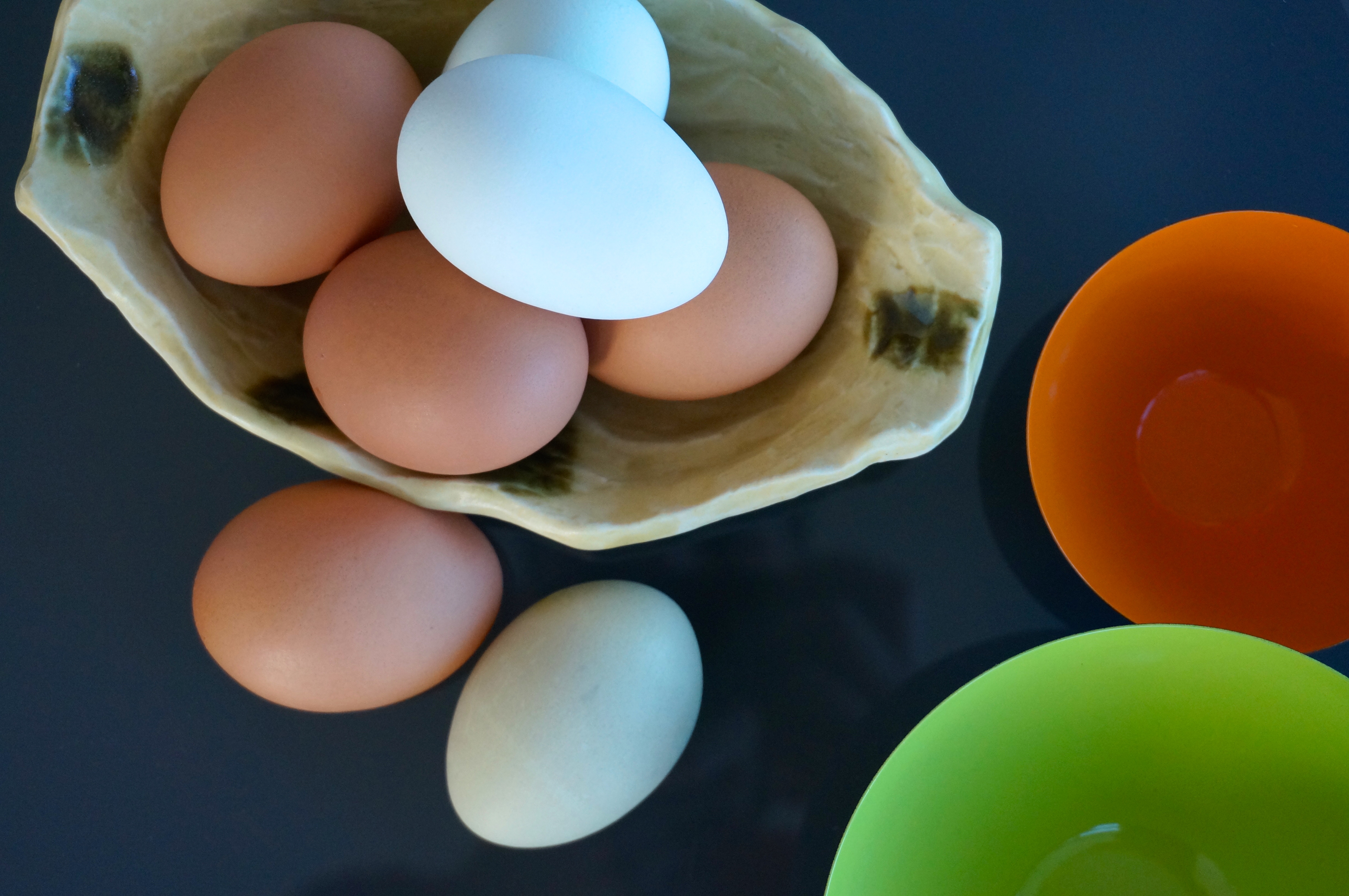
DSC03807

But back to the chickens. When I was really little I was too scared to walk inside the chicken coop (it was big enough to hold several adults standing up) and collect the eggs. The chickens flapped around too much and seemed really menacing to me. But I remember that one time, my mom asked me if I felt ok going to get her two eggs. I must have been six or seven years old by then and in a rare moment of bravery I said yes. “Hold them carefully, ok?” she said. “Don’t drop them or they’ll break.”

I had my mission. I approached the coop and slowly opened the door. I was in luck. One of the hens was eating peacefully in the corner and she had left her two freshly laid eggs undefended.The other hens seemed quiet, sitting over their own eggs. Gingerly, I stepped forward with both eyes on the hen. I reached and took one egg in each hand and backed my way out of the coop, never losing sight of that hen. As soon as the door closed behind me, I knew I had done it. I had procured the eggs and conquered the chickens.DSC03798

Feeling relieved and elated I started to walk back to our house to triumphantly give the eggs to my mom. I’d show her how I was a big boy now, brave and helpful to her. I was ready to start running to the house when I remembered my mom’s words: Hold them carefully, ok? I realized I hadn’t been careful enough. So I held on to those two eggs tighter. I took only one more step before both eggs burst in my palms, egg whites and yolk dripping onto the ground. I looked at my hands and burst into tears, loud enough for my mom to hear me and come out. Between sobs I told her I was sorry and that I was trying to hold them tight so they wouldn’t drop and this is what happened. She smiled, took me inside and cleaned my hands, and explained to me that eggs are fragile and that it was ok, that next time I would know not to hold them too tight.

She went back to the coop herself and got two eggs from another hen. She needed them to make crème caramel, that wonderful desert that so many cuisines have riffed on. Hers was the classic French kind. Deep amber caramel and a quivering custard made with milk, eggs, and vanilla. By the time she finished making it and it chilled enough for me to eat, several hours later, I had forgotten all about the broken eggs.

DSC03824Crème Caramel – Translated and adapted from Meilleur du Chef

Note: When I was researching recipes for créme caramel online, I was pretty horrified at what I found. Recipes that use heavy cream, cornstarch, crème fraîche, and all kinds of other nonsense. So I looked for a recipe where I knew I could find an authentic one: the French. This is how créme caramel should be: just milk, eggs, sugar, and vanilla. Nothing else.

Ingredients:

For caramel:
200 g sugar
3 tablespoons water

For crème:
1 liter whole milk
7 large eggs
250 g sugar
1 vanilla bean
pinch of salt

Directions:

Preheat the oven to 325° F.

Place the sugar and water in a heavy-bottomed saucepan over low heat. Let the sugar dissolve. Increase the heat to medium-high and boil until the caramel turns light golden brown, about 10 minutes (it happens quickly towards the end; don’t let the caramel get too dark). Remove from the heat immediately and carefully divide the hot caramel among 8 ramekins, quickly swirling to cover the entire bottom of each ramekin. Let cool on the countertop. The caramel should harden. Arrange the ramekins in a deep baking pan (at least 2″ deep).

Cut the vanilla bean lengthwise and scrape out the seeds. In a medium saucepan, add the milk, vanilla bean seeds, and the whole bean. Heat the milk to just below boil over medium heat. Meanwhile, in a medium bowl, add the eggs and sugar and whisk together until combined thoroughly. When milk is hot, pour about 1/3 cup slowly in eggs while whisking continuously. Repeat with 1/3 cup of hot milk at a time until you have incorporated all the milk with the eggs (discard the vanilla bean). Strain the mixture through a fine mesh sieve. Pour into the 8 ramekins. Pour boiling water into the pan holding the ramekins until the water level reaches halfway up the sides of the ramekins.

Bake for about 40-45 minutes until the custard is just set. Remove from the oven and allow the ramekins to cool in the water bath for 5 minutes. Remove from the water bath and let cool to room temperature on a cooling rack. Cover ramekins with plastic wrap and refrigerate until cold.

To serve, run a knife around the edges of each ramekin and invert the custards onto serving plates.

Roasted Sunchokes with Orange, Rosemary, and Pine Nuts

DSC03886

Yesterday was the first day of spring, and here in New York city we got…more snow. Yep, as I am writing this post, I am watching a furious swirl of wet snowflakes covering the oh-so-recently snow-free ground. I can almost hear them: You thought you could get rid of us that easily? <insert evil laugh here>

Nothing describes the absurdity of this winter better than this quote from today’s New York Times: “Snow starts around noon, as temperatures hover just above freezing, and roughs up the evening commute. At 6:46 p.m., spring begins, the snow stops abruptly and twittering robins drape the city with garlands of daffodils.” Steve and I laughed heartily when we read this and then we stopped laughing and each shed a single tear for the loss of our meteorological innocence.

What can I say? Prolonged and brutal winters can make you a little crazy.

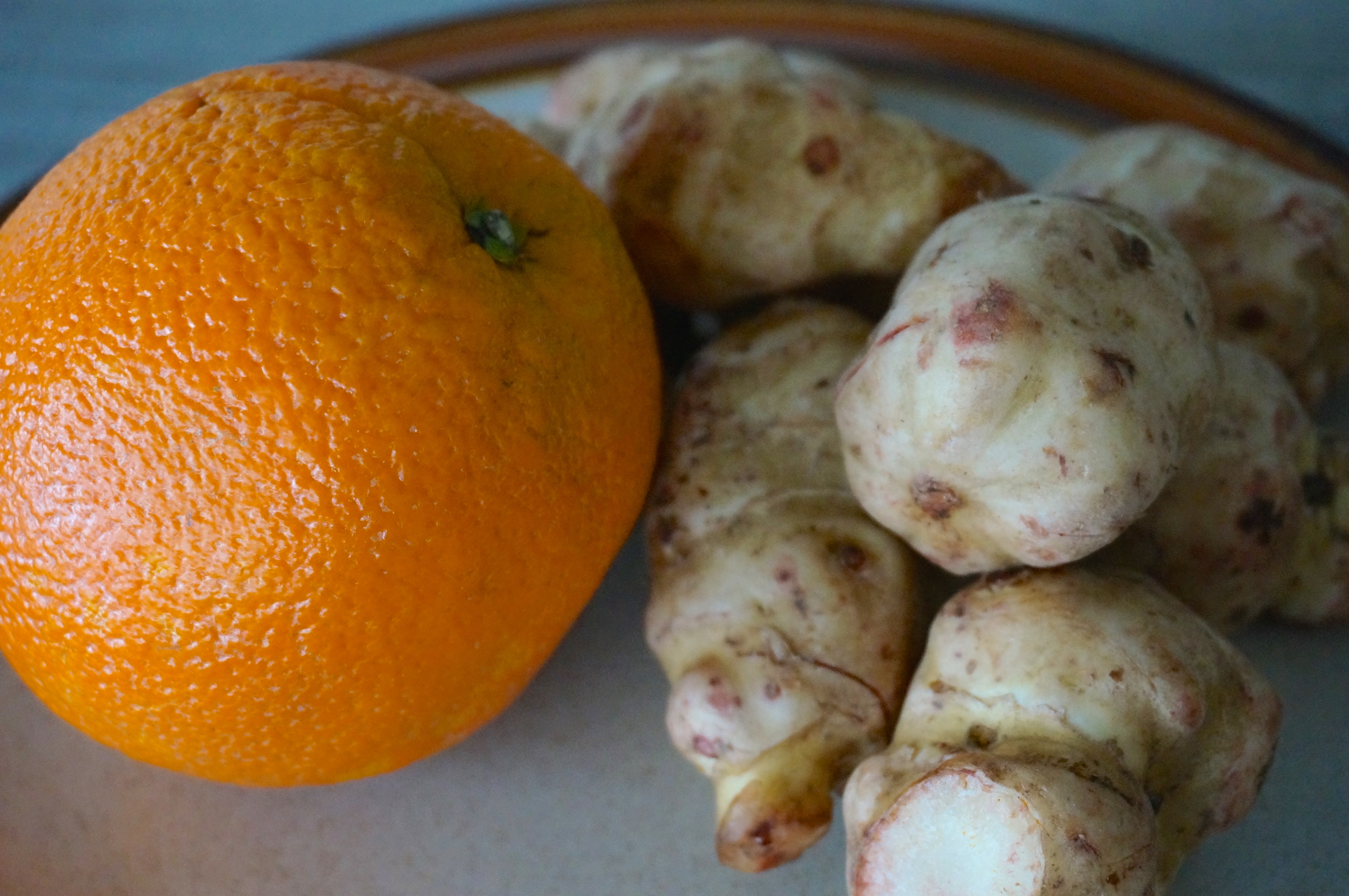
So, just give up on the weather and simply eat and drink to your heart’s delight. To help you with that, here’s an easy recipe for an appetizer that you can make with things you can find right now in your grocery store. Sunchokes are also known as Jerusalem artichokes, for reasons that I can’t fathom, since they are closer to potatoes and carrots than artichokes. In any case, they crisp up in the oven really nicely and they pair very well with toasted pine nuts, orange, and rosemary. A hint of balsamic vinegar adds an additional note of acidity and the final dash of aleppo pepper gives it that unexpected smoky heat that draws you in for one more bite. 

DSC03877Roasted Sunchokes with Orange, Rosemary and Pine Nuts

Makes 4 appetizer servings

Ingredients:

1/4 cup pine nuts
1 lb sunchokes (jerusalem artichokes), washed and scrubbed clean
2 cloves garlic, peeled and slides in thin slices (about 2mm each)
1 teaspoon chopped fresh rosemary
2 tablespoons olive oil
salt and pepper
1 orange
2 teaspoons of good balsamic vinegar
1 teaspoon aleppo pepper

Directions:

Preheat the oven to 425°F.

In a sauté pan, toast the pine nuts over medium heat, tossing frequently, until they give off a toasted smell and they just start to turn golden brown. Immediately remove into a plate and allow to cool.

Slice sunchokes crosswise into 1/4″-1/2″ slices. In a large bowl, toss sunchoke slices with the garlic, rosemary, olive oil, and some salt and pepper. Spread on two large baking sheets, so that all sunchoke slices are lying flat on the pan. Make sure that all garlic slices are on top of sunchoke slices, otherwise they will burn. Roast in the preheated oven for about 30 minutes, without turning, until the bottoms of the slices turn dark brown, but don’t burn. The tops will stay yellow and become soft.

Meanwhile, peel orange and slice crosswise in four 1/2″ slices (there will be some orange left over). Place each slice in the bottom of an individual serving bowl.

Once sunchokes are roasted, pile them on top of the four orange slices. Top with roasted pine nuts, balsamic vinegar, and aleppo pepper, divided among the four bowls. Serve immediately


Pomegranate Aperitif

DSC03813For the last few weeks and until the end of the month I am working on Saturday afternoons. Every Saturday I leave home after lunch and get back around 6pm. As I am leaving work, I send a text message to Steve: “On my way. Cocktails?” I did it the first Saturday I had to work and it’s now become a tradition. I show up around 6pm and we share a cocktail, different each week. This is one of those cocktails. It’s a little tart and a little fizzy and one hundred percent refreshing. It’s the kind of cocktail you gulp down in less than 2 minutes without realizing it. In other words, my favorite kind.

Pomegranate Aperitif – Adapted from Bon Appétit

Makes 6 drinks

Note: If you don’t have boiled cider syrup or saba (wine-grape juice that’s been reduced until syrupy and concentrated), use a few drops of good balsamic vinegar.

Ingredients:

1 cup pomegranate juice
2 tablespoons boiled cider syrup or saba
2 cups Lillet Blanc
4 dashes celery bitters
Club soda

Directions:

Whisk pomegranate juice and cider syrup or saba in a large pitcher, then stir in Lillet and bitters. Pour into rocks glasses filled with ice; top off with club soda.

Miso-Glazed Turnips

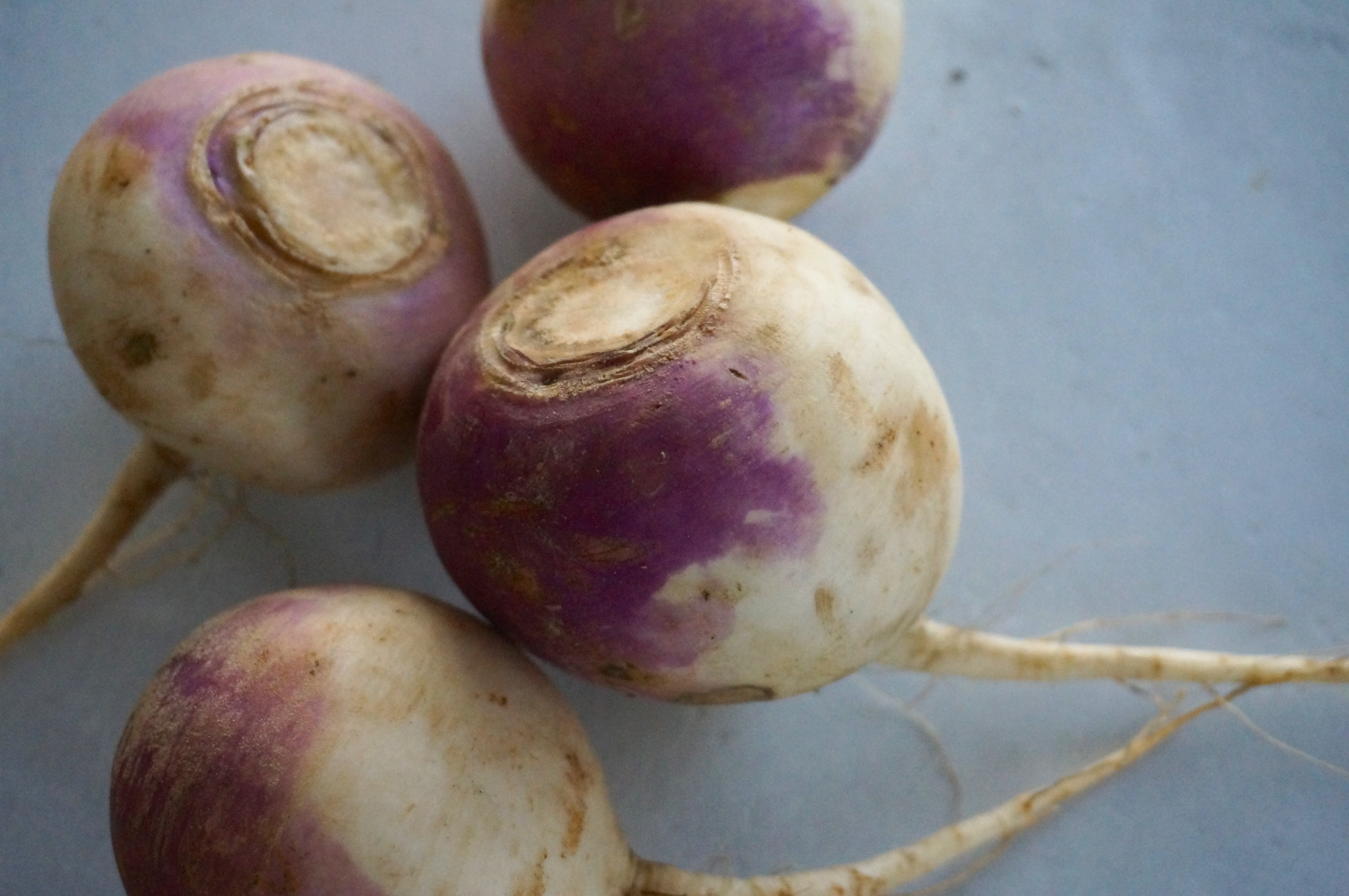
DSC03867

I started learning English when I was 8 years old. My parents enrolled me in after-school lessons that took place at a private high school called The English School. In my first two years there, my teachers spoke Greek, so they would explain things that we learned in a language we understood. Towards the end of my second year, though, I found out that starting the following year, my teachers would only speak English. I was terrified. How would they be able to explain things to me? It took one lesson that following year to ease my fears. I hadn’t realized that I had already learned enough English to be able to communicate with the teacher.

DSC03866

One day, our exercise revolved around a fairy tale called “The Enormous Turnip.” It’s an old Russian fable of a farmer who plants a turnip that grows so large that he can’t pull it out of the ground. He calls his wife to help and then progressively more and more people and animals come to help them pull it out. It’s not until the tiny mouse joins them that they are able to finally pull the turnip out of the ground.

We read the story in class and we all had one question: What the hell is a turnip? We had never seen or eaten one. There wasn’t even a Greek word for it. The teacher struggled to explain that it was a root vegetable like a carrot but round and purple-white. It took a couple of decades for me to finally eat a turnip and when I did, I loved it.

Its pungent, almost medicinal smell is tempered by a sweetness that is especially brought out by roasting it or sautéing it. This recipe is simple but it creates a really flavorful side dish that can accompany either meat or seafood.

turnipMiso-Glazed Turnips – Slightly adapted from Bon Appétit

Ingredients:

1 pound small turnips, trimmed, scrubbed, cut into 1” wedges (peeled or unpeeled)
2 tablespoons white miso
2 tablespoons unsalted butter
1 teaspoon sugar
¾ cup water
Kosher salt and freshly ground black pepper
2 tablespoons fresh lemon juice

Directions:

Combine turnips, miso, butter, sugar and water in a medium skillet.

Bring to a boil over medium-high heat and cook turnips, turning occasionally, until they are tender and liquid is evaporated.

Once all the liquid has cooked off, keep cooking turnips, tossing occasionally, until they are golden brown and caramelized and the sauce thickens and glazes the vegetables, about 5 minutes longer.

Add lemon juice and a splash of water to pan and swirl to coat turnips. Season with salt and pepper.