Zucchini with Eggs (Kolokouthkia me t’afka / Κολοκουθκια με τ’αφκα)

DSC02100

We had arrived a couple of days earlier. It was Steve’s first time in my hometown and I was driving him around, showing him the places where I grew up. It was a beautiful, sunny spring day and we were walking around the old part of the city. It had gone through many transformations, from the bustling commercial center of town to a neglected ghost of its past glory, until several years ago it was turned into a pedestrian-only zone. There was a lot of complaining from the store owners, that the lack of cars would kill the little business they had left. Instead, the area transformed itself. Old buildings were restored. Restaurants and coffee shops opened everywhere. People rediscovered the joy of walking, unencumbered by cars. Retro became cool and the area blossomed.

DSC02103

So there we were, walking along the “main” street (what used to be a narrow, single-lane road, but the “main” one nevertheless) when we decided to look for a place to eat. We passed by a few places, with tables out on the street, awash in sunshine, but we decided to keep looking. We turned the corner into a little side street when Steve spotted it. It was not much. An old (really old), low building in the back of an alley, with a concrete floor yard, covered with thatched straw, providing a welcome shade for us. It was a small restaurant that opened for lunch and sold just a few homemade dishes, simple and traditional, enough to feed the motley crew of locals that were hanging out outside. We took a table and ordered.
DSC02120

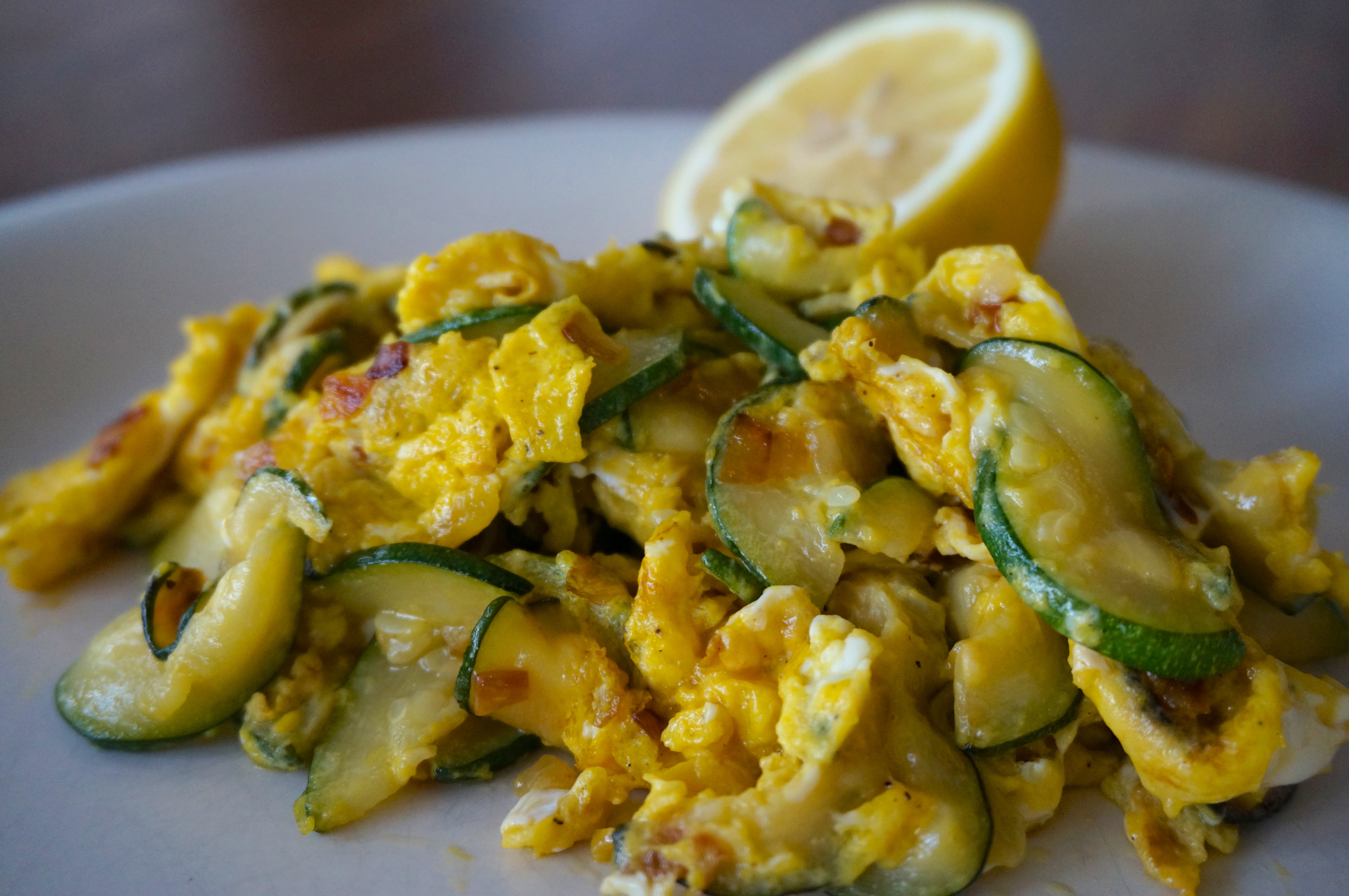
I don’t remember what else we ate there. But I do remember that we ordered kolokouthkia me t’afka (zucchini with eggs). It seemed an unremarkable choice for me. It was something I grew up with, a quick solution for a meal when my mom was pressed for time. But I also remember Steve’s face when he took his first taste. His eyes lit up with that look of amazement and discovery we both get when we taste something remarkable. “Why have we not had this before?” he said. Truth was, I had forgotten about it. Needless to say, we have had this dish many times every since.

There were a lot of memories made on that trip. There were the drives through villages redolent with the aroma of orange blossoms. There was the lunch on top of a rock overlooking the Mediterranean Sea as we watched a storm approach. But before all of those there was this, the simple meal of zucchini with eggs, cooked in olive oil and showered with fresh lemon juice.

Zucchini with Eggs (Kolokouthkia me t’afka)

Makes 2 servings

Ingredients:

Half a medium onion, chopped
1 large zucchini (about 10oz-12oz/280gr-340gr)
4 large eggs
1/4 cup olive oil
1 lemon
salt and pepper

Directions:

Cut the zucchini in half lengthwise and then slice crosswise very thin (about 1/8″) using a very sharp knife or a mandolin. Whisk eggs in a small bowl with some salt and pepper and set aside.

Heat olive oil in a large sauté pan over medium heat. Add chopped onion and cook for about 2 minutes until onion just begins to soften but hasn’t started to brown yet. Increase heat to medium-high and add the zucchini. Season with salt and pepper. Cook, stirring often, until zucchini is cooked and lightly browned at the edges (about 15-17 minutes).

Reduce heat to medium and add eggs. Cook, stirring often, until eggs are cooked through, about 2-4 minutes.

Serve immediately with lots of fresh lemon juice squeezed on top (we use the juice of an entire lemon for two servings).

Chicken with Clementines, Fennel, and Ouzo

DSC01430

I’m back from a little over three weeks of travel and I am so happy to be home again. I’ve always been a homebody, so being away from home for long periods of time makes me feel rootless and restless. Even when I am in New York I’ve been known to resist being out of the apartment for too long. I like to come home, regroup, and then go out again.

DSC01432

One of my trips was back home to visit my family. It was a somewhat special trip because I had a reunion of sorts with three of my friends from high school, two of whom I hadn’t seen in 25 years. I marveled at how little we have changed in some things (our looks in general, our mannerisms, many of our interests) and how much in others (the inability of some us to read menus in dim restaurant lights, having teenage kids).

DSC01437

The older I get, the more I find myself going down memory lane and remembering little details about my childhood. The four of us, along with my sister who was there with us, remembered and laughed about some silly things, like our predilection for writing bad poems which we exchanged and commented on with the seriousness of a grand literary salon.

DSC01435

Inevitably, we compared our teenage years with those of their own kids. And, as it seems to be the habit of every generation, we lamented the fact that “back in our days” things were different, or better, or less complicated. Truth be told, things were simpler then. We were a lot more innocent, as was the world in which we lived. With no Internet or any connected devices, our world was limited to what was physically close to us and that made things a lot less complex.

DSC01438

While I was at home, I also did one of my favorite activities: go to the grocery store. I love to walk the aisles and rediscover food that I grew up with but have either completely forgotten or haven’t tasted in years. Like the slightly sweetened sesame rusks called glystarkes or the fried dough balls soaked in honey syrup called loukoumades. Every morning I ate a fresh kolokoti, a turnover filled with cooked pumpkin, raisins, and bulgur wheat.

DSC01441

I started this blog post thinking I was going to somehow bring it back to the taste of licorice or anise, which is a key element of this recipe I want to share with you today. I had envisioned talking about how as a kid I watched The Little House on the Prairie and always wondered what this “sweet root” (as the greek subtitles translated it) was that the kids seemed to buy at the pharmacy. And how it turned out to be licorice, a word that comes from the greek glykoriza which means sweet root. And how I realized I hated licorice, though I still like ouzo, especially on a hot summer night, turned milky with the addition of ice cold water.

But in the end, I couldn’t really find my way to all that and I figured I would just give you this recipe from “Jerusalem: A Cookbook.” It’s an extraordinary dish, made even more amazing by its simplicity.
DSC01442

Chicken with Clementines, Fennel, and Ouzo – Slightly adapted from Jerusalem: A Cookbook

Makes 4 servings

Ingredients:

6 1/2 tablespoons / 100ml ouzo (or other anise flavored drink like arak or pernod)
4 tablespoons olive oil
3 tablespoons freshly squeezed orange juice
3 tablespoons freshly squeezed lemon juice
2 tablespoons grain mustard
3 tablespoons light brown sugar
2 1/2 teaspoons salt
1 1/2 teaspoons black pepper
2 medium fennel bulbs (about 1lb or 500gr)
2 – 2 1/2 lbs skin-on, bone-in chicken thighs
4 clementines, unpeeled, sliced horizontally very thin (about 1/4 inch)
1 tablespoon fresh thyme leaves
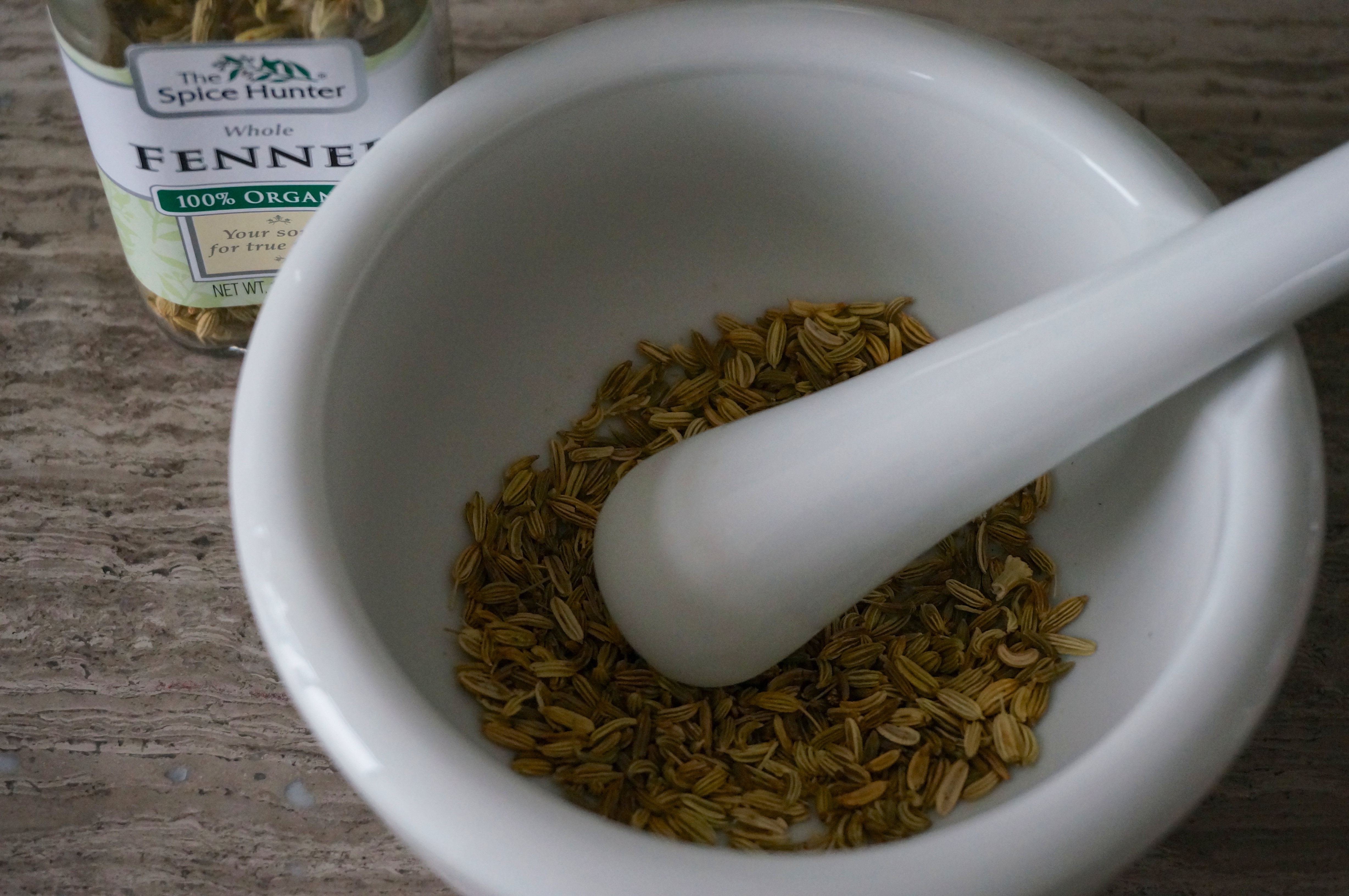
2 1/2 teaspoons fennel seeds, lightly crushed
chopped flat-leaf parsley for garnish

Directions:

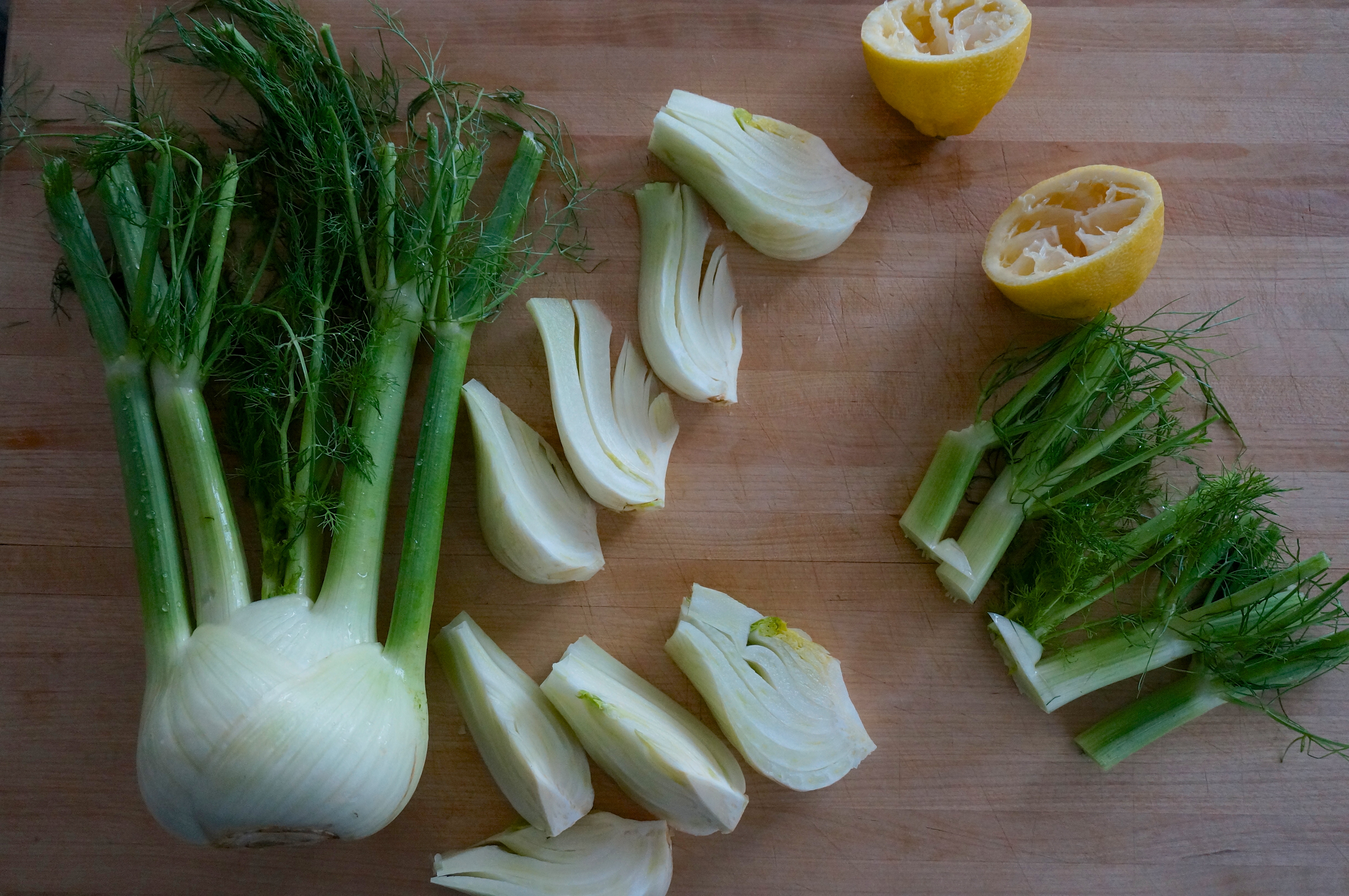
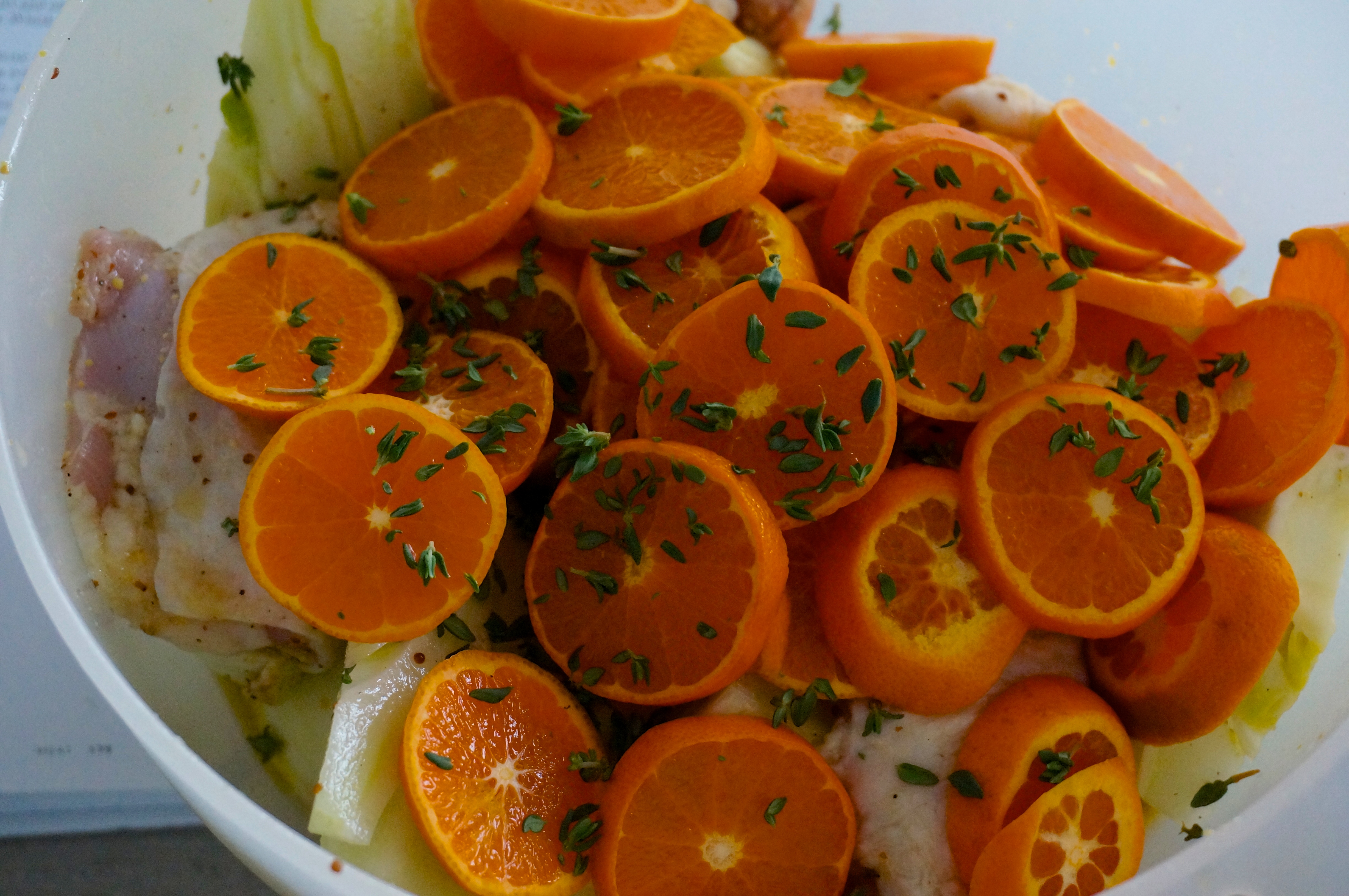
Put the first eight ingredients in a large bowl and whisk well. Cut each fennel bulb in half lengthwise and then cut each half into 4 wedges. Add the fennel to the bowl along with the chicken thighs, clementine slices, thyme, and fennel seeds. Using your hands, mix everything well and then cover and leave to marinate in the fridge for a few hours or overnight (if you don’t have the time, skip the marinating stage).

Preheat the oven to 475º F / 220º C. Transfer the chicken and all the ingredients in the bowl, along with the liquid marinade, in a baking sheet that is large enough to accommodate everything without being overcrowded (this will help the chicken to brown). Make sure that the skin of the chicken thighs is facing up. Put the pan in the preheated oven and roast for 35-45 minutes until the chicken is brown and cooked through.

Remove from the oven. Lift the chicken, fennel and clementines from the pan and put on a serving platter. Cover and keep warm. Pour the cooking liquid into a small saucepan and place over medium-high heat. Bring to a boil and then simmer until the sauce is reduced by one third. You should be left with about 1/3 cup (80 ml). Pour the hot sauce of the chicken and top with some parsley before serving.

Savory Tomato Jam

DSC01454

We spent New Year’s eve in Corsica with a group of friends. Given that we were in a house situated in a tiny village of 40 inhabitants, and considering that around the holidays everything is pretty much closed in France, I have nothing to report in terms of food discoveries. We pretty much bought a bunch of groceries on our first day, and we cooked simple meals every day.

DSC01455

Corsica, or at least the small part we saw, is a beautiful island, with rugged mountains that come down straight into the crystal blue waters of the Mediterranean. There are fig trees and citrus trees everywhere, as well as rosemary and laurel and a strange, edible fruit-bearing tree we had never seen before called Arbutus or Strawberry trees (Arbousier in French). The mountain side on which our house was located was covered with paddle cactuses, though the delicious, red prickly pears they produce had all been picked clean by now.

DSC01459

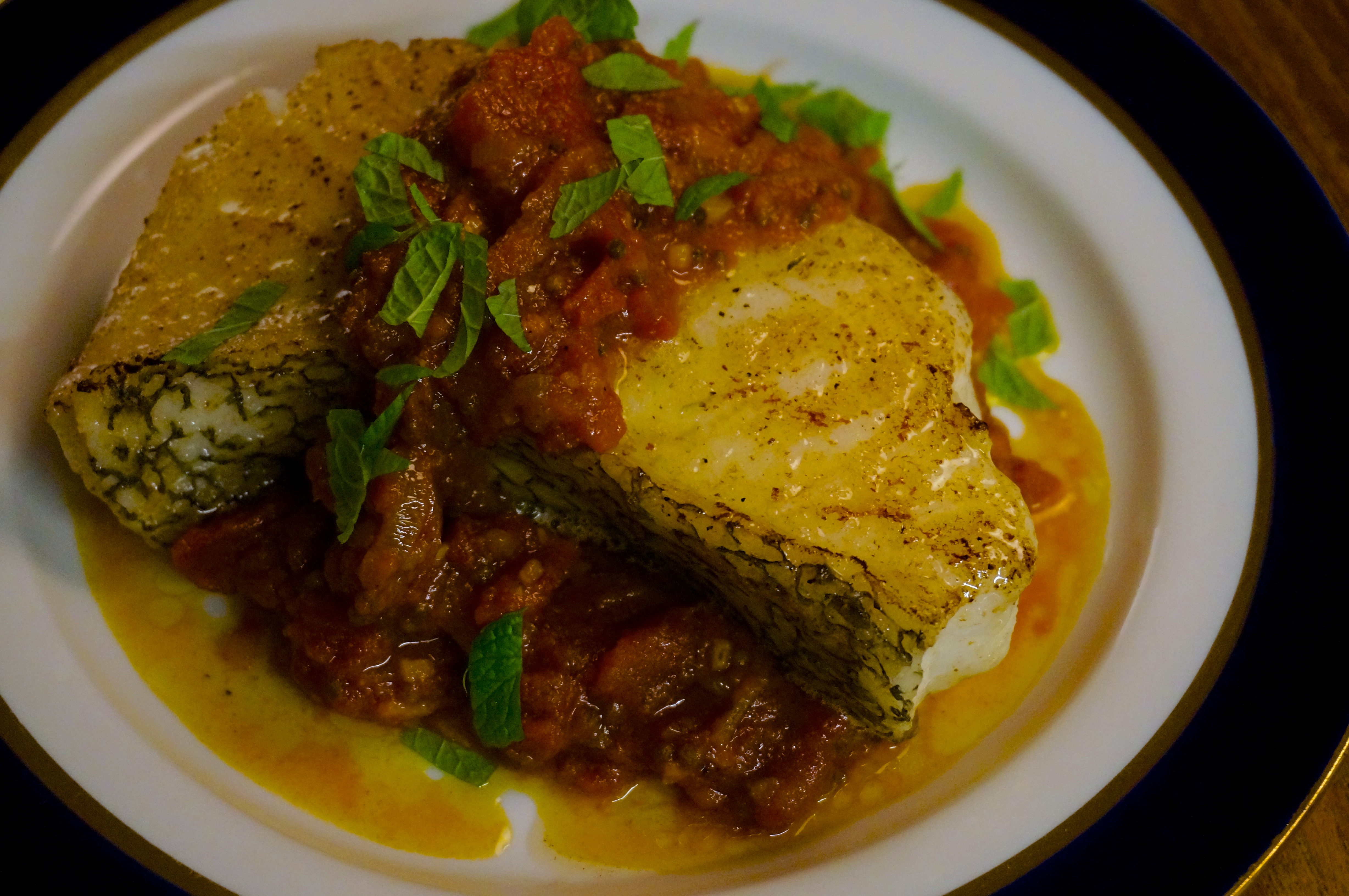
The weather was beautiful. Sunny and high 50s everyday. Very different than the weather back in New York where we are getting ready to return to. With a high of 17º F, it’s a veritable Arctic landscape in the Northeast. So, if you are trying to survive the first snow blizzard of 2014 and want something that provides some spicy warmth, I give you this recipe for a savory tomato jam. It’s a delicious combination of tomatoes and spices, cooked slowly together until they form a thick sauce that is a perfect accompaniment to seafood. Though I would guess that it would also pair well with chicken or pork.

Enjoy, and stay warm out there.

DSC01462

Savory Tomato Jam – Slightly adapted from BonAppetit.com

Makes about 3 cups

Ingredients:

1/4 cup vegetable oil
2 tablespoons yellow mustard seeds
1 tablespoon ground coriander
1/2 teaspoon ground cardamom
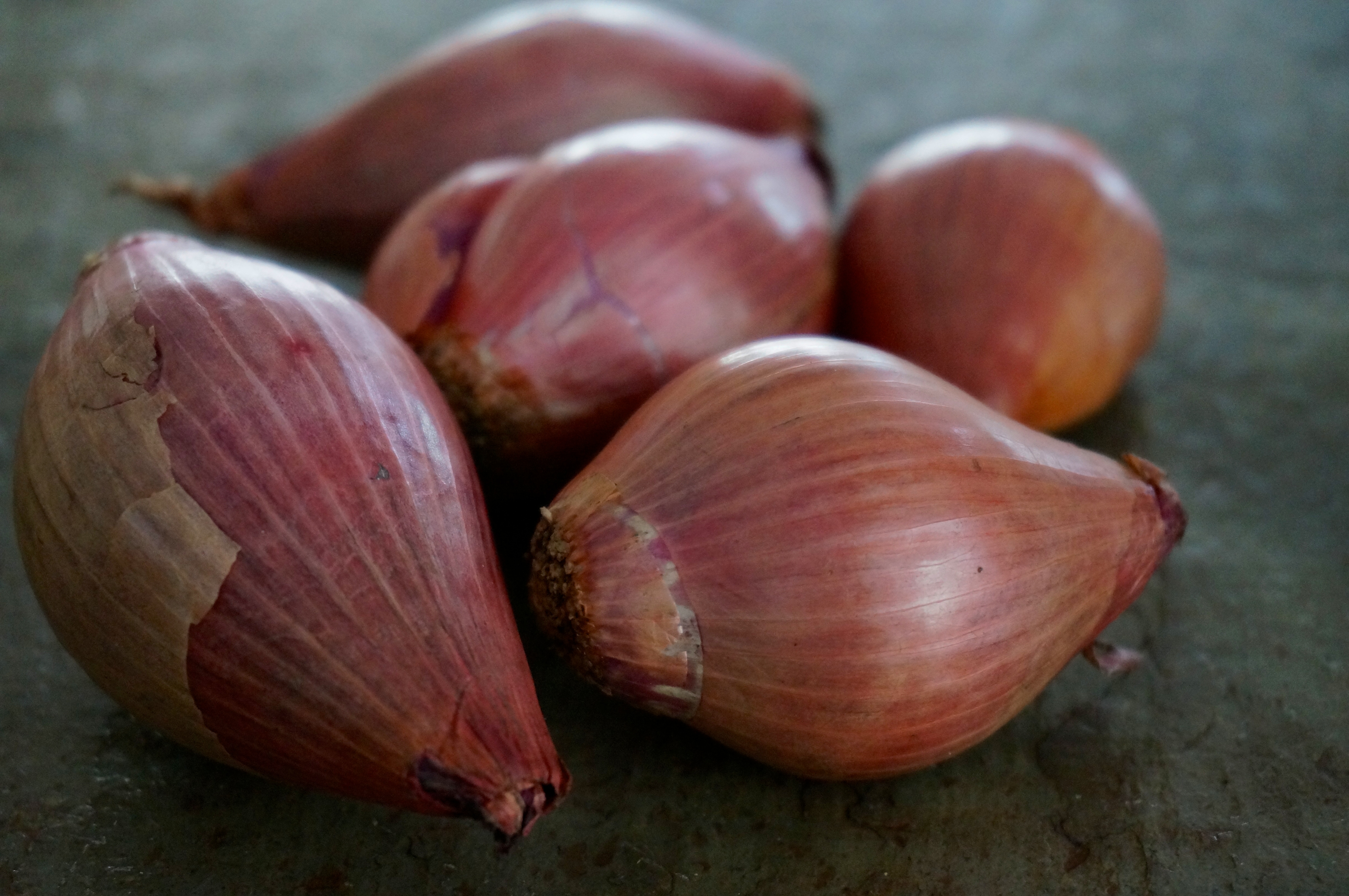
2 medium shallots, thinly sliced
2 garlic cloves, chopped
2 tablespoons chopped peeled ginger
1/4 cup fish sauce
1/4 cup sugar
1 tablespoon ground turmeric
1 teaspoon crushed red pepper flakes
1 28oz can of diced tomatoes
2 tablespoons fresh lime juice
salt and freshly ground pepper
fresh mint, chopped

Directions:

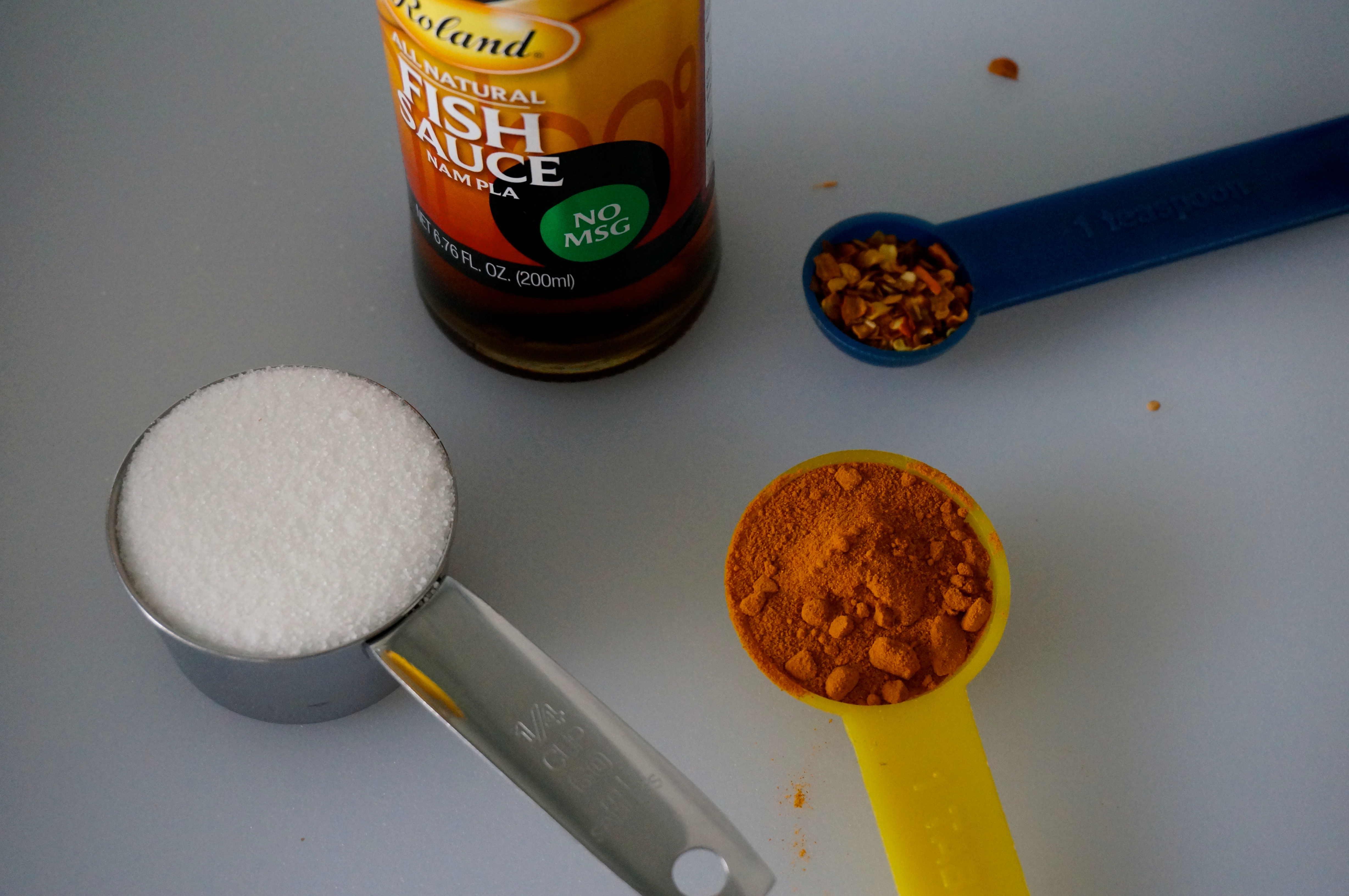
Heat oil in a large saucepan over medium heat. Add mustard seeds, coriander, and cardamom and cook, stirring often, until mustard seeds begin to pop, about 1 minute. Add shallots, garlic, and ginger and cook, stirring often, until softened, about 5 minutes. Add fish sauce, sugar, turmeric, and red pepper flakes and cook, stirring constantly, until sugar is dissolved, about 1 minute.

Add diced tomatoes with their juices. Bring to a boil, reduce heat, and simmer, stirring often, until tomatoes are softened and mixture thickens, 35–45 minutes. Mix in lime juice; season with salt and pepper.

Serve over cooked fish or chicken and top with chopped fresh mint.

Red Wine Braised Octopus / Χταπόδι κρασάτο

DSC01521

I had been in the U.S. for probably a couple of months. I was a freshman in college and on that particular night, my new American friends and I were sitting around the lounge of our college dorm talking about the kinds of things only freshmen can find interesting. At some point, the discussion turned to food and more specifically, food people found disgusting. Liver, intestines, tongue, brains, anything with a head on it, anything with tentacles, all were things tossed around by everyone in their attempt to out-disgust each other.
DSC01509

Everyone but me, that is. Because, as I explained to my increasingly horrified audience, these were all things I grew up eating. As I described a few occasions when my family sat down for a special Sunday lunch and my sister and I each got a whole, roasted baby lamb’s head in our plates, how we used to spread the soft-like-butter brains on our piece of bread — “to get smarter” our dad told us with a wink while he ate the eyeballs, because even we had limits and wouldn’t eat the squishy orbs — and how we used our forks to scrape the melt-in-your-mouth cheeks off the lamb skull, I realized that a couple of people were ready to pass out.

So I kept going and described the traditional Easter dish of kokoretsi: liver, heart, lung, kidneys, and other organs wrapped in intestines and cooked on a skewer over hot coals.

DSC01517

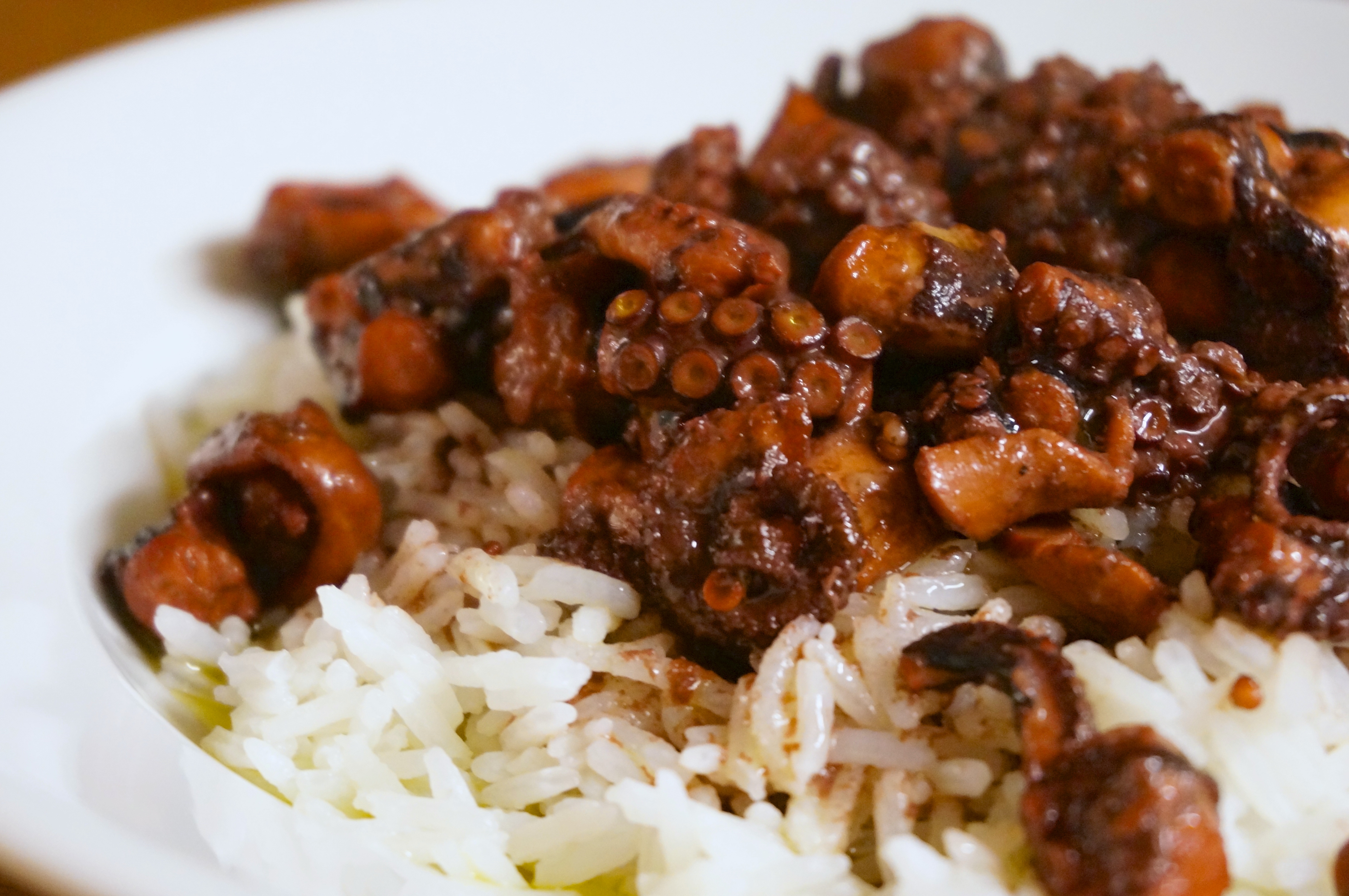
I soon learned to accept the squeamishness of most Americans when it comes to a lot of food I have no problem eating. But there’s one case I still find baffling: those who don’t like to eat “things with tentacles.” That means octopus (or squid). How could you not love octopus? Nothing compares when it comes to texture and taste. If cooked properly, it’s tender with a tiny bit of chewiness, with the taste of the ocean along with a distinct meaty flavor that pairs so well with red wine or vinegar.

This recipe comes from my mom. It’s the way I always ate octopus growing up. Braised in red wine and vinegar for a long time, until it melts in your mouth. The toughest part about this recipe is cutting the octopus, which can be a little slippery, but once that is done, the rest is a piece of cake. Try it, even if you are not a fan of “things with tentacles.” I bet you’ll change your mind.

DSC01513

Red Wine Braised Octopus

Makes 3-4 servings

Note: I usually buy whole octopus frozen and defrost it in the fridge. It’s preferable to buy frozen octopus. In fact, freezing freshly caught octopus and then defrosting it is a good way to tenderize it. Do not add salt to the octopus when cooking it. It is naturally salty. In fact, most of the octopus is salt water that will evaporate in the first part of the recipe.

Ingredients:

3 lbs octopus, cleaned and cut into 1.5″-2″ pieces
1 cup red wine
1 cup olive oil
1/2 cup red wine vinegar
1/2-3/4 cup water
1 bay leaf
black pepper

Directions:

Place cut octopus in a large pot. Do not add anything else in the pot. Turn the heat on medium and cook octopus until almost all of its water has evaporated (or as my mom always says “until it drinks its water”). The octopus pieces will turn deep pink and shrink considerably.

When only a little bit of liquid remains in the pot, add remaining ingredients, bring to a boil and then simmer with a lid loosely covering the pot until the sauce is reduced and slightly thickened (1.5-2 hours). Taste and season with black pepper if necessary.

Serve with rice or pasta.

Lemon Cornmeal Pistachio Muffins

DSC00098

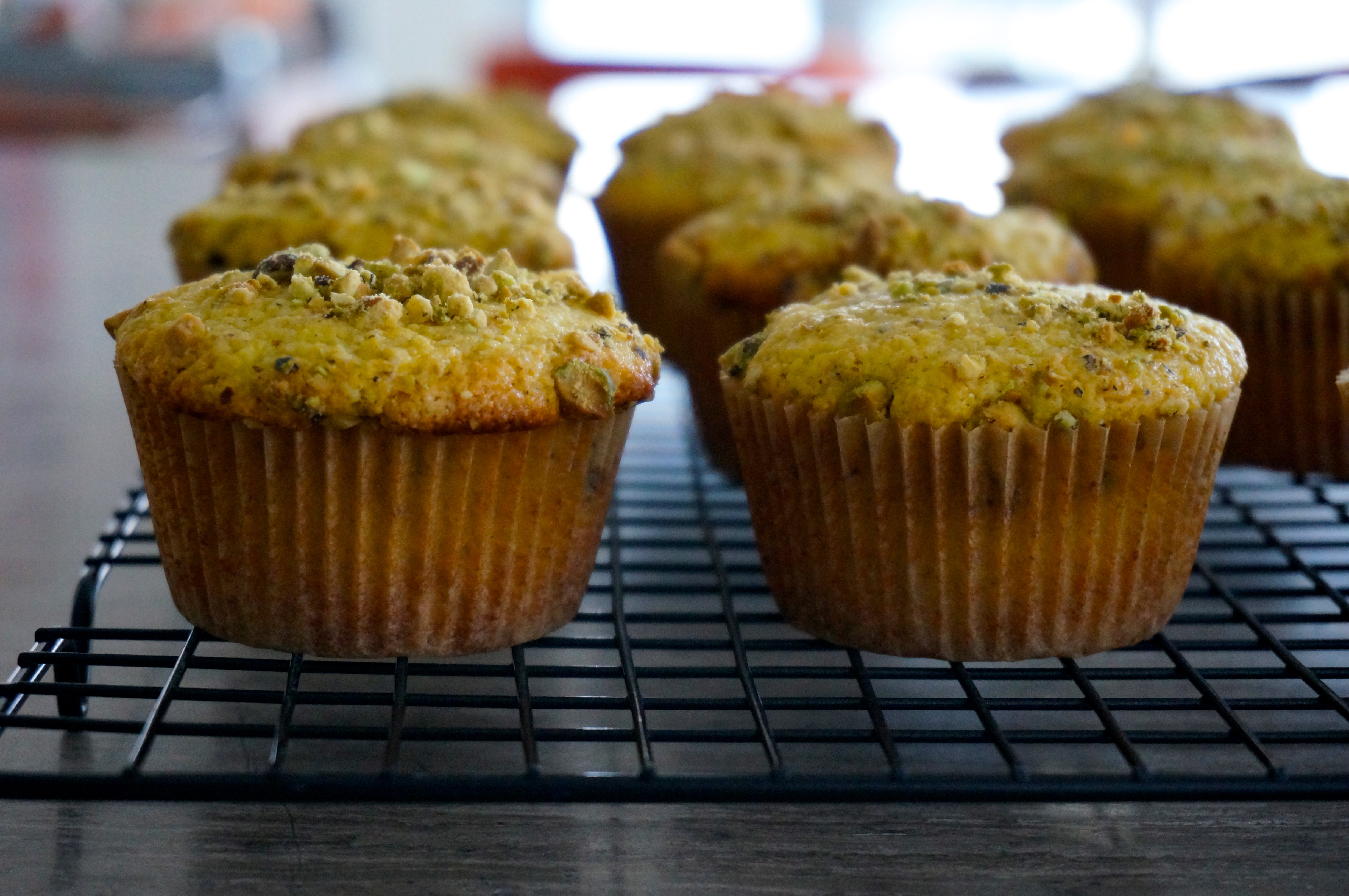
Every now and then, I’ll see a recipe title and I will know, instantly, that not only will I make that recipe, but that I will love the end result. That is exactly what happened with these muffins. Their recipe comes from Baked Elements: The Importance of Being Baked in 10 Favorite Ingredients, the amazing cookbook by Matt Lewis and Renato Poliafito. The first time I leafed through the book, as soon as I saw the words “lemon,” “cornmeal,” and “pistachio” together in the title, I immediately bookmarked it.
DSC00089

If I remember correctly, it was the first recipe I tried from that cookbook and I wasn’t mistaken. The end result was indeed as great as I thought it would be. These are not super sweet muffins. They are not giant, moist, cakey muffins, like those you’ll find at your grocery store. They are almost hearty. They are slightly tangy, with a satisfying crunch from the cornmeal and a finishing nuttiness from the pistachios on top. They make a great breakfast but an even better snack in the afternoon with some hot tea.

DSC00085

Lemon Cornmeal Pistachio Muffins – From Baked Elements: The Importance of Being Baked in 10 Favorite Ingredients

Makes 12 muffins

Ingredients:

1/2 cup shelled pistachios
2 large eggs
3/4 cup sour cream
2 teaspoons lemon juice
zest of 1/2 lemon
3 oz unsalted butter (3/4 stick), melted and cooled
3/4 cup all-purpose flour
1 1/4 cups yellow cornmeal
1 cup sugar
1 teaspoon salt
2 teaspoons baking powder

Directions:

In a food processor, pulse the pistachios until they are coarsely chopped. Remove 1/4 cup of the chopped pistachios and set aside. Continue to process the remaining pistachios in the food processor until they are almost powdery.

Preheat the oven to 400º F. Lightly grease a 12-cup muffin pan (or use paper cups to line it).

In a medium bowl, lightly whisk the eggs. Add the sour cream, the lemon juice, the zest and the butter and whisk them until they are combined.

In a large bowl, whisk together the flour cornmeal, sugar, salt, the powdery pistachios, and the baking powder. Make a well in the middle of the dry ingredients and pour the wet ingredients in it. Fold everything together until just mixed. Don’t overmix them.

Fill each muffin cup about 3/4 full and sprinkle the tops with the coarsely chopped pistachios. Bake for about 12-15 minutes until the tops are golden brown and a toothpick inserted in the middle comes out clean.

Transfer the pan on a wire rack and let it cool for 10 minutes. Take the muffins out and serve immediately or let them cool completely and store them in an airtight container or wrapped in plastic wrap for 2 days. They also freeze very well.

Roasted Tomatillo Salsa

Thanksgiving is one of my favorite holidays. I love that it’s a holiday that celebrates something really positive and universal: being thankful for all the good things in your life. How wonderful is that? Coming from a culture where every holiday is either religious or celebrating a bloody war of some kind, I immediately embraced Thanksgiving when I came to the U.S.

DSC01253

When I was a young college student in the U.S., my new American friends invited me back to their homes to celebrate Thanksgiving with their families. This was such a generous gesture, it made me love this country and want to be a part of it even more. I realized what actual hospitality is, when parents, who hadn’t seen their kids in months, went out of their way to make me feel comfortable and welcome in their homes during a holiday that is so family-centered.

DSC01259

And then there’s the food. Thanksgiving introduced me to many new and amazing delights, like cranberry sauce and pecan pie. It also introduced me to some food traditions I never quite learned to like, like pumpkin pie and sweet potato pie, both of which I find strange (who wants dessert made from a side dish?).

DSC01263

Over the years, I’ve cooked many Thanksgiving meals and have invited friends and strangers to share them with me. For the last several years, Steve and I have had our own tradition. We have our Thanksgiving in Paris, where we cook a traditional meal for all of our friends there. We get the turkey from a neighborhood butcher who cooks it for us on the rotisserie. We make everything else, including a traditional dish from Steve’s family called under-the-sea salad, a concoction of cream cheese, lime jello, and canned pears that only an American could come up with.

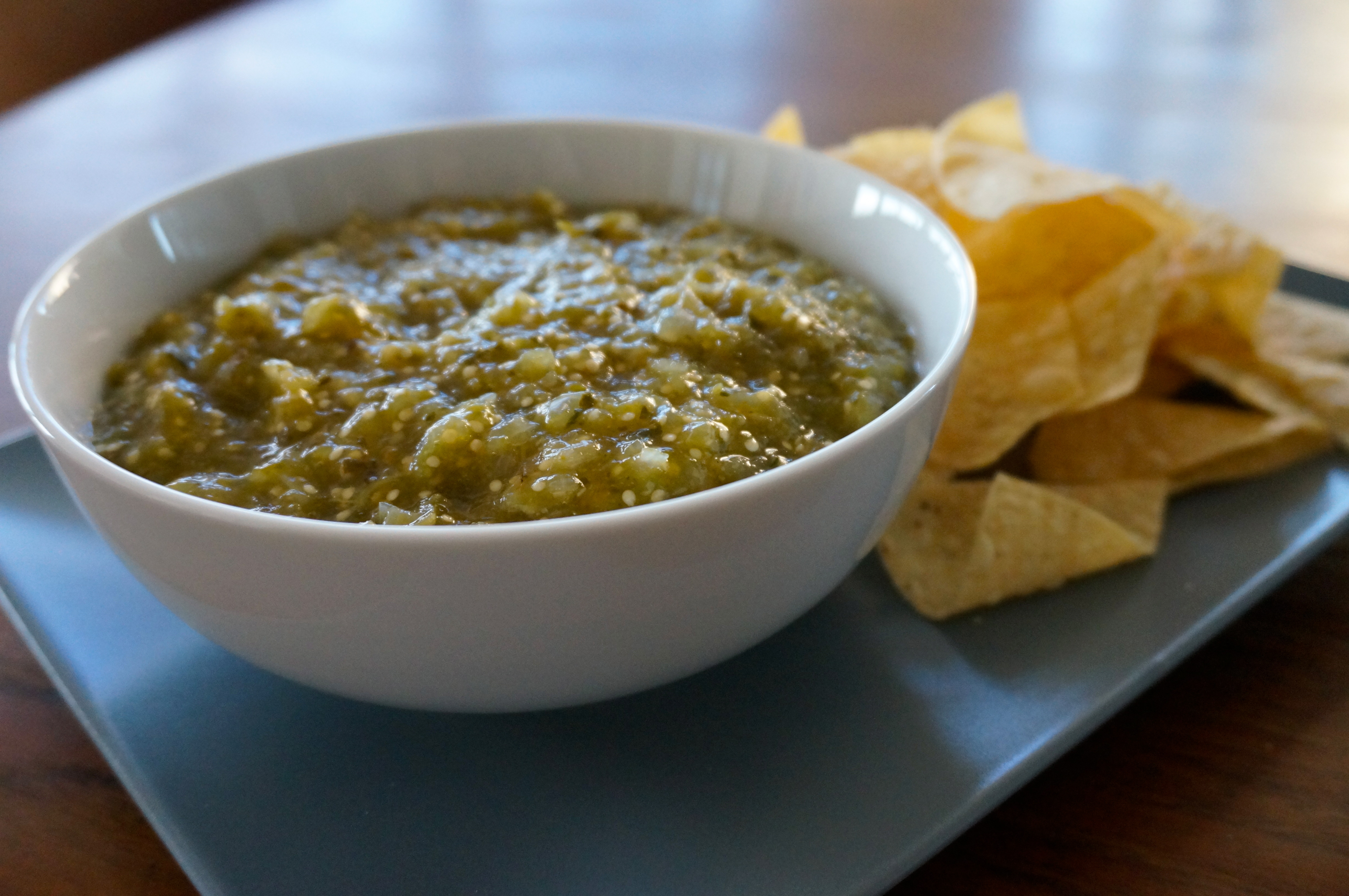
I don’t have that recipe for you today, but I do have a recipe that Steve makes for roasted tomatillo salsa. It’s perfect for snacking on while everyone is waiting for the turkey to finish, or while they are playing video games or watching football in the living room. The photos and preparation of this recipe post were all done by Steve.

Happy Thanksgiving everyone!

DSC01278

Roasted Tomatillo Salsa – Adapted from Epicurious.com

Ingredients:

1 1/2 pounds fresh tomatillos or 3 (11-ounce) cans tomatillos
3-5 fresh serrano chiles
3 garlic cloves, unpeeled
1/2 cup fresh cilantro
1 large onion, coarsely chopped
1 teaspoon kosher salt
Juice of half a lime

Directions:

Preheat broiler.

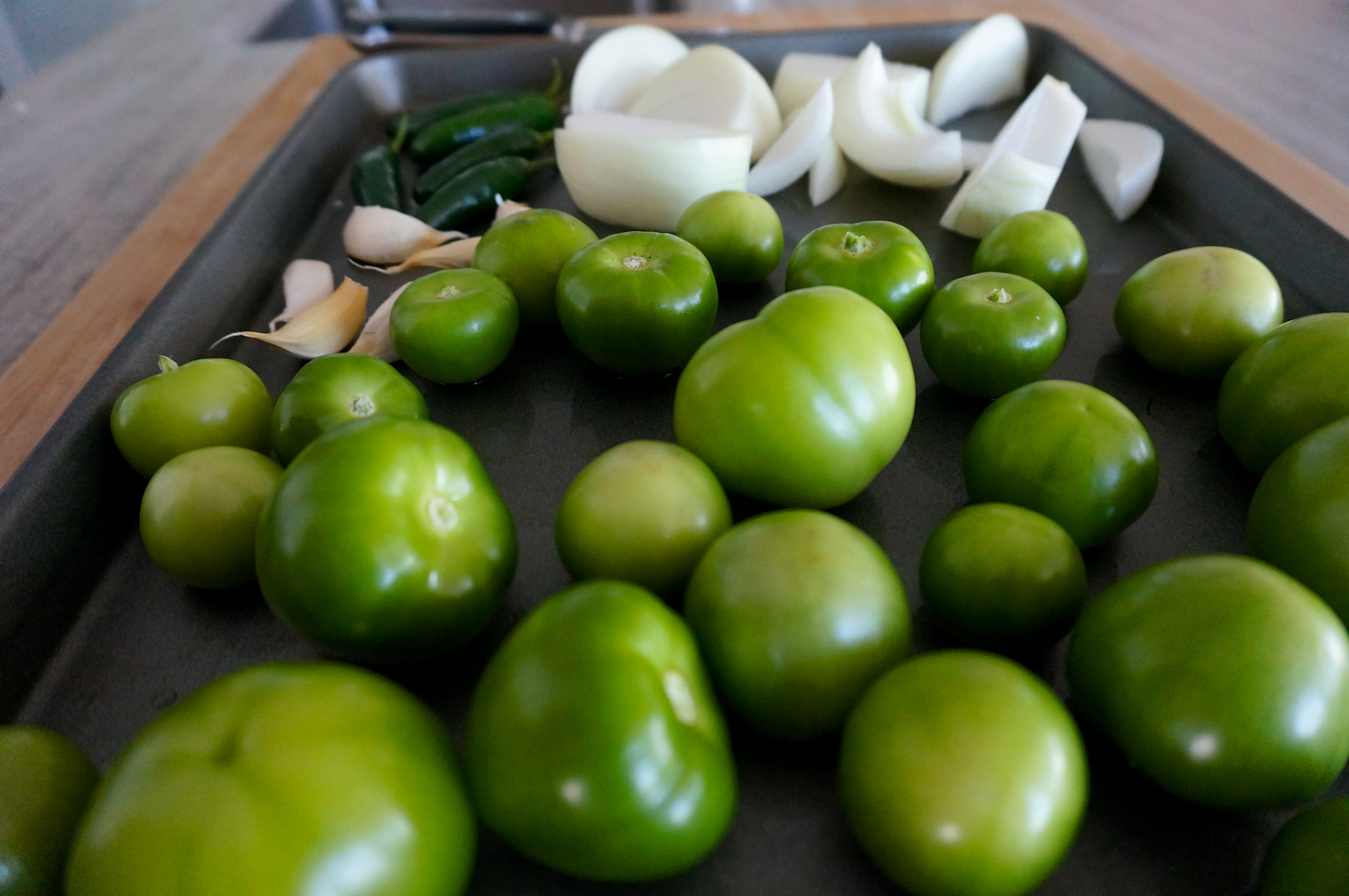
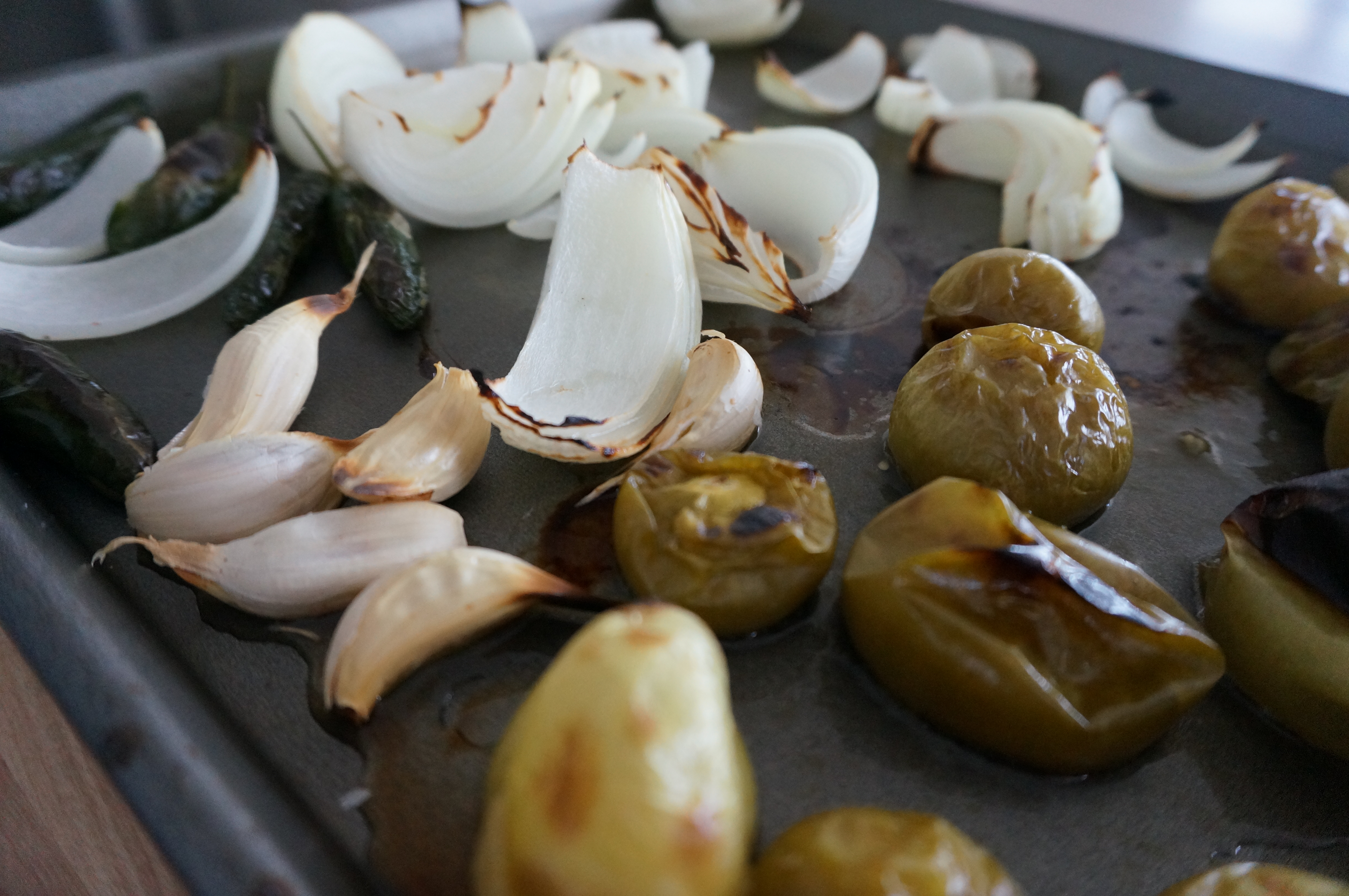
If using fresh tomatillos, remove husks and rinse under warm water to remove stickiness. If using canned tomatillos, drain and measure out 2 cups. Broil onion, chiles, garlic, and fresh tomatillos (do not broil canned ones) on the top rack of the oven, turning occasionally, until tomatillos are softened and slightly charred, about 10 minutes. (Smaller items, like the garlic might need to be removed early.)

Peel garlic and pull off tops of chiles. Put all ingredients in a blender, including cilantro, salt, and lime juice and purée. Chill in refrigerator and serve with tortilla chips.

Baked Doughnuts

DSC01382

The night before I joined the army, the aliens came.

I’m not sure why my parents thought that it was a good idea to spend the eve of my enlistment eating dinner at a restaurant. Perhaps they thought it would be a good distraction. God knows we all needed one. But there we were, sitting al fresco on a hot summer night, eating roast lamb and whatever else my dad had ordered, when I saw them.

DSC01371

“What is that?” I said, pointing at the row of lights that twinkled in the hazy air, hovering high above, somewhere far from where we were sitting. Everyone looked up. We immediately started to guess their nature and it wasn’t long before the UFO possibility came up. This was the 80s and I was a 17-year-old that had grown up with Carl Sagan’s voice describing the “billions and billions of stars out there” and who had read and worshiped Isaac Asimov and Arthur C. Clarke. It seemed entirely possible to me that what we were seeing was actually a circle of lights viewed from the side, like a great big shiny doughnut resting on the dark canvas of the sky.

DSC01376

The lights became the only topic of conversation for my family and soon other tables at the restaurant noticed them and started to point up at the sky, some laughing nervously. My dad asked the waiter if he knew what they were but he said that he had no idea and that he was sure he had never seen those lights before. This was important. The lights were new. The UFO explanation had gained support.

DSC01377

After dinner, as we were driving back home I kept looking out of the car window at those lights that still hung in the sky, hoping that yes, indeed, they were an alien ship, and that when the morning came, the world would change forever. And maybe this thing that I had feared since I could remember; the menacing rhinoceros that had been charging towards me from the moment I was first told that all boys like me would have to join the army when they finished high school; this experience that, based on the stories I had heard repeatedly from every adult man in my life including my dad, was going to be hard, traumatic, and painful; maybe, just maybe, becoming a soldier simply wouldn’t happen for me.

DSC01378

But when the morning came, there was nothing in the news, nothing in the paper, and as we all got ready for the long drive to the camp, where I would say goodbye to my parents and sister, all of them putting on a brave face for me, saving their tears for the drive back home, we never mentioned the bright lights in the sky.

It wasn’t until weeks later, after basic training was over and I was allowed a day long leave, when I asked my dad if he ever found out what those lights were. “Oh, it turned out to be a new restaurant that opened up on the mountains,” he said. “I guess it was such a clear night, we could see its lights all the way down here.”

By then it didn’t matter. My two-year military adventure had begun and I had discovered that, like just about everything in life, I could learn how to survive it. Without the help of aliens.

DSC01380

Baked Doughnuts – Adapted from The Breakfast Book

Note: These doughnuts are incredibly delicious, even though they are baked and not fried. They are tender and really flavorful. Don’t skimp on the nutmeg. I know it seems like a lot but in the end, you can taste it just enough to give them an unmistakable doughnut-y flavor.

Ingredients:

For doughnuts:
1/3 cup water
1 1/2 cups milk
1/3 cup vegetable shortening
3 1/4 teaspoons instant yeast
1/4 cup sugar
2 teaspoons salt
2 teaspoons nutmeg
2 eggs, lightly beaten
4 1/2 cups all-purpose flour

For topping:
1/2 cup (1 stick) butter, melted
1 cup sugar mixed with 1 teaspoon cinnamon

Directions:

In a small saucepan, heat the milk, water, and shortening until the shortening is melted. Let it cool to look warm (around 105 degrees F).

In a large mixing bowl, add the yeast, the 1/4 cup of sugar, salt, nutmeg, eggs, 2 cups of the flour, and the lukewarm milk mixture. Beat until well blended. Add the remaining 2 1/2 cups of flour and mix until smooth. The dough will be very wet and sticky. Cover the bowl and let it double in volume for about 1 hour.

Preheat the oven to 450 F. Prepare two baking sheets with parchment paper.

When the dough has finished rising, scrape it onto a board or countertop that is very generously dusted with flour. Dust a little flour on top of the dough and flour your hands. Using your fingertips, pat the dough out into a circle or rectangle that is about 1/2 inch thick.

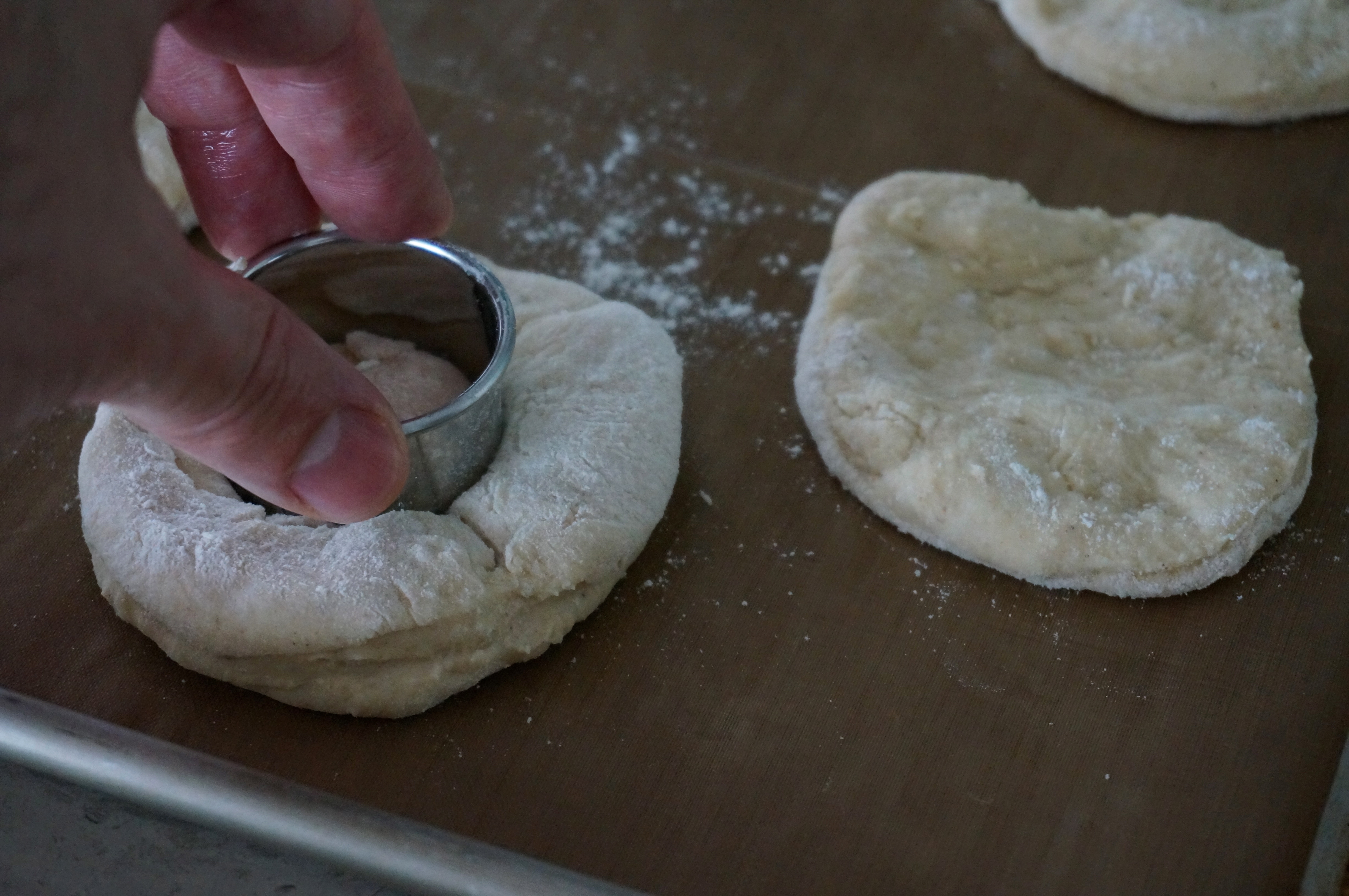
Use a 3 1/2″ round cookie cutter and cut out doughnuts, placing them on the prepared baking sheets. Using a 1 1/2″ round cookie cutter, cut out doughnut holes from the middle of the doughnuts, placing them also on the prepared baking sheets. The donuts rise but they don’t spread so you only need to leave about an inch between them. Continue until you have used up the dough. There will be lots of scraps of dough that remain. I like to gather them and roll them into long flat strips that I twist and place on the baking sheets as well.

Let the doughnuts rest and rise for 20 minutes, uncovered.

Bake the first baking sheet for 10 minutes (you can leave the second sheet to rise for an extra 10 minutes while the first is baking), until the donuts are turning slightly golden brown on top. Remove from the oven and immediately brush them generously with the melted butter. Rolle brushed doughnuts in the cinnamon sugar.

Doughnuts are great served warm but they will keep covered for a couple of days. They also freeze really well.