Lamb Stir-Fry with Pomegranate and Yogurt

DSC02360

I wasn’t especially close to my grandparents. My maternal grandfather died when I was really young and my dad’s parents lived far away so we saw them rarely. The only grandparent I saw fairly often was my maternal grandmother. For as long as I can remember, she lived in a little house behind my aunt’s house. She was a refugee, having lost her home in the war of 74, and a widow. We saw her a few times a year when we would go and visit.

DSC02346

My grandmother looked like a typical old Greek woman from the movies. Always dressed in black (perpetually in mourning for her husband, as old customs required), her hair always covered in a large black headscarf. It was a source of great mystery to me, her hair, when I was little. The couple of times I caught a glimpse of her without the headscarf, I could see a torrent of white hair cascading down her black-clad back. It seemed magical somehow.
DSC02352

I have few memories of the times I spent with her. I remember that my sister and I, influenced by American movies and cartoons we watched on TV, always wanted her to tell us stories and fairytales. When she would tell us that she didn’t know any stories (she was a farmer’s wife who raised nine children in hard, village conditions) we would explain to her that she must, she was a grandmother after all, and all grandmothers know all kinds of fables. Inevitably, she would give in and tell us the same one or two stories she knew, none of which satisfied our hunger for fantastical beings. One of those stories involved a cockroach who convinced a cow to let it ride on its back to cross a muddy field, but then somehow fell in the deep impression that the cow’s hoof left in the mud, at which point the cow, unaware of the cockroach’s fall, started to pee, filling the impression with pee and drowning the unfortunate cockroach to death.

Yeah, she wasn’t kidding when she said that she really didn’t know any fairytales.

DSC02354

One fond memory I have with her involves pomegranates. There was a small pomegranate tree growing in her front yard and when the fruit was ripe, she would pick one and painstakingly peel and deseed it for us. My sister and I loved receiving our small bowls filled with the sweet-tart fuchsia-colored seeds, eating them with a spoon, feeling their juices burst in our mouths, always wary of eating too many lest they make us constipated as the adults always warned us.
DSC02359

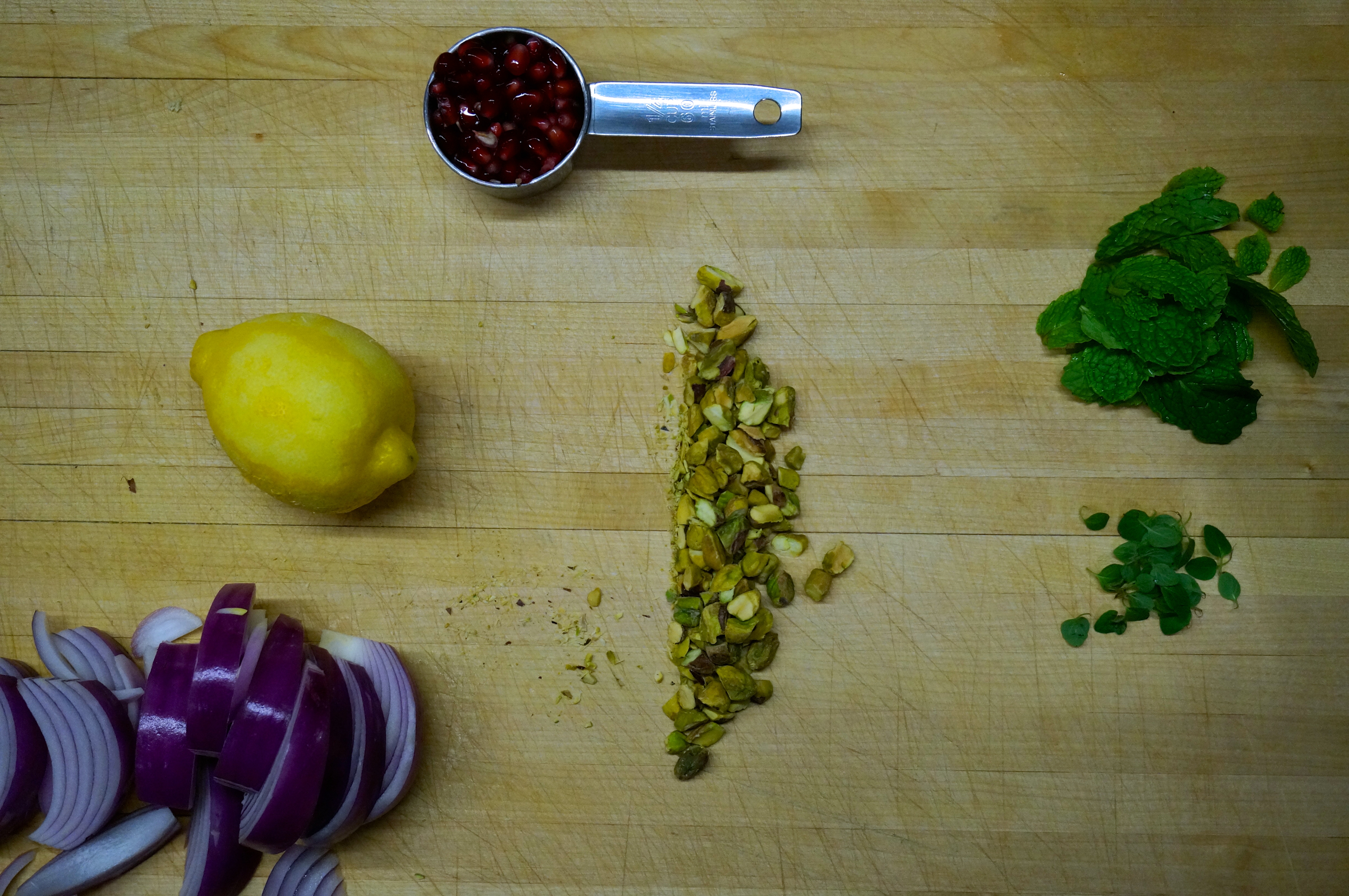
Pomegranates always make me think of my grandmother. I didn’t often eat them, however, because I hated the process of picking the tiny seeds from their intricate web of pith. It was only recently that I discovered a much easier way to deseed a pomegranate by whacking it with a wooden spoon. So, when I saw this recipe for a lamb stir-fry with pomegranate and yogurt in Bon Appétit, I bought a pomegranate and tried it. It turned out to be fantastic. The lamb is intensely fragrant with cumin and coriander, while the yogurt and pomegranate add a buoyant and sweet coolness to the dish.

DSC02363


Lamb Stir-Fry with Pomegranate and Yogurt – Adapted from Bon Appétit

Serves 2

Ingredients:

1 teaspoon ground cumin
½ teaspoon ground coriander
1 pound boneless leg of lamb, thinly sliced against the grain
1 teaspoon paprika
3 cloves garlic finely chopped
1 tablespoon red wine vinegar
½ teaspoon salt
½ teaspoon freshly ground black pepper
1½ tablespoons olive oil
½ cup plain Greek yogurt
1 tablespoon water
zest from half a lemon, finely chopped
1 medium red onion, cut into ½” wedges
½ cup water
¼ cup pomegranate seeds
2 tablespoons chopped pistachios
Fresh oregano and mint leaves (for serving)

Directions:

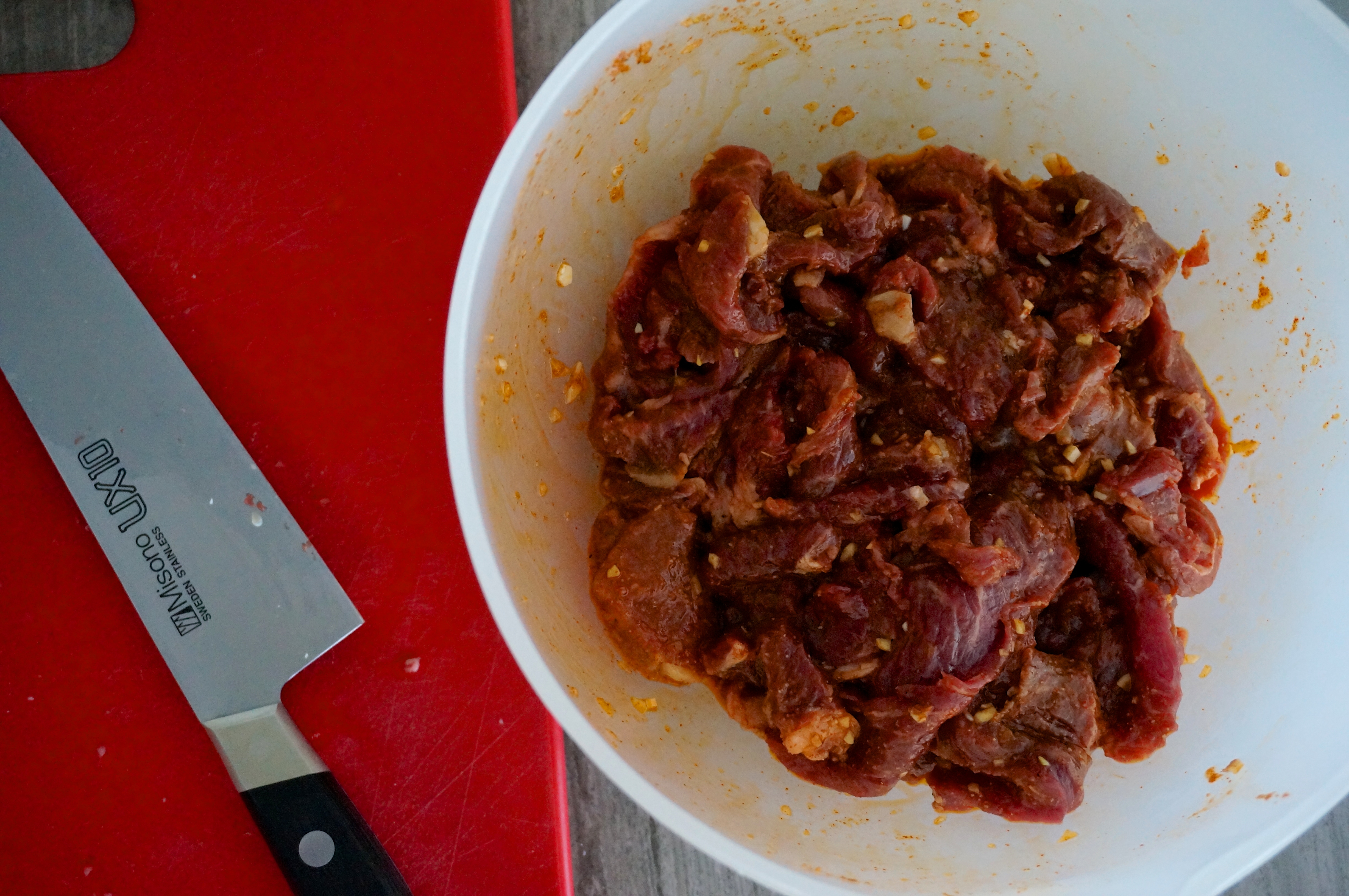
In a medium bowl, mix together cumin, coriander, paprika, garlic, vinegar, salt, pepper, and 1½ Tbsp. oil in a large bowl. Add lamb and toss to coat. Cover and let it marinade in the fridge for at least two hours, or up to 24 hours.

Whisk yogurt, lemon zest, and 1 Tbsp. water in a small bowl; season with salt and pepper. Set aside.

Heat 2 Tbsp. olive oil in a large skillet over medium-high heat. Working in batches, cook lamb (do not overcrowd in pan), tossing occasionally, until browned, about 3 minutes per batch; transfer to a plate with a slotted spoon.

Add onion to skillet and cook, stirring often, until beginning to brown and soften, about 4 minutes. Add ½ cup water; season with salt and pepper and cook, stirring occasionally, until onion is tender and water is almost completely evaporated, about 4 minutes. Return lamb to skillet and toss to combine.

Serve lamb topped with yogurt, pomegranate seeds, pistachios, and herbs.

The Perfect Roast Chicken

DSC02221

I am not a perfectionist. I never have been. Yes, it’s true that I can be a control freak, but that’s because I want things done in a certain way, not necessarily to be perfect. If you’ve ever worked with me in the kitchen, you know what I mean (and you have sworn never to set foot in a kitchen where I am cooking again). I’ve always believed that the amount of resources necessary to achieve that last sliver of perfection are proportionately much larger than the potential benefits gained.

DSC02177

So, in my work and my cooking, I’ve always believed that really good is as good as perfect. A few rough edges here and there add character. Especially when it comes to food. I’d rather spend my energy trying new recipes or heck, enjoying the food I made, than chasing the perfect crust or the quintessential balance of flavors.

But once in a while, perfection will just land in your lap, like a gift from the heavens. That’s the case with this recipe for the perfect roast chicken. It comes from the people who actually do look for perfection, experimenting with recipes again and again until they get them, well, perfect. I’m talking about the team behind Cooks Illustrated and America’s Test Kitchen. I’ll admit, sometimes I think they fall short of their goals. But in this case, they reached the summit of chicken-y perfection.

DSC02206

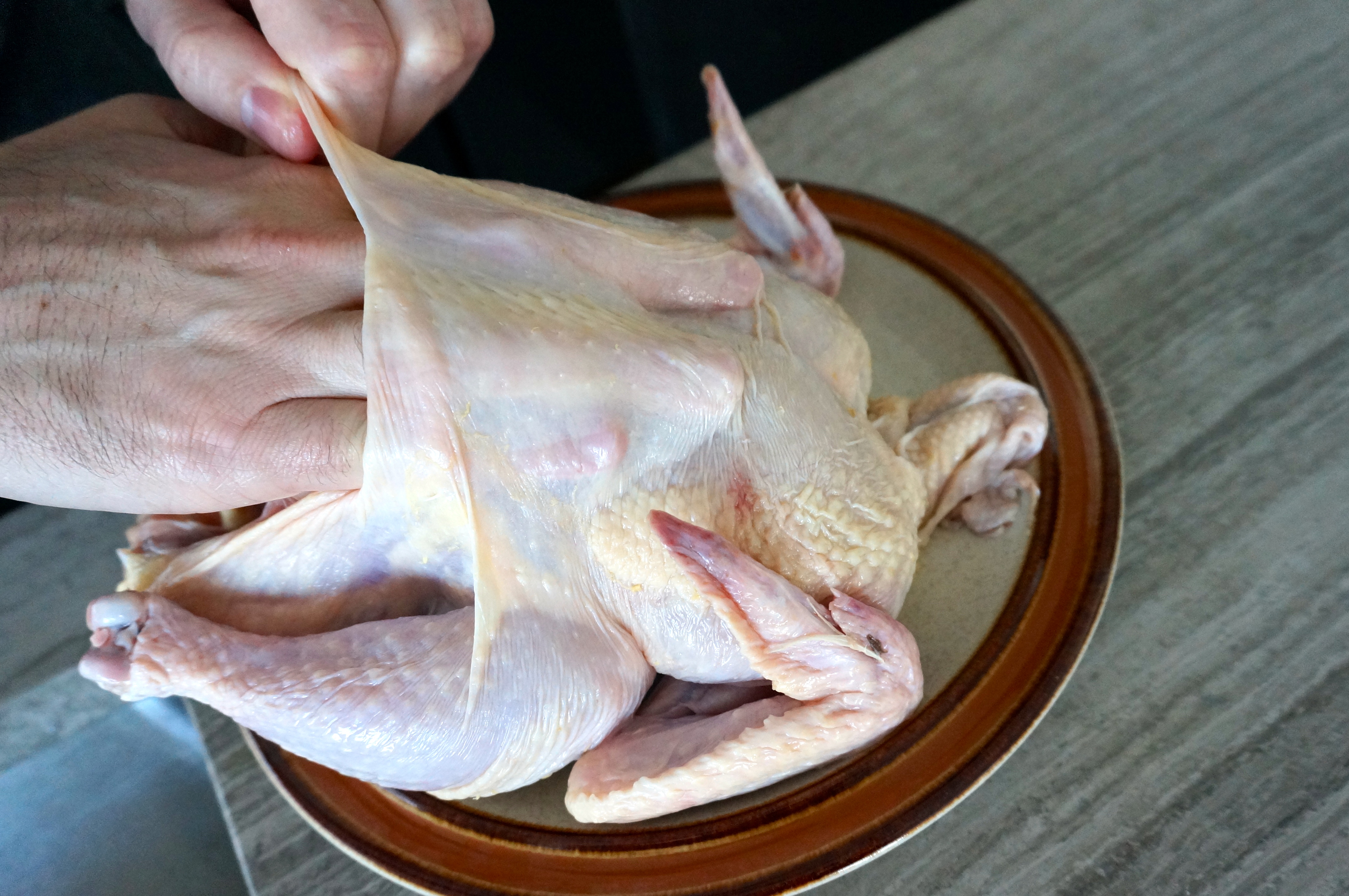
This isn’t a tough recipe, but it does require some planning. The chicken really needs to sit in the fridge for at least 12 hours, even better if it’s a full 24 hours. So, the night before you will be roasting it, you’ll need to prep it. It’s not tough. It’s a little icky at first (it involves separating the skin from the meat with your fingers) but after the first time, you’ll get used to it.

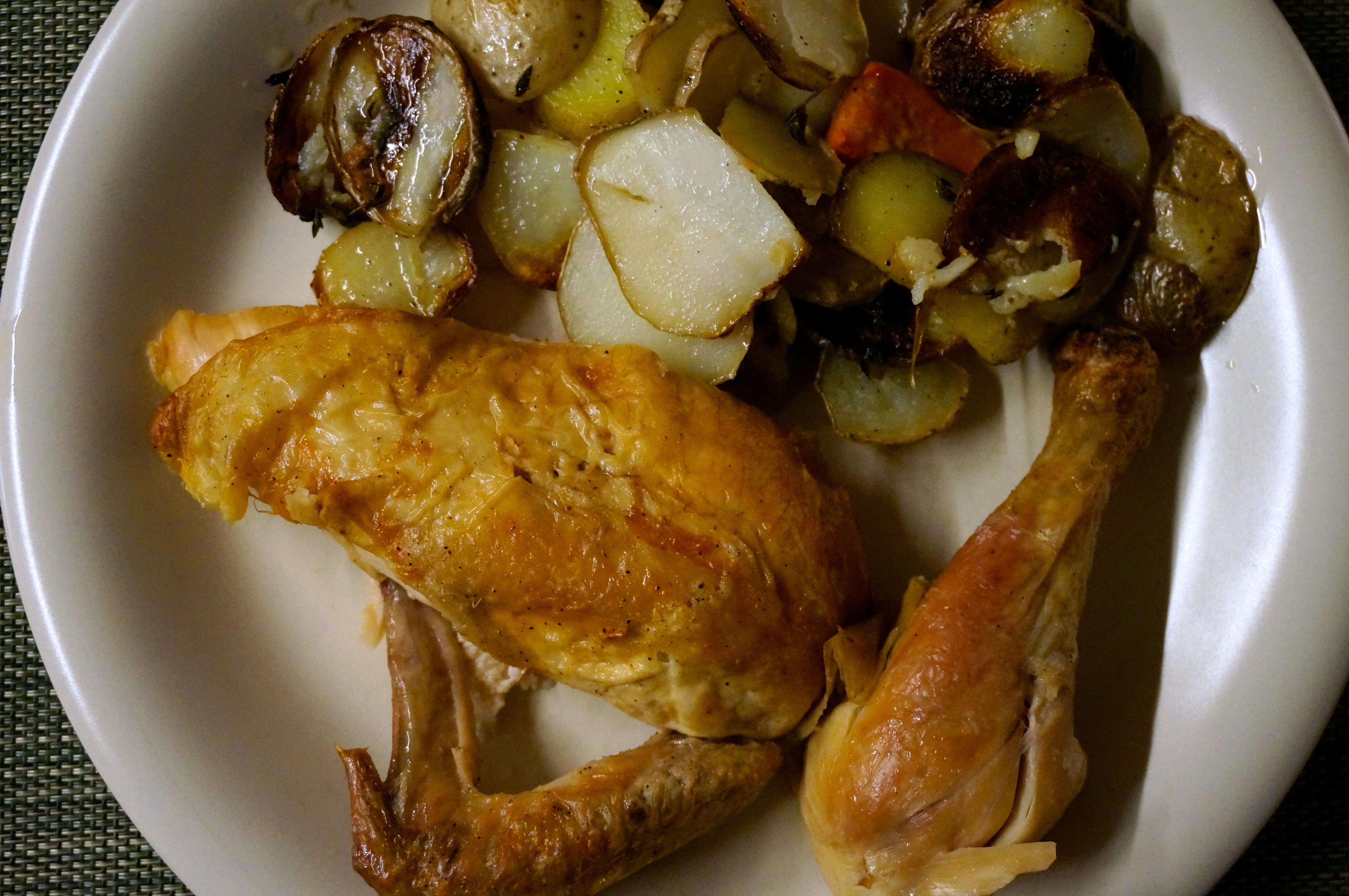
But here is the best part. The chicken comes out perfect. Every. Single. Time. The skin is unbelievably crisp and crackly, without even a hint of fat underneath it. The meat is incredibly juicy. And the potatoes and carrots that have been roasting in chicken fat almost outshine the chicken itself.

I’m not a perfectionist. But thank god other people are. Without them, we wouldn’t have this recipe for the perfect roast chicken.

DSC02228

The Perfect Roast Chicken – Slightly adapted from America’s Test Kitchen

Ingredients:

1 chicken (3.5-4 lbs)
3/4 tablespoon table salt
1 teaspoon baking powder
1/2 teaspoon black pepper
3 medium potatoes
2 carrots
1/2 teaspoon table salt
1 tablespoon canola oil
1 tablespoon fresh thyme leaves

Directions:

Pat dry the chicken, inside and out. Using a sharp paring knife, cut four slits along the back of the bird.

DSC02180

Using your fingers, carefully loosen the skin from the breasts, thighs, and legs. Start by inserting your fingertips under the skin from the large cavity side. Keep moving your fingers side to side moving down the breast towards the neck. Move all the way to the leg and thighs and loosen as much of the skin as you can, being careful not to tear it.

DSC02182

Using the tip of the sharp paring knife, poke the skin of the chicken about 20 times. Do that all around, including the back, the legs and the thighs.

DSC02191

Tuck the wing tips under the bird.

DSC02195

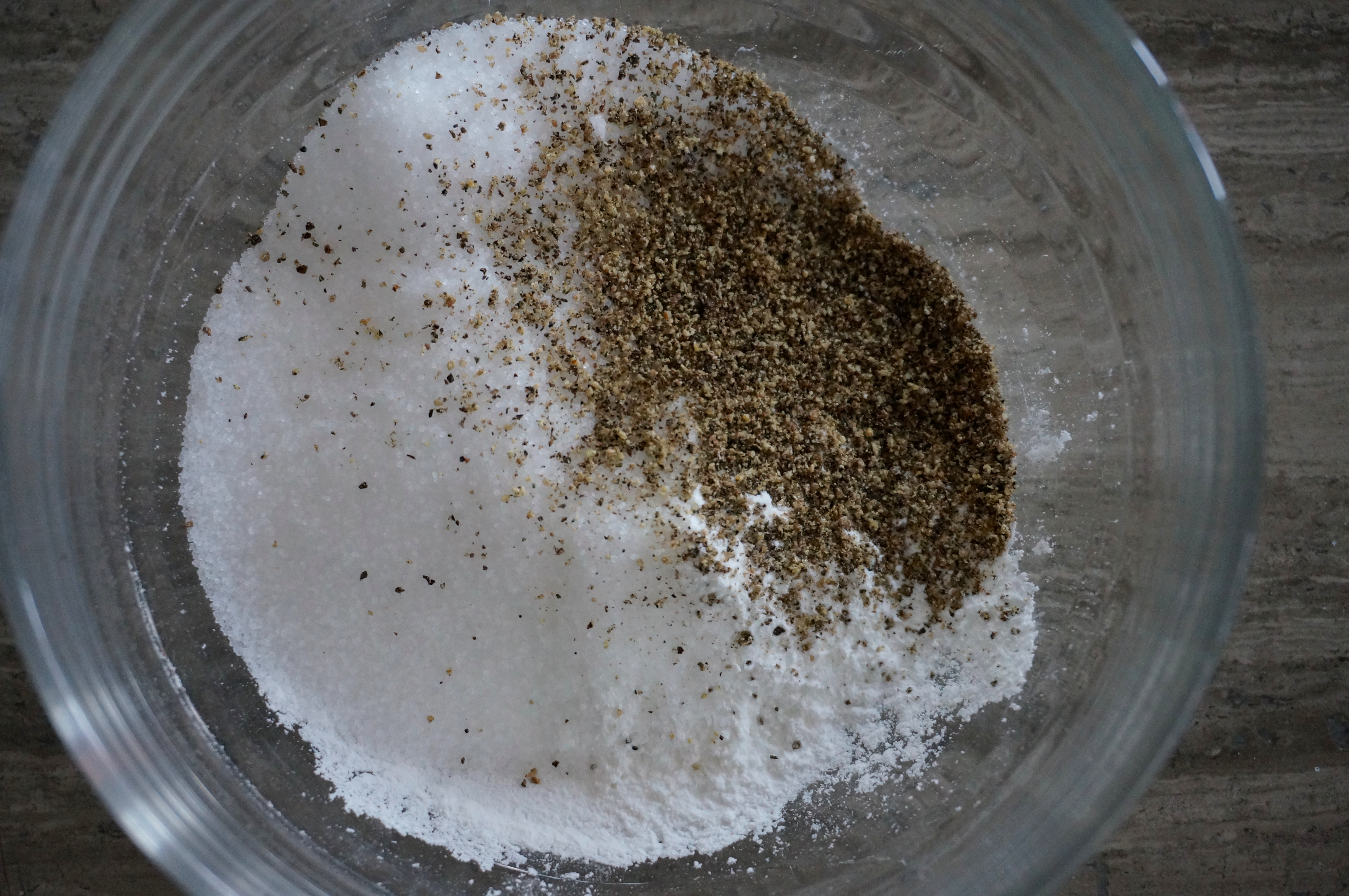
In a small bowl, whisk together the salt, baking powder, and black pepper. Rub the mixture all over the chicken (over the skin; don’t rub the mixture under the skin). Make sure you rub it on the entire skin, including, the back, wings, legs, and thighs.

DSC02197

Place on a rack over a roasting pan and set in the fridge, uncovered for at least 12 hours, preferably 24 hours.

DSC02204

The next day, peel potatoes and carrots and slice in 1/4 inch slices. Mix with oil, salt and thyme.

Preheat the oven to 450º F. Put heavy duty foil in bottom of roasting pan. Spread potatoes and carrots evenly. Make sure you have enough potato and carrot slices to cover the bottom of the roasting pan.

When the oven is hot, flip the chicken breast-side down and roast on a rack on top of the roasting pan with the potatoes and carrots for 25 minutes.

DSC02217

Flip the chicken breast-side up. Roast for an additional 20 minutes.

Raise the heat to 500º F. Continue roasting another 10-15 minutes, until a thermometer inserted in the thickest part of the thigh registers 160º F.

Remove from the oven and let chicken rest for 5-10 minutes before carving. Serve alongside roasted potatoes and carrots.

Roasted Broccoli with Anchovies and Black Garlic

DSC02299

I guess I know that a once obscure food item has gone mainstream when I can find it at my corner grocery store, right in the produce aisle. I’m talking about black garlic, a onetime rare delicacy that I am hoping will continue its trend to easy access (In addition to our corner store, I also found it at Trader Joe’s and I’m sure it’s available at Whole Foods). Black garlic is regular garlic that has been aged in a hot environment (often referred to as “fermentation,” though the term is under dispute) over several weeks until it turns coal black. Each clove is soft and slightly sticky, almost jelly-like, with a taste that’s sweet with tones of tarragon and molasses, but still clinging to its mellow garlic flavor. It’s delicious, versatile (it stays good for a long time), and incredibly addictive.

DSC02303

A few weeks ago I was putting together dinner for us and I decided to come up with a new dressing for roasted broccoli, instead of the usual lemon zest, parmesan, and olive oil that I use. I had some leftover anchovies packed in oil and a head of half-used black garlic and I thought, salty and sweet, all I need is some fat and some acid to make the perfect dressing. So, I experimented a little and ended up with this recipe. It makes for an extremely satisfying side dish, one that would probably overwhelm any main dish you pair it with, so choose something simple, like grilled chicken or tuna steaks (as we did in the photo below).

DSC02320

Roasted Broccoli with Anchovies and Black Garlic

Makes 2-3 servings

Ingredients:

12 oz (350 g) of fresh broccoli florets (from three broccoli stems)
1½ tablespoon olive oil
freshly ground black pepper
4-5 anchovy fillets packed in olive oil, drained and chopped into small pieces
2 tablespoons olive oil
1 tablespoon freshly squeezed lemon juice
4-5 cloves black garlic, sliced into thin slices
½ tablespoon balsamic vinegar

Directions:

Preheat oven at 425º F. In a large bowl, toss broccoli, 1½ tablespoon olive oil, and freshly ground pepper (do not add salt to the broccoli). Spread on a baking sheet and roast for about 20 minutes, tossing once halfway through, until the broccoli starts to turn dark brown at the edges.

Meanwhile, make the dressing. In a small bowl combine the rest of the ingredients and whisk with a fork until combined. As soon as the broccoli is finished roasting, place it in a heatproof bowl, add the dressing and toss well. Serve immediately.

Gluten-free, Dairy-free Chocolate Orange Cake

DSC02255

This is what my cookbooks look like. Whenever I buy a new one I go through it and mark any recipe that looks like something I’d want to try. I like to use these nifty Post-it bookmarks that are clear where they attach to the page so that they don’t cover anything. As you can see from the photo (and this is only a small sample of the cookbooks I have), I end up with a lot of recipes that I want to try out. And this doesn’t include recipes from magazines and blogs, which I collect using the fantastic Paprika recipe manager app.
DSC02277

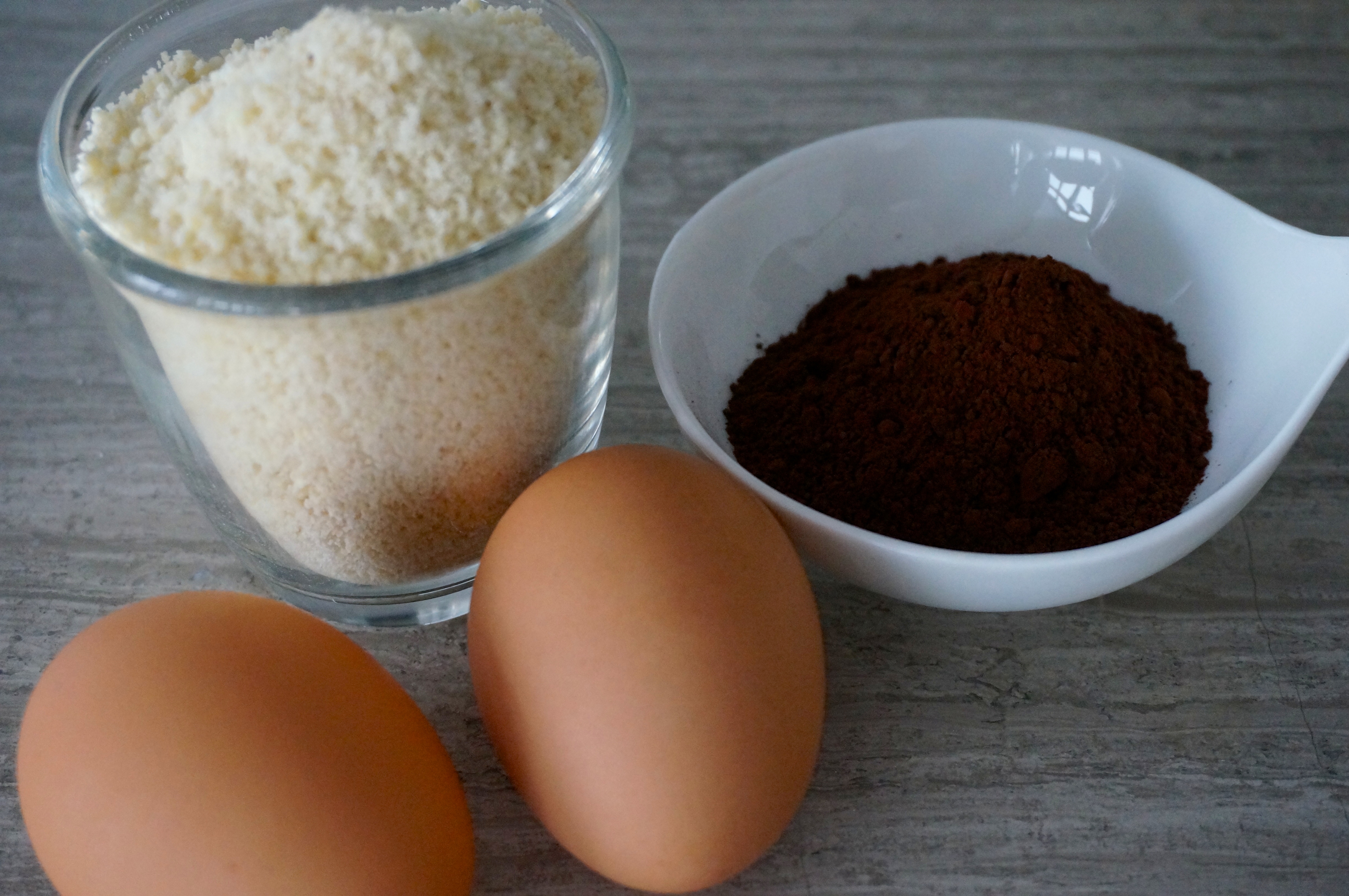
To make a long story short, I really shouldn’t be adding to my collection of recipes to try. But the other day I was reading a newspaper from back home online, when at the bottom of the page I noticed the title of a recipe: Incredibly Light Chocolate Orange Cake (without Flour).  I was intrigued. Chocolate and orange are one of my favorite flavor combinations (here’s looking at you, irresistible orangettes!). A quick look at the ingredient list revealed ground almonds as the substitute for flour and boiled, whole oranges as the substitute for butter. I was beyond intrigued. I had to try it.

DSC02240

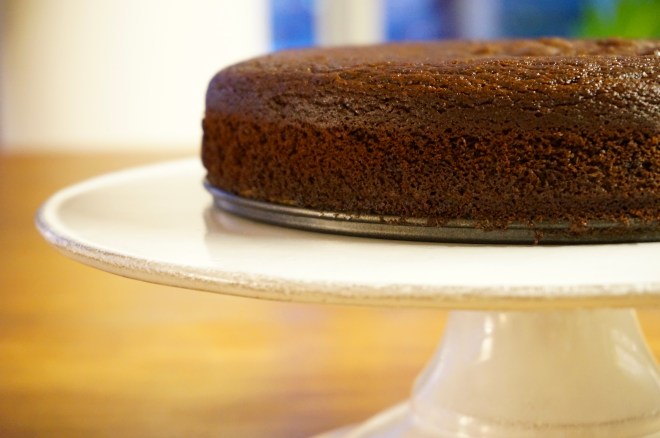
The result was actually very interesting. A moist cake with a distinct chocolate taste but redolent with aromas of orange. I say aromas because the presence of orange in this cake goes beyond what you would get if you used only orange juice. Since it incorporates the entire fruit, you get the sweet and tangy flavor of the orange segments, the mellow bitterness of the pith, and the sharp taste of the orange oil from the rind. All together, it creates a not-too-sweet cake that begs for another bite, if only to decipher the complex combination of tastes hitting your tongue at the same time.

DSC02262

I know this post seems to come a day late, given that yesterday was Valentine’s day. But Steve and I don’t really do much on Valentine’s day, a day we feel ambivalent about. Back in my single days, I used to hold a dinner party for all my single friends, making beef bourguignon and a chocolate torte, all of us toasting to our singledom, in defiance of this silly holiday that taunted us.

Now that I think about it, given the bitter and sweet flavor combinations of this cake, it would perhaps make a perfect Valentine’s day cake, for both those in celebration of the day and those who don’t like it.

DSC02288

Gluten-free, Dairy-free Chocolate Orange Cake – Translated and slightly adapted from Phileleftheros

Ingredients:

2 small oranges, preferably organic/unsprayed (about 12 oz / 345 g)
2 tablespoons orange liqueur, like Grand Marnier
1 ½ teaspoon baking powder
½ teaspoon baking soda
½ cup unsweetened cocoa (2 oz / 55 g)
1 ¼ cups sugar (7 ¾ oz / 250 g)
2 cups ground almonds (7 oz / 200 g)
pinch of salt
6 large eggs

Directions:

Preheat the oven at 350º F (180º C). Lightly grease the bottom and sides of a springform 8″ (20 cm) cake pan. Cover the bottom of the pan with parchment paper.

Wash the oranges and place them in a medium-sized pot. Cover them with cold water and heat over medium-high heat until they come to a boil. Reduce the heat to low, cover, and let simmer for about 1 1/2 to 2 hours. Drain oranges and let cool. (Oranges can be boiled up to two days in advance and kept in the fridge)

Roughly chop the oranges, remove any pits, and place in the bowl of a food processor. Add liqueur and process until no pieces of orange are left. The mixture should be a relatively smooth pulp with small pieces of rind (it doesn’t have to become completely smooth). Add the baking powder, baking soda, cocoa, sugar, almonds, and a pinch of salt. Process until combined.

Add eggs one at a time, processing until each egg is combined. Pour mixture in prepared pan and bake for about 60 minutes, until a cake tester inserted in the middle comes out clean. Immediately run a sharp knife around the edge of the pan and place the pan on a cooling rack. Let cake cool completely in the pan.

Thai Coconut Shrimp Soup

DSC02230

So do we have a final verdict on coconut? Is it healthy or unhealthy? Is it good for you or does it clog your arteries? It seems like coconut is one of those foods that somehow managed to do a complete one-eighty a few years ago. I remember the warnings about how it was full of saturated fat, second only to palm oil, and how it should be completely avoided. Then, coconut hired the best PR person in the world and became the darling of the health nut world.

DSC01531

I choose to believe that it’s good for you, for no other reason than my total love for anything coconut. I’ve only recently experimented with coconut oil as a substitute for butter (with some good results) but I’ve been using coconut milk for years. And given that it’s a main ingredient in Thai cuisine, I could never give it up. Besides, who can resist a frosted, coconut cake?

DSC01535

So, when Bon Appétit published a recipe for Tom Kha Gai, a chicken coconut soup, that seemed simple to make and promised to be delicious, I quickly bookmarked it and prepared it at the first chance I got. Unfortunately, it was terrible. The broth was bland, the chicken was tough, and there was a taste of chicken fat permeating everything that made it hard to eat.

DSC01538

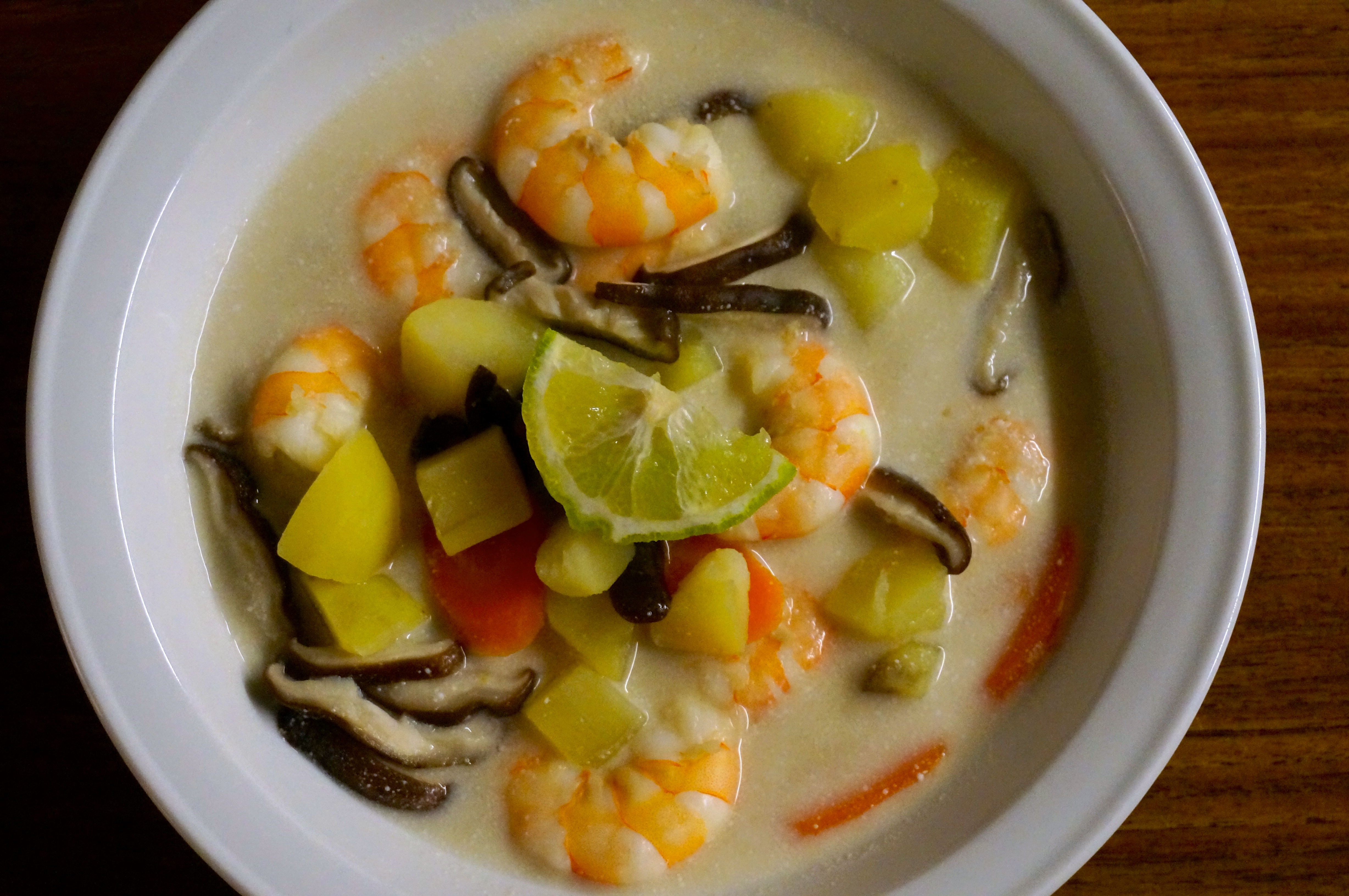
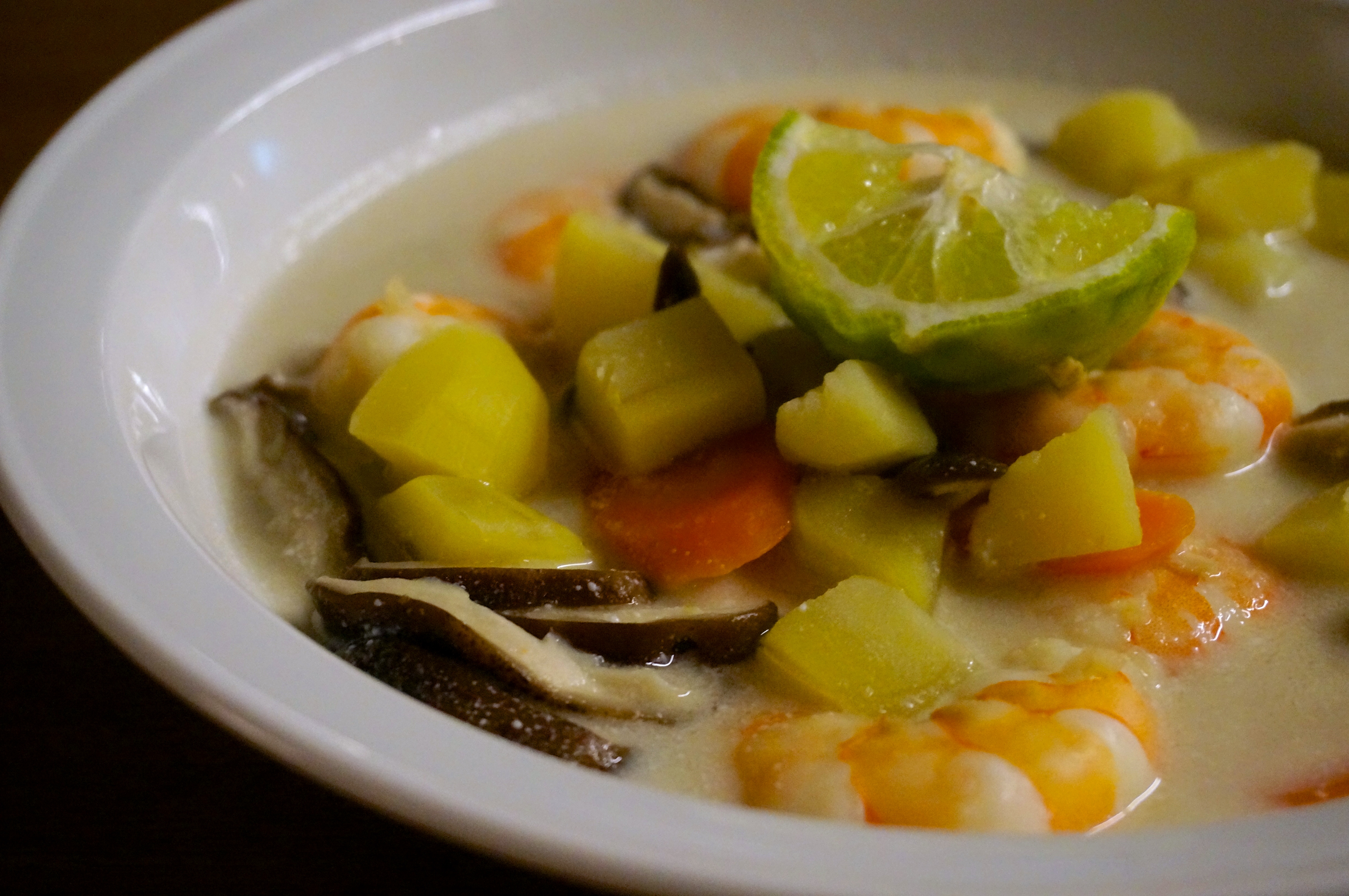
So, much like I did with the Caramel Garlic Chicken recipe, I set out to improve this one as well. I got rid of the chicken and used shrimp. I infused the broth with shrimp shells and let it simmer longer than the original recipe. And to add both flavor and substance to the dish, I added some carrots and potatoes, similar to what you’d get in a massaman curry.

I am proud to say that the results were lip-smacking good. Steve almost licked his bowl clean. And yes, the recipe uses coconut milk. Try it. I hear it’s good for you.

DSC02237

Thai Coconut Shrimp Soup – Inspired by the recipe for Tom Kha Gai in Bon Appétit

Makes 2-3 servings

Ingredients:

1 1” piece ginger, peeled
5 kaffir lime leaves (or 1/2 Tbsp. lime zest and 2 Tbsp lime juice)
3 cups low-sodium chicken broth
1 lb shell-on raw shrimp (16-20 count)
4 oz. shiitake, oyster, or maitake mushrooms, stemmed, caps cut into 1/4″ slices
3 small potatoes, peeled and cut into 1/2″ cubes
1 small carrot, peeled and sliced diagonally into 1/4″ slices
1 cup coconut milk
1 Tbsp. fish sauce (such as nam pla or nuoc nam)
1 tsp. sugar
1 stalk fresh lemongrass, tough outer layers removed
juice of half a lime
lime wedges (for serving)
Chili oil, sriracha, fresh cilantro (optional)

Directions:

Remove the shells from the shrimp and reserve half of the shells (discard the other half of the shells). Using the back of a knife, smash lemongrass and ginger; cut lemongrass into 4” pieces. Bring lemongrass, ginger, kaffir lime leaves, reserved shrimp shells, and broth to a boil in a large saucepan. Reduce heat and simmer until flavors are melded, 13–15 minutes. Strain broth and return to saucepan; discard solids.

Add mushrooms, potatoes, and carrot and return to a boil. Reduce heat and simmer briskly until potatoes are cooked, about 15 minutes. Add shrimp and continue to simmer until shrimp have turned pink and are cooked, about another 3-4 minutes. Mix in coconut milk, fish sauce, and sugar and gently reheat soup. Add juice of half a lime and stir (omit this if you used lime juice instead of kaffir lime leaves).

Divide soup among bowls. Serve with lime wedges. If you want, you can also top soup with chili oil, sriracha sauce, or cilantro.


Dried Apricot and Pistachio Ice Cream

DSC01362

So, apparently, the Super Bowl is happening in New York tomorrow. Yeah, that’s how much Steve and I follow football. To our defense, the Super Bowl is technically in New Jersey, not in New York city. But honestly, it could be two blocks away and we still wouldn’t know who’s playing in it. I saw the team names by accident today, while reading an article in the Styles section of the New York Times, so I blurted them out at lunch with a friend, making it seem like I always knew it was the Denver Broncos and the Seattle Seahawks (see how I did that?). They both looked at me with a look that said Who are you? so I told them the truth.

DSC01369

More pressing around here has been the weather. Days and days of below freezing temperatures have made even me, an avid winter lover, complain about the cold. You know it’s getting too cold when the East River fills with big, flat chunks of ice, floating down from upstate New York like mini icebergs, creating delays for the ferry. When you’re on a rickety old ferry boat, floating over a river that is so cold it freezes, the sound of thumps and scraping noises that it makes as it passes over sheets of ice can be very disconcerting.

DSC01391

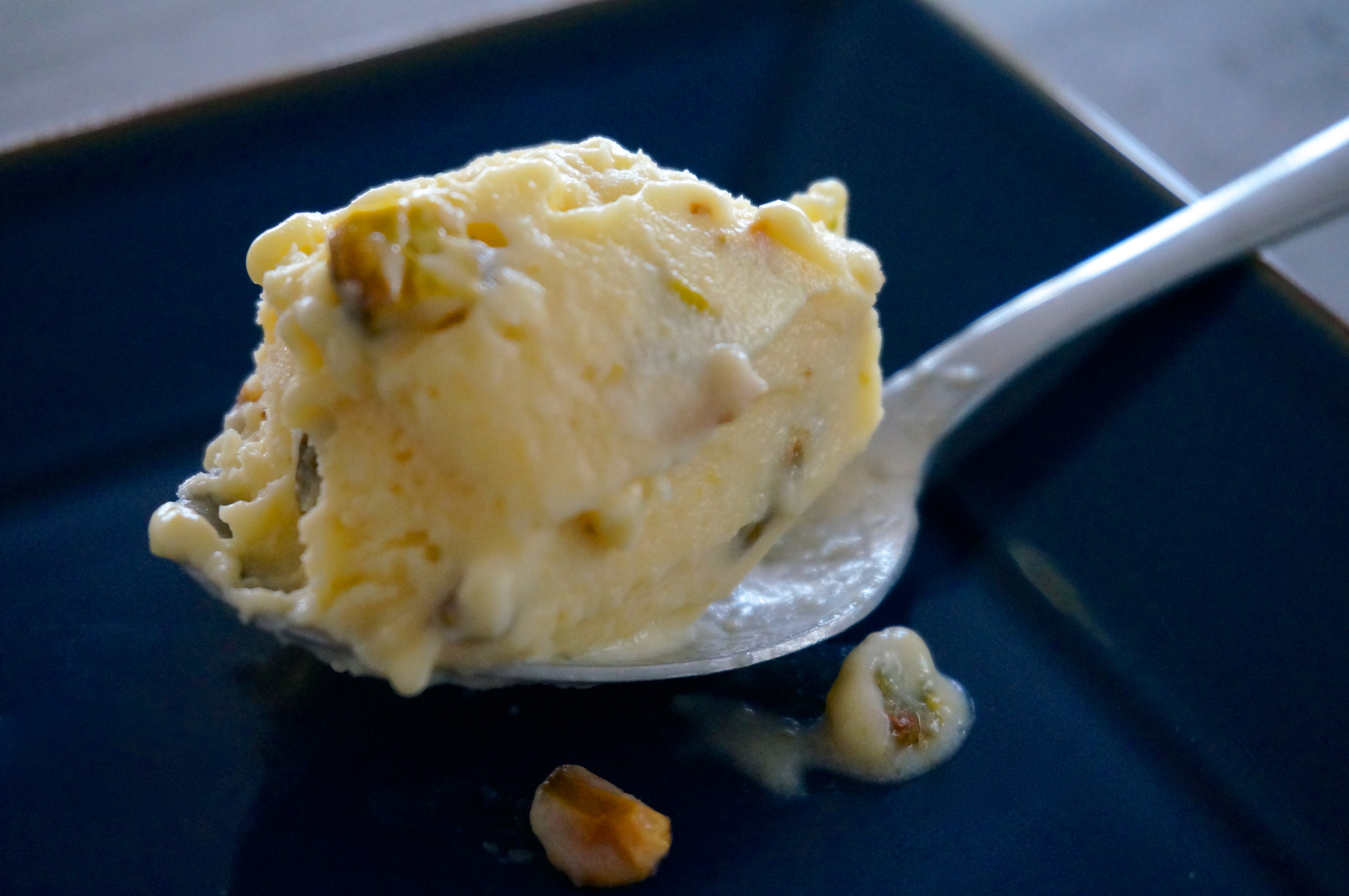
So, it might seem strange that I am posting an ice cream recipe today but it’s really a way to cheat and give yourself a taste of summer. No fresh fruit around? No problem. Ice cream genius David Lebovitz has the solution. Take some dried apricots and reconstitute them with the help of some sweet wine and blend them into an ice cream. Given what’s around this time of hear, it’s really the best you can do.

Oh, and enjoy the Super Bowl. Go <insert you favorite team name here>!!

Dried Apricot and Pistachio Ice Cream – Slightly adapted from Perfect Scoop: Ice Creams, Sorbets, Granitas, and Sweet Accompaniments

Makes about 3 cups (750 ml)

Ingredients:

5 oz (140 g) dried apricots, quartered
3/4 cup (180 ml) sweet white wine (or dry white wine with 1 tablespoon of sugar blended in)
1/2 cup (70 g) shelled pistachio nuts (preferably unsalted)
2/3 cup (130 g) sugar
1 cup (250 ml) whole milk
1 cup (250 ml) heavy cream
a few drops of freshly squeezed lemon juice

Directions:

In a small saucepan, warm the apricot pieces with the wine. Simmer for 5 minutes, cover, remove from heat, and let stand for 1 hour. Meanwhile, coarsely chop the pistachios.

Purée the apricots with the wine in a blender along with the sugar, milk, cream, and lemon juice until smooth.

Chill the mixture in the refrigerator and then freeze in your ice cream maker according to the manufacturer’s instructions. During the last minute of churning, add the chopped pistachio nuts, or layer them as you scoop the ice cream into the container where you will keep it.

Caramel Garlic Chicken

DSC02151

One of the gifts Steve gave me for Christmas was a book called “The Flavor Bible: The Essential Guide to Culinary Creativity, Based on the Wisdom of America’s Most Imaginative Chefs.” Unlike a cookbook, this is more of a reference book. Let’s say you found some sorrel in your local market and you’ve never cooked with it before. You don’t even know what it tastes like. A quick look at the book will tell you that sorrel goes with lentils, fish, and eggs but that it should be avoided in a salad. Or that sorrel, nutmeg, and ricotta cheese is a great combination.

DSC02158

I’d like to think that I have a really good appreciation for flavor combinations. Often when I cook without a recipe, I can actually imagine how different things will taste together and know what I should add to a dish to make it better without actually tasting it. Or at least I think I do. There are times when my flavor experiments fail, but others when they are really successful (like my broccoli, anchovy, black garlic concoction that ended up being incredibly addictive; I’m working on a recipe and will post soon).

DSC02165

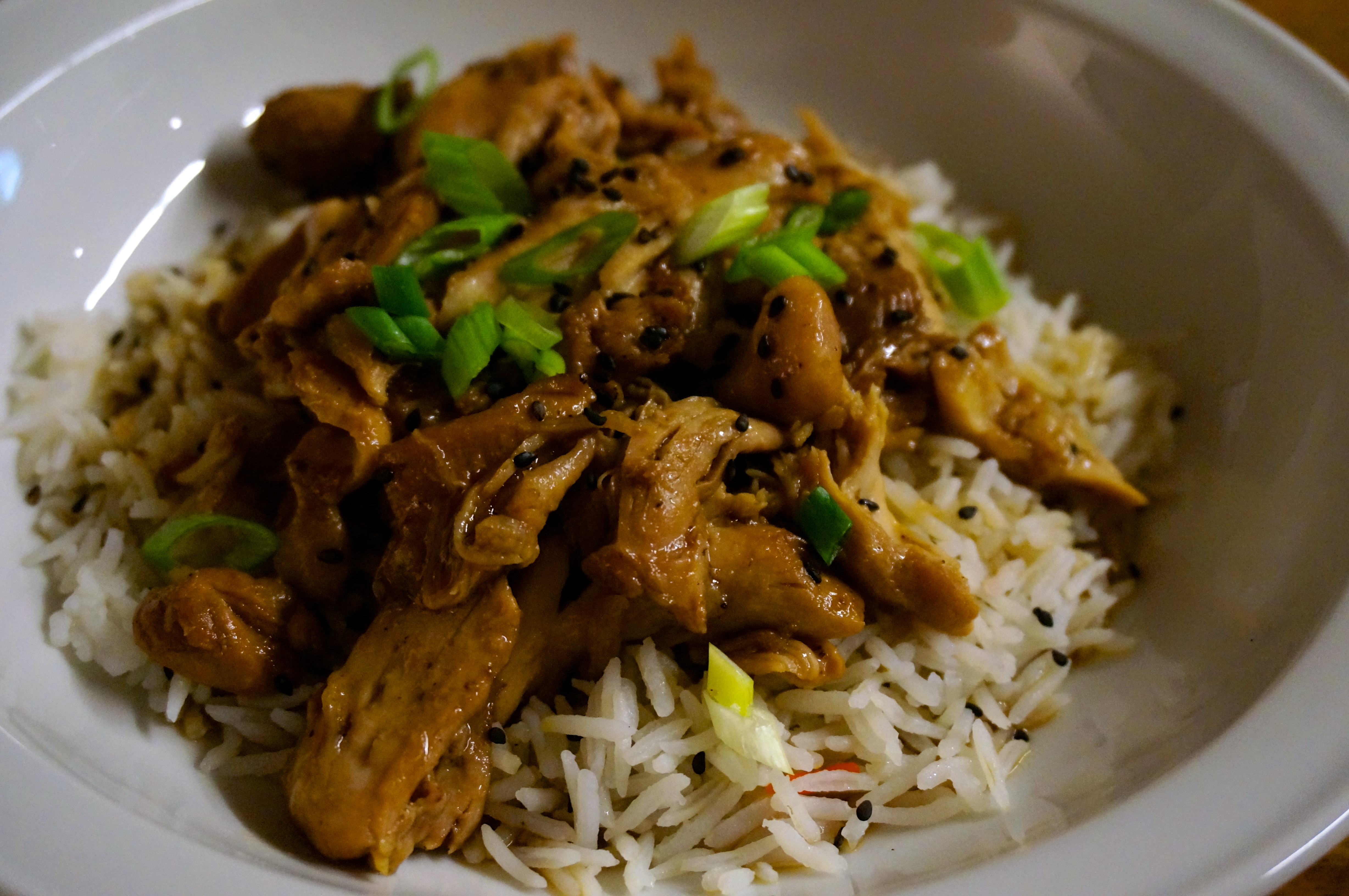
So, when I saw a recipe for Caramel Chicken in Bon Appétit I was instantly intrigued and suspicious. I just couldn’t imagine those two flavors working together, which only made me more curious. So, I tried it and I was amazed at how well the recipe worked. Though, to be fair, the caramel here is very subtle. It’s more of a sour/salty sauce with caramel undertones. But it works. The problem with the original recipe was that it resulted in tough pieces of chicken covered in unappetizing fatty skin. So, I made a few changes and tried it again. This time, not only was the taste amazing, but the chicken was incredibly tender, with no fatty skin to distract from its caramel goodness. And I realized that the recipe name (Caramel Chicken) omitted a major component of the dish: the slow cooked garlic cloves that melt in your mouth and deliver the much needed depth to this dish. So, in addition to modifying the recipe, I adjusted its name.

Try it. You won’t be disappointed.

DSC02154

Caramel Garlic Chicken – Adapted from Bon Appétit

Makes 4 servings

Ingredients:

2 tablespoons vegetable oil
2 pounds boneless, skinless chicken thighs
Kosher salt
freshly ground pepper
8 garlic cloves, peeled and lightly crushed with back of knife
⅓ cup (packed) light brown sugar
¼ cup (or more) unseasoned rice vinegar
3 slices ¼”-thick slices peeled ginger
1 cup chicken broth
¼ cup soy sauce
black sesame seeds (optional)
2 scallions, thinly sliced
Cooked white rice (for serving)

Directions:

Preheat oven at 325° F.

Heat oil in a large wide oven-safe pot over medium-high heat. Season chicken thighs with salt and pepper and add three or four thighs in the pot. The thighs should not be crowded. Cook for 10-15 seconds on one side, turn and cook for another 10-15 seconds on second side (the thighs will not brown; they will just start to turn white). Remove thighs from pot and transfer to a plate. Don’t worry if a little bit of meat gets stuck at the bottom of the pot. Just leave it in there. Repeat the process for all the thighs.

Add garlic to pot and cook, stirring often, until golden, about 2 minutes; transfer to plate with chicken. Pour off fat from pot.

Return pot to medium-high heat and add ½ cup water, scraping up browned bits of chicken. Add brown sugar; stir to dissolve, then cook, stirring, until mixture thickens and turns a deep amber color, about 4 minutes. Carefully add vinegar (it may bubble up; sugar will crystallize); stir to dissolve sugar.

Add ginger, broth, and soy sauce, then add chicken and garlic. Bring to a boil, cover and place in oven. Cook for one hour, until thighs are fully cooked.

Remove thighs and garlic from the pot and transfer to a plate. Using two forks, separate thighs in bite-sized pieces. Discard ginger slices.

Place the pot on high heat and bring cooking liquid to a boil. Cook until slightly thickened, about 10-12 minutes. Return chicken and garlic to pot; turn to coat.

Serve over plain white rice and top with black sesame seeds (optional) and chopped scallions.