Pickled Carrots

DSC04126

There is a Greek Orthodox holiday called clean Monday (kathara deftera). It’s the end of carnival (the Sunday right before it, when everyone dresses up in costumes, much like Halloween) and the beginning of the great lent before Easter. Carnival is the last day of being able to eat meat and clean Monday is the first day of fasting. Since it always takes place in the spring, the tradition has always been to go out into the countryside and have a picnic that is all vegetarian.

Even as a kid, I wasn’t that excited by the idea of eating on the hard ground outdoors. But there was one reason for which I really looked forward to clean Monday: the pickles. These weren’t the American variety pickles, in salted brines or heavy on spices. These were pure vinegar, sugar, and water pickles. There were all kinds of vegetables (cauliflower, beets, carrots), all tantalizingly tart and crisp. And there was pickla, a mixture of veggies pickled in a vinegar and mustard sauce that I ate by the spoonful.

I absolutely loved everything pickled, and I still do. This recipe for pickled carrots couldn’t be simpler. It’s a little different than how carrots would have been pickled when I was a kid, but it still has everything I love: bracing sourness, a satisfying amount of sweetness, and an audible crunch.

DSC04128

Pickled Carrots

Note: If you don’t have the right spices, don’t worry. You can use whatever whole spices you have. Experiment with different flavors.

Ingredients:

1 lb carrots peeled, and cut into 1/2″ thick sticks
1 cup white wine vinegar
1 cup water
1/2 cup sugar
1 tablespoon kosher salt
1 teaspoon black peppercorns
1 teaspoon mustard seeds
1 teaspoon fennel seeds
2 cloves garlic, peeled and lightly smashed
2 mason jars or any other glass containers that can withstand boiling water

Directions:

Place carrot sticks in mason jars (don’t pack them too tight; leave room for the brine). Divide peppercorns, mustard seeds, fennel seeds, and garlic between the jars.

In a small saucepan, bring vinegar, water, sugar and salt to a boil, stirring to make sure the sugar and salt dissolve. Carefully pour boiling brine over carrots in mason jars, leaving only about 1/2 inch from top. Let them cool for about 30 minutes, close jars with their lids, and refrigerate.

Pickles are ready to eat after just a few hours but they are best after a day or two. They last in the fridge for at least a couple of weeks.

Honey and Fennel Granola

DSC04109

Surprises aren’t always welcome. And I’m not just talking about bad ones (Surprise! Your appendix burst!). Sometimes even good surprises can be unpleasant. When I was in 7th grade, some of my classmates and I organized a surprise birthday party for a boy who was at the time my best friend. We went to his house while he was away and anxiously waited for him to arrive. When his parents (who were working with us for the surprise) brought him in the door, we yelled “Surprise!“, at which point he immediately burst into tears and ran off. It took his parents 3o minutes to calm him down and bring him back to the party, which ended up being a lot of fun.

I never understood why he reacted that way until four years later, my parents announced to my sister and me that we were going out to dinner. When we got to the restaurant and opened the door, about 50 of our friends from school were there yelling “Surprise!” They had organized the party for both of our birthdays (which are four days apart) with the help of our parents. This was such a wonderful thing that our friends and parents did, but my immediate reaction was to want to turn around and run away. It was too much for me, the unexpected obligation to be at this party, to adjust from a quiet dinner out with my family to a night of dancing with my friends. I got over it after a few minutes, but I finally understood why my 7th grade friend had run away like that when we surprised him.

In food, good surprises are always welcome. In fact, I long for them. Bad surprises are never good (Surprise! That was a glass shard you just chewed on!). But an unexpected ingredient or an unknown cooking technique, they make me deliriously happy.

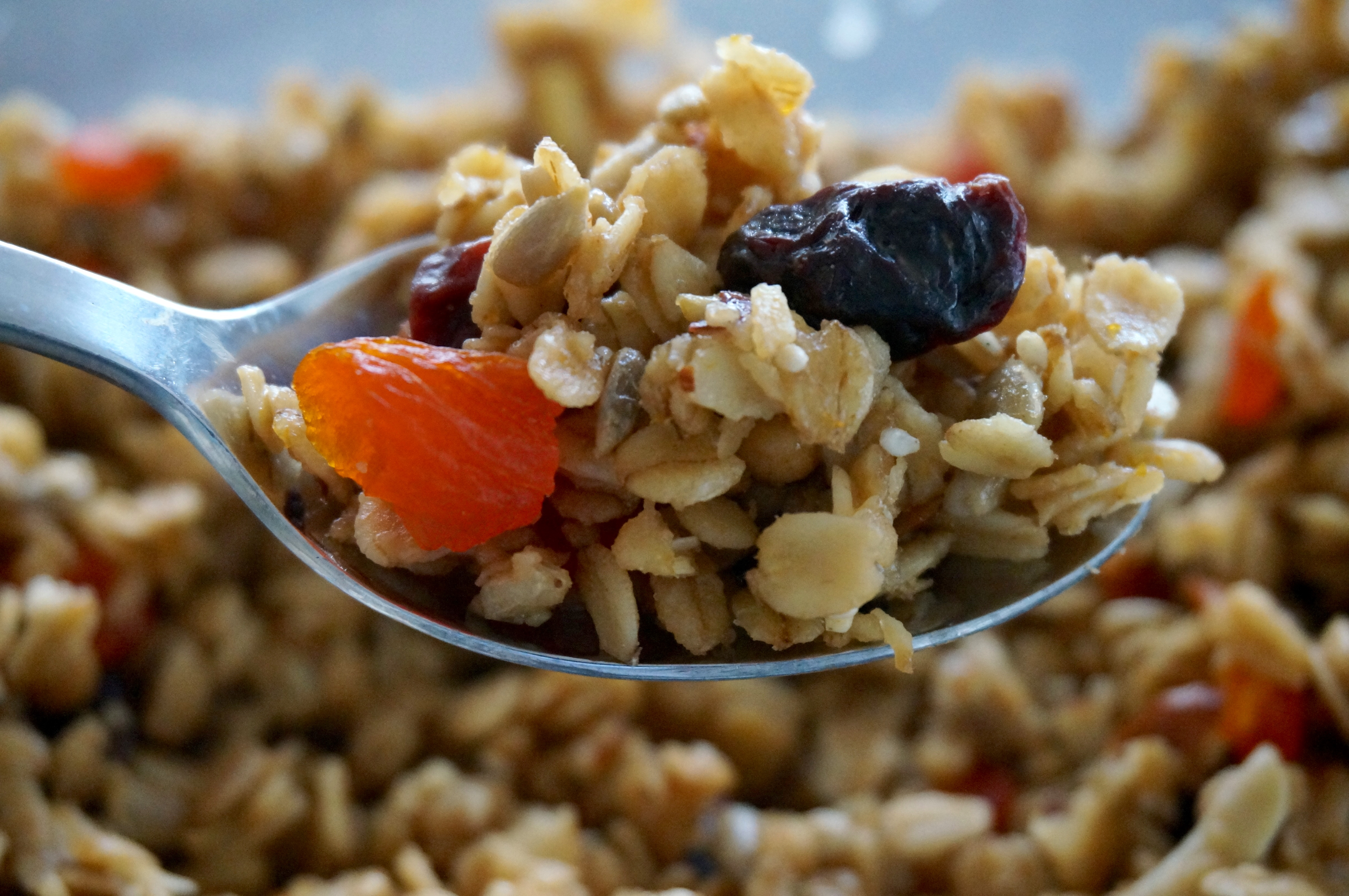
Granola isn’t known for its ability to surprise. But when I made this recipe and we tasted it for the first time, we pursed our lips and nodded in satisfaction. It was unexpected. The fennel and honey combined to make a truly unique flavor, at least for granola. We were surprised. Pleasantly. And we didn’t run away. We dug in for seconds.
DSC04115

Honey and Fennel Granola – From Bon Appétit

Ingredients:

⅓ cup pine nuts
⅓ cup raw sunflower seeds
¼ cup slivered almonds
1 tablespoon sesame seeds
2 teaspoons fennel seeds
½ cup honey
3 tablespoons smooth peanut butter
3 tablespoons vegetable oil
½ teaspoon finely grated orange zest
1 tablespoon fresh orange juice
1 tablespoon vanilla extract
2 cups old-fashioned oats
½ teaspoon kosher salt
½ cup dried apricots, chopped
½ cup sweetened dried cranberries, chopped

Directions:

Preheat oven to 350°. Toast pine nuts, sunflower seeds, almonds, sesame seeds, and fennel seeds on a rimmed baking sheet, tossing occasionally, until lightly golden, 5–7 minutes. Reduce oven temperature to 275°.

Meanwhile, whisk honey, peanut butter, oil, orange zest and juice, and vanilla in a medium bowl until smooth. Toss nuts and seeds, oats, and salt in a large bowl. Pour honey mixture over and gently mix until oat mixture is completely coated.

Spread out on a parchment-lined rimmed baking sheet and bake, stirring halfway through (edges will take on color before center does), until golden brown, 20–25 minutes. Let cool; granola will crisp as it cools. Break up into pieces, then stir in apricots and cranberries.

Do Ahead: Granola can be made 1 week ahead. Store tightly covered at room temperature.

Macadamia and Basil Pesto

DSC04237

On Wednesday night, we took our friend Martine who’s visiting us from France to see “Kinky Boots” on Broadway. It’s a fun show, a real crowdpleaser, and Martine loved it. It was nice to go back to the theater. When we lived in Hell’s Kitchen we used to go very often since we were just a few blocks away from Broadway, but since we moved to Brooklyn, we don’t go that much, which is a shame. I love the theater. It’s such a truly transporting experience (or a soporific one, when you hit the wrong show).

The issue one always has to deal with, when going to a show in New York, is dinner. Since shows start at 8pm (with a few exceptions), most visitors take advantage of the pre-theater dinners at many of the local restaurants. They start at 6pm-6:30pm and they get you out in time for your show. Steve and I, however, would eat at home. We wanted something quick and easy, so we almost always opted for pasta. In the summer, we would make pesto (from a recipe from Steve’s mom, Cora) and freeze it in portions, so that we could have it all year round, including for a pre-theater quick dinner at home.

After a couple of shows, however, we realized that we needed a new plan. You see, Cora’s pesto uses a lot of raw garlic. The first time we ate pasta with pesto and we went to a show, ten minutes into it, we started burping deadly fumes. We could smell each other’s garlic breath and we were sure that so could all the other people around us. After a second show where we exposed people to our garlic breath bombs, we decided to switch dinner ideas.

So, I came up with a different version of a pesto that is without garlic. It still packs a punch, with lemon zest and parmesan, but it’s gentler on the people sitting next to you who may not like to be tear gassed while watching a play.DSC04239

Macadamia and Basil Pesto

Make 1/2 cup pesto, enough for 4 pasta servings

Ingredients:

2 cups loosely packed basil
grated zest of half a lemon
1 cup grated parmesan or pecorino
2 tablespoons olive oil
12 macadamia nuts, toasted in 350° oven for 6-7 minutes, cooled, and roughly chopped
1/4 tsp salt

Directions:

Place everything, except oil in a food processor. Pulse a couple of times to combine. Start the food processor and drizzle oil in while processor is running. Pesto will be thick. Add some hot pasta water to dilute and mix with hot, cooked pasta.

Plum Torte

DSC04175

I spent yesterday preparing for a friend who’s here visiting us for 10 days and another friend who’s visiting us this weekend and the next. When I was little, we lived in a small two-bedroom house (which became a three-bedroom when my parents split one bedroom into two tiny ones, for me and my sister). When people would come visit and stay overnight, they usually took my and my sister’s beds. We were relegated to the living room where we slept on cots (or “camp beds” as we called them). They were uncomfortable and squeaked when you moved, but I didn’t care. I loved having visitors in our house. DSC04152

They brought new life to our family, with their funny stories and different ways. And usually they brought gifts too, for me and my sister. My mom always stressed about having guests stay with us and now as an adult I can understand why. Our house was really small, and where we lived, there was no public transportation. We had one car only and my mother didn’t learn to drive until I was a teenager. But she always made sure our visitors (aunts and uncles, grandparents, cousins) felt welcome and comfortable. She cooked and baked and often made the “special” desserts that she made only on important occasions.DSC04157

I’m not as stressed as my mom was when friends or family visit Steve and me. We are lucky to have extra space and people who visit us can usually take care of themselves in New York city. But just like my mother, I make sure nobody leaves our home hungry. I bake for a couple of days to make sure we have many breakfast options. I make at least two different ice creams for a quick dessert and I plan out at least one big, home cooked dinner at our place.

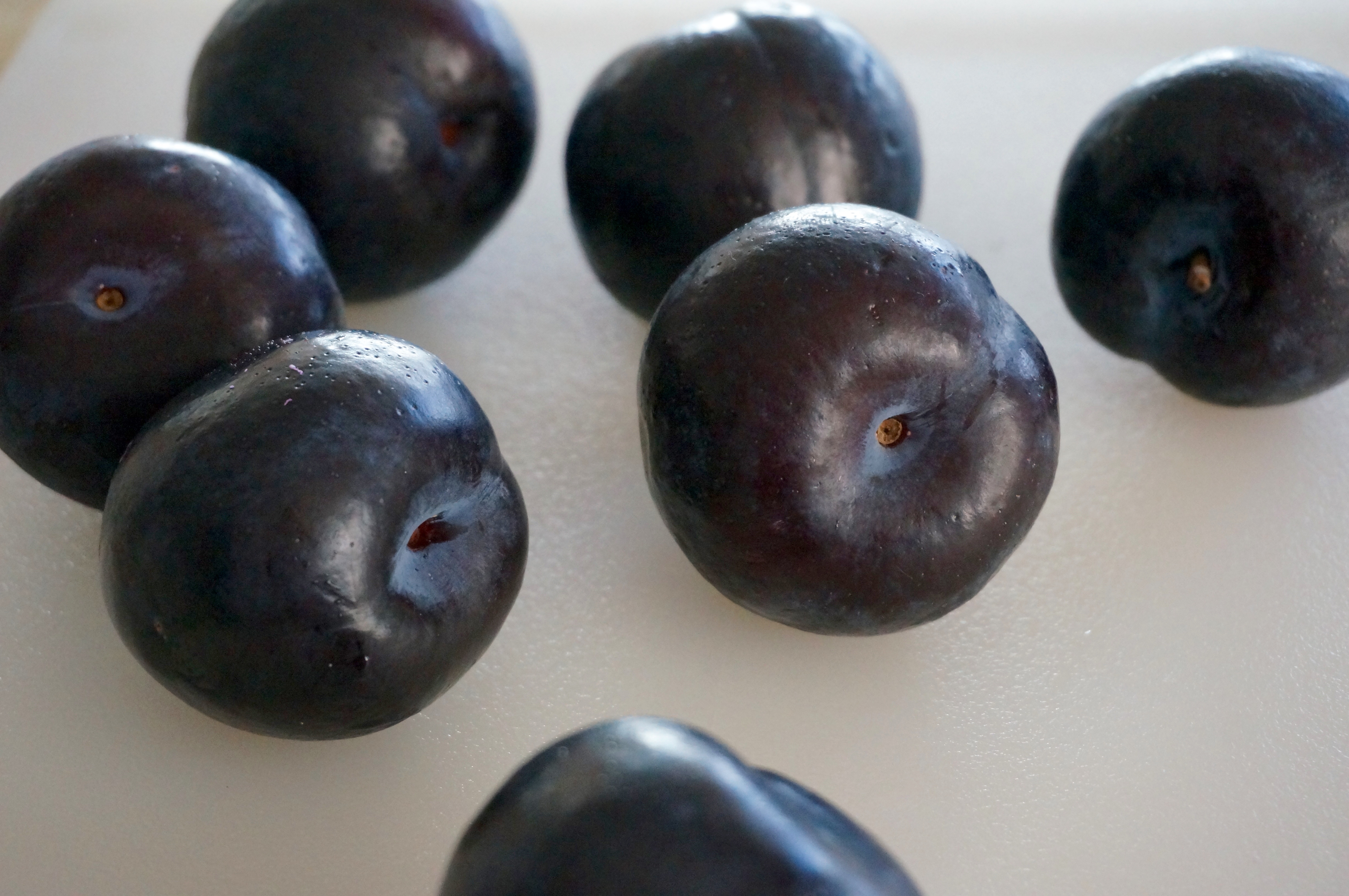
So in anticipation of our friends coming this weekend I made this plum torte. It comes together in 10 minutes and it’s the perfect summer dessert. The plums get covered with the rising batter and they bake slowly, releasing their juices into the buttery cake. I think our friends will be happy at dinner tonight.DSC04168Plum Torte – Adapted from Smitten Kitchen

Ingredients:

2 tablespoons sugar
1/2 teaspoon ground cinnamon (note: if you don’t like cinnamon, substitute with 1/2 tablespoon finely grated lemon zest)
1 cup (125 grams) all-purpose flour
1 teaspoon (5 grams) baking powder (the aluminum-free kind, if you can find it)
Large pinch of salt
1 cup (200 grams) granulated sugar
1/2 cup (115 grams or 8 tablespoons) unsalted butter, softened
2 large eggs
6-7 black plums or 12 small Italian purple plums, halved and pitted (or use pluots, nectarines, or peaches)
2 teaspoons fresh lemon juice

Directions:

Heat over to 350°F. In a small bowl, mix together 2 tablespoons of sugar and 1/2 teaspoon ground cinnamon (or 1/2 tablespoon grated lemon zest). Set aside. Sift or whisk together flour, baking powder and salt in a medium bowl. In a larger bowl, cream butter and sugar together with an electric mixer until fluffy and light in color, about 2-3 minutes. Add the eggs, one at a time and scraping down the bowl, then the dry ingredients, mixing until just combined. Batter will be thick, like frosting.

Spoon batter into an ungreased 9-inch springform pan (you can put parchment paper in bottom for easy removal) and smooth the top. Place the plums, skin side up, all over the batter, covering it. No need to press them into the batter. It will rise and mostly cover them. Sprinkle the top with lemon juice, then with the cinnamon sugar (or lemon zest sugar).

Bake until cake is golden brown and a toothpick inserted into a center part of the cake comes out free of batter, about 50 to 60 minutes. Cool on rack.

Pasta with Peas and Pine Nuts in Minted Yogurt Sauce

DSC04187

For three weeks, Steve and I went completely gluten free. It was meant to be a test, to see if gluten is the source of my joint problems that I’ve had for the last twenty years or so. It’s become almost a joke with my friends. “What’s hurting this week?” I seem to develop tendonitis at the drop of a hat, and in some cases it takes years to go away (or never has, like with my shoulder). I’ve had various blood tests that haven’t shown any severe allergies or auto immune disorders, but we thought that maybe I have an intolerance for gluten that isn’t full blown celiac disease. A friend of ours who does have celiac was a very good source of information on going gluten free. So, we both gave it a try. Here’s what happened in those three weeks:

  1. A blood vessel burst in Steve’s right eye (nothing serious, but it did fill the inside of his eye’s white with red blood)
  2. I developed a weird rash on my upper body and started getting itchy at night
  3. The pain in my hip that I’ve been trying to treat for two years and which had been getting a little better started getting worse
  4. I developed a persistent heartburn

You get the idea. We didn’t feel any different or better by giving up gluten, so we ruled out gluten as a source of problems for me. Though we did joke that all of the things that happened to us during those three weeks were due to a severe gluten deficiency.

Here’s what I did learn by going gluten free for three weeks:

  1. In some ways, it’s relatively easy. You can eat almost everything, except wheat, barley, and rye, which can hide themselves in foods without you realizing it. But because of the gluten free craze, everything is well labeled and most restaurants indicate gluten free dishes on their menus
  2. You also don’t have to give up cake or pancakes or any baked goods like that because there is a fantastic gluten free flour called Cup 4 Cup that works incredibly well. I made a few cakes with it and we couldn’t tell the difference.
  3. I some ways it’s also very hard. If you have celiac disease, then you have to worry about gluten cross-contamination. If someone uses the same knife to cut bread that they use to cut your meat, depending on the severity of your allergy you can get very sick. That’s very hard to control, especially when eating out in restaurants.
  4. Bread is virtually impossible to replicate without gluten. So is pizza crust. All of a sudden, because we couldn’t eat them, bread and pizza because something we craved endlessly. There are gluten free pizzas and breads, but none that we tried came close to the original.
  5. Pasta is a different deal. There are some great pastas made with non-wheat flours (like corn and quinoa) that taste fantastic and even have that pasta chewiness. And since most recipes for pasta (like the one here) use ingredients that are gluten free, you can eat pasta to your heart’s content.

Our gluten free experiment ended last Sunday with white bread toast, slathered with butter and apricot jam. We are considering going off sugar for three weeks next but that’s much tougher. For now, we’ll replenish the gluten in our body and go from there.

DSC04181

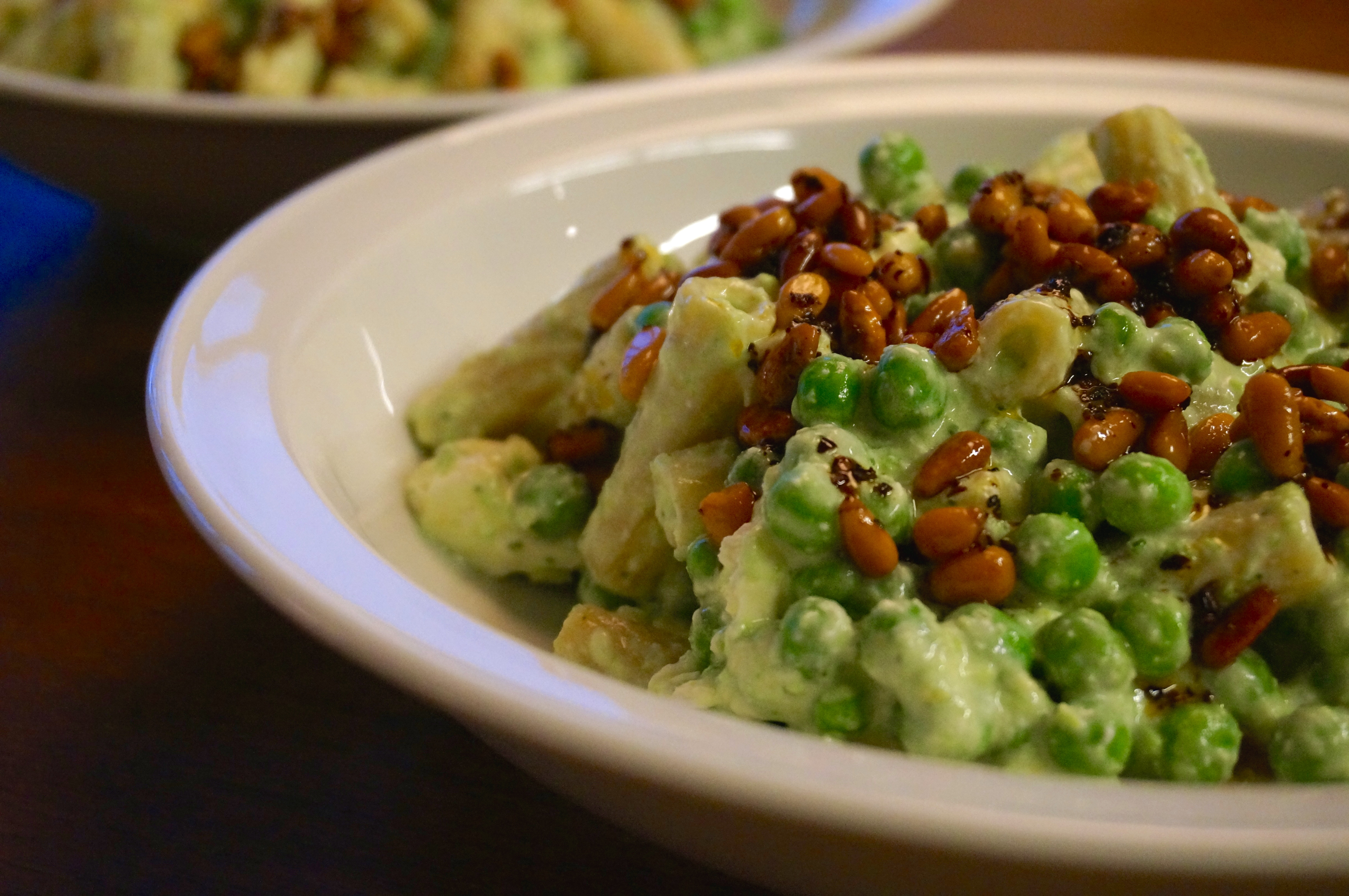
Pasta with Peas and Pine Nuts in Minted Yogurt Sauce – Adapted from Jerusalem: A Cookbook

Ingredients:

3/4 cup (7 oz; 200 g) whole-milk Greek yogurt
1/3 cup (75 ml) olive oil
1 small clove garlic, pressed or grated on microplane
10-12 mint leaves
finely grated zest of 1 lemon
10 oz fresh or thawed frozen peas
6 oz pasta shapes of your liking
1/4 cup (30 g) pine nuts
1 teaspoon Aleppo pepper (or 1/2 teaspoon red pepper flakes)
4 oz (120 g) feta cheese, coarsely crumbled

Directions:

In the bowl of a food processor, combine the yogurt, 3 tablespoons (45 ml) of the olive oil, the garlic, the mint leaves, the lemon zest, and 2 oz (about 1/3 cup) of the peas. Process to a uniform pale green sauce, and transfer to a large mixing bowl.

Cook pasta in boiling salted water until it is al dente. While the pasta cooks, warm the remaining olive oil in a small frying pan over medium heat. Add the pine nuts and Aleppo pepper or chile flakes, and cook for 2-3 minutes, or until the pine nuts are golden and the oil is deep red. Also, warm the remaining peas in some boiling water (you could use some of the pasta water for this) and drain them.

Drain the cooked pasta into a colander, and shake it well to get rid of excess water that may have settled into the pasta’s crevices. Add the pasta gradually to the yogurt sauce; adding it all at once may cause the yogurt to separate. Add the warm peas and feta. Toss gently. Taste and adjust salt. Serve immediately, with pine nuts and chile oil spooned over each serving.

Rose Levy Beranbaum’s Fresh Blueberry Pie

DSC04124

Summer weekends in the city. When, no matter how early you wake up, the sun is already up before you with the promise of a day full of surprises. An afternoon walk means a series of encounters, random, mostly unexpected, that seem to beg to be written about: the shrieking kids running in and out of a gushing fire hydrant; the old man sitting under a beach umbrella on the sidewalk with a chess set in front of him waiting for a willing (daring?) opponent; the samba blaring out of a third floor apartment’s open window, whose occupant is sunbathing on her fire escape. There is both a sense of excitement and a languid attitude in the air. People are less grumpy, more outgoing, less likely to grumble because you are blocking their path on the sidewalk.
DSC04137

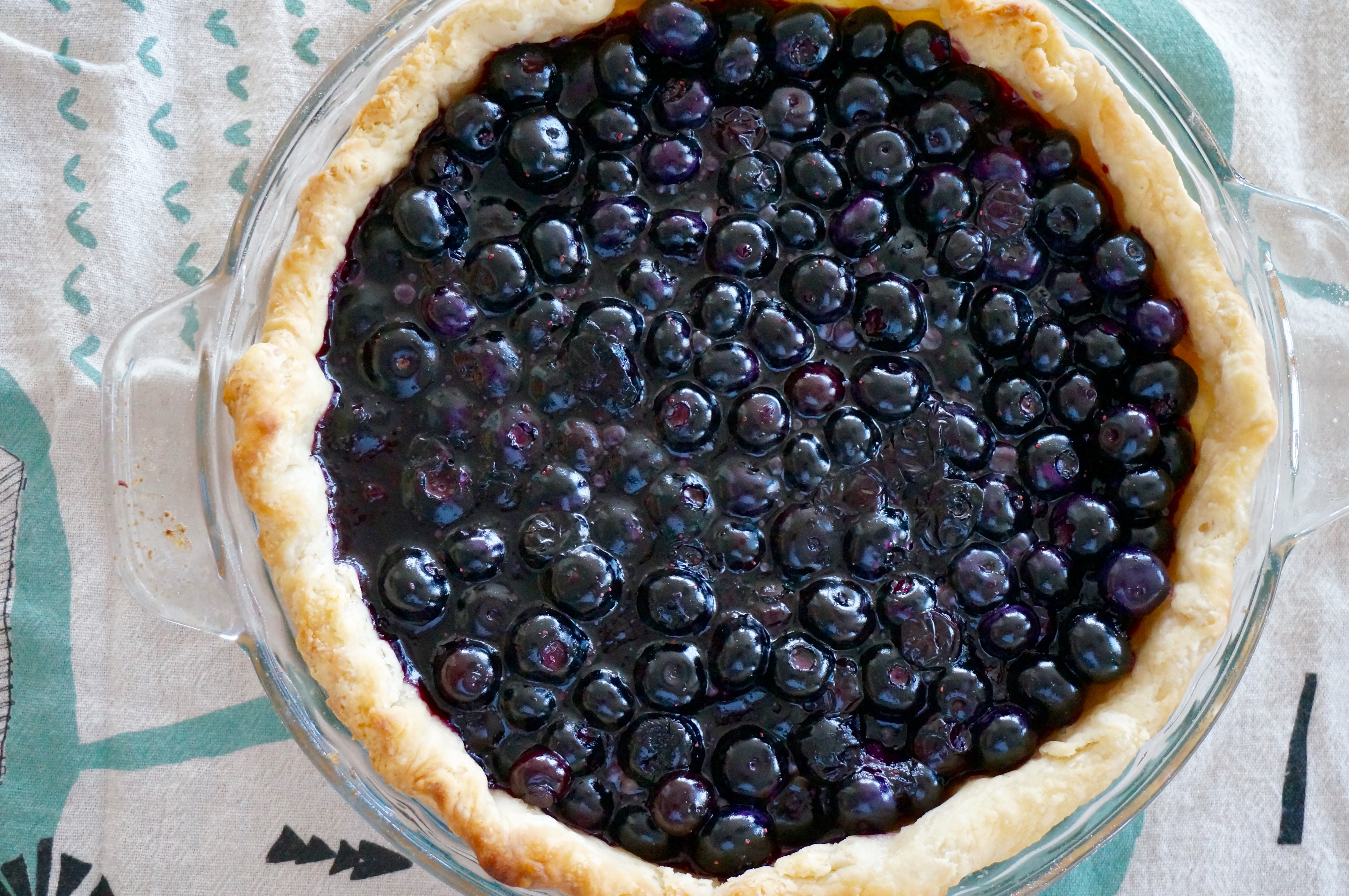
There is an ease to everything. Clothes are looser, smiles are easier, food tastes better. When the heat peaks in the middle of the afternoon, there is a primal human need for a cocktail, cold and preferably fizzy, that just comes to the surface. At dinner time, the outdoor tables of restaurants are packed, no matter the raucous traffic just a few feet away. Rosé is abundant and dishes are fresh and simple. And when time for dessert comes, if it’s not ice cream, then it’s a fresh blueberry pie, summer itself on a plate, a perfect ending to a perfect day.DSC04116Rose Levy Beranbaum’s Fresh Blueberry Pie – Slightly adapted from Food 52 Genius Recipes

Ingredients:

One uncooked single pie crust
1 tablespoon egg white, lightly beaten (optional)
4 cups fresh blueberries, rinsed and dried
1/2 liquid cup and two tablespoons water, divided
2 tablespoons cornstarch
1/2 cup sugar
2 teaspoons lemon juice
Pinch of salt
1 1/2 cup whipped cream (optional)

Directions:

Preheat the oven to 425°F. Place the pie crust in a 9-inch pie plate and crimp the border with your fingers. Line the crust with parchment, pleating it as necessary so it fits into the pan, and fill it with pie weights (rice or dried beans work well). Bake for 20 minutes. Carefully lift out the rice or beans with the parchment. With a fork, prick the bottom and sides, and bake 5-10 minutes, or until the crust is pale golden. Check after 3 minutes and prick any bubbles that may have formed. Cool the crust on a rack for 3 minutes, so it is no longer piping hot, then (optionally) brush the bottom and sides with the egg white — this will help keep the bottom crust from getting soggy.

Measure out 1 cup of the blueberries and place them in a medium saucepan together with the 1/2 cup water. Cover and bring them to a boil.

Meanwhile, in a small bowl, whisk together the cornstarch and the remaining 2 tablespoons of water. Set it aside.

When the water and blueberries have come to a boil, lower the heat and simmer, stirring constantly for 3 to 4 minutes or until the blueberries start to burst and the juices begin to thicken. Stirring constantly, add the cornstarch mixture, the sugar, lemon juice, and salt. Simmer for a minute or until the mixture becomes translucent. Immediately remove it from the heat and quickly fold in the remaining 3 cups of blueberries.

Spoon the mixture into the baked pie crust and allow to sit at room temperature for at least 2 hours before serving. When set, the berries will remain very juicy but will not flow out of the crust. Serve with whipped cream if desired. This pie can be stored at room temperature for up to 2 days.

Peach Pie Braided Bread

DSC03184

One of the things I experienced for the first time in my life when I moved to the U.S. in 1990 was the mall. Growing up, we had heard of malls and seen them in movies, but we never had one where I lived. So there I was in Philadelphia, with just a suitcase and in need of bedding and other basics for my new college dorm room. I was quickly given directions to the Gallery, Philly’s largest mall. I took the subway (another first) and landed at the glass and steel entrance. I pushed through the revolving doors and I was instantly in love.DSC03175
It’s funny how all the things that over the years I’ve come to hate about malls are the exact ones that made me love them when I first experienced them. There was the clean, almost antiseptic smell, a mix of marble, perfume, and ozone, that made me think clean! and safe! I loved the constant muzak, so calm and innocent, sort of like a glistening snake smoothly gliding towards you in the sunlight. I thought that having all those stores in one place was such a great convenience (no need to walk out in the streets!) and I loved the little stands that dotted the middle of the mall, mimicking actual street stalls. Never mind that what they sold was nothing but gimmicks and AS SEEN ON TV! products.DSC03167

But my absolute favorite was the food court. Cheap and barely edible Chinese food? Bring it on. Cheesesteaks with four tiny slices of steak under a mountain of processed cheese? I was all in. Pizza with greying ham and canned pineapple? Heaven.

My tastes have obviously changed over the years and I look back at all that food I ate in abject horror. But there’s one thing I can’t help but remember fondly: Cinnabons. You could smell the sugar, cinnamon, and butter about five minutes before you hit the food court. Each bun was the size of a small baby’s head. I would start from the outside layers, like peeling an onion, and work my way to the insanely rich middle. I would devour the whole thing in minutes, making sure to get all the cream cheese frosting that got stuck on the cardboard box. I was still a teenager and eating a whole Cinnabon after two huge slices of “Hawaiian” pizza was not a problem.

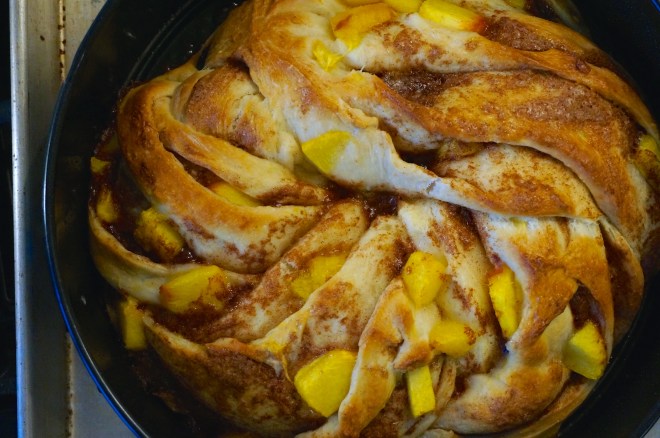
This week’s recipe isn’t for a Cinnabon but it’s for its distant cousin, a healthier and more seasonal version. It will fill your kitchen with the aroma of buttery cinnamon sugar but also with the smell of baked peaches. It’s best eaten warm, with your hands, and with no regrets.DSC03186Peach Pie Braided Bread – Slightly adapted from Joy the Baker

Ingredients:

For the Dough:

2 1/4 teaspoons active dry yeast
1 tablespoon granulated sugar
3/4 cup whole milk, warmed to a warm lukewarm
1 large egg yolk
2 tablespoons unsalted butter, melted
2 1/4 cups all purpose flour
1/2 teaspoon salt
a bit of oil for greasing the bowl

For the Filling:

1/4 cup unsalted butter, at room temperature
1/4 cup granulated sugar
3 teaspoons ground cinnamon
2 ripe peaches, peeled and cut into 1/2″ cubes
1 large egg, beaten for egg wash

Directions:

In a medium bowl stir yeast with sugar. Stir in the lukewarm milk and then add the egg yolk and melted butter. Whisk together until thoroughly combined. Allow mixture to rest for 5 minutes. It should foam and froth.

In a large bowl whisk together the flour and salt.

Make the dough by hand: Pour the milk mixture over the dry ingredients and start kneading it until it pulls away from the edges of the bowl. Place dough on a lightly floured counter and knead by hand for about 10 minutes more. Dough ball should be smooth and damp, without being too sticky. Shape dough into a ball.

Make the dough in a mixer: In a mixer with the dough hook attachment, add the dry ingredients and the milk mixture. Mix at medium speed for about 5 minutes until the dough is smooth and not too sticky. Shape dough into a ball.

Grease a large bowl with olive oil. Place the dough in the bowl and cover. Allow to rest at warm room temperature for about 1 hour, or until doubled in size.

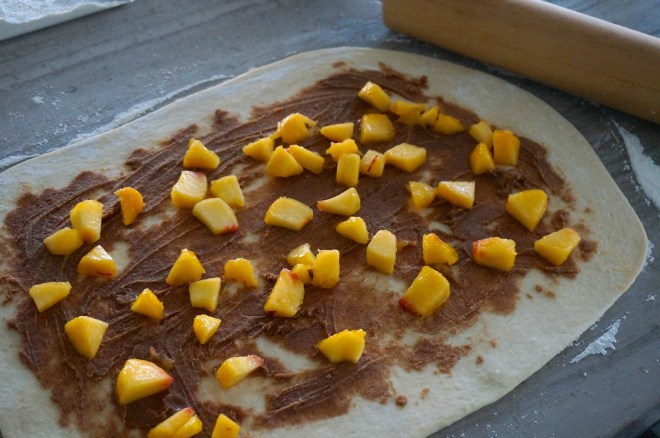
While the dough rises, whisk together the butter with sugar and cinnamon for the filling. Set aside.

Preheat the oven to 375º F. Grease a 10-inch cast iron skillet. Set aside.

After the dough has doubled in size, place it on a lightly floured counter and knead twice. Using a rolling pin to roll the dough to a rectangle of about 18×12 inches.

Spoon the cinnamon filling over top, spreading evenly, leaving a clean 1-inch border around the edges. Sprinkle the peach pieces over the cinnamon filling. Start by rolling the longest side of the dough. The roll will be a bit lumpy because of all the fruit. Using a sharp knife, cut the log in half length-wise leaving 1-inch of the edge uncut.

Start braiding the two pieces, by carefully lifting the left strand over the right strand. Repeat this motion until you reach the bottom of the dough. Press together to seal. Join the two ends, creating a circle with the dough and press together.

Using both hands, transfer the dough ring to the prepared cast iron skillet. Brush the bread with the beaten egg.

Bake for 20-25 minutes until golden brown and bubbling. Allow to cool for about 30 minutes before slicing and serving.