Oven Poached Fish in Olive Oil

I’ve always loved cooking for people. I rarely cook just for myself. This is partly because cooking is an activity with a very specific end result. When I cook, I create something. And that’s something I want to share. Often it’s something I want to show off. I’ll be the first to admit that humility is not an ingredient in my cooking.

DSC01275

So, I’ve always loved having dinner parties. Even when I lived in apartments with impossibly small kitchens, I’d have friends over for dinner. Out of a half size oven and a workspace the size of school desk, I have produced multi course meals for eight people. When Steve and I met, we found our love for food was mutual. So, the dinner parties continued and became more elaborate. We started pairing wines with every course. We printed menus.

DSC01269

The only problem with such extravagant affairs has been that at times we ended up spending more time in the kitchen than at the table with our friends. So, over the last few years I’ve adjusted our menus, opting for dishes that can be prepared ahead of time and served easily and quickly. This recipe is one of our favorites. It takes 15 minutes to put together but the result is delicious and impressive.

DSC01265

Fish is especially difficult for dinner parties. It so often requires cooking right before eaten, it smells up the kitchen, and it can easily be overcooked. By poaching it gently in the oven in olive oil, this recipe takes care of all of those problems. In fact, I’ve often left it in the oven for 30 minutes past what the recipe says and I’ve never had any problems with it. The fish always comes out tender, moist, and flavorful.

If you are worried about the amount of olive oil, don’t be. The fish absorbs almost none of it. And in the end, you can strain the olive oil and keep it in the fridge. Use it whenever you cook anything with seafood. It will have only the slightest hint of the fish, capers, and lemons.

DSC01286

Oven Poached Fish in Olive Oil – Slightly adapted from Epicurious.com

Makes 4 servings

Ingredients:

1/4 cup capers, rinsed
2 – 2 1/2 lb (1-inch-thick) skinless, firm, white flesh fish fillets (such as halibut or chilean sea bass)
1 1/2 large lemons, very thinly sliced crosswise
1/4 cup chopped fresh flat-leaf parsley
About 2 cups extra-virgin olive oil (enough to cover the fish)

Directions:

Preheat oven to 250°F.

Chop half of capers and pat fish dry. Sprinkle fish with 1 1/2 teaspoons salt and 1/2 teaspoon pepper and let stand 10 minutes at room temperature. Arrange half of lemon slices in 1 layer in an 8-inch square glass baking dish and arrange fish in 1 layer over lemon. Top with all of capers, remaining lemon slices, and 3 tablespoons parsley, then pour oil over fish. Bake in middle of oven, uncovered, until fish just flakes and is cooked through, about 1 to 1 1/4 hours.

Serve fish with some of lemon slices, capers, and oil spooned over. Sprinkle with remaining parsley.

Pasta Flora / Παστα Φλωρα (Apricot Jam Coffee Cake – Cyprus Version)

Pasta Flora / Παστα Φλωρα (Apricot Jam Coffee Cake – Cyprus Version)

There is no better way to experience the inertia of history than through ethnic cuisines. Take the Mediterranean, for example. If you were to take a cruise around the region and sample food from all the countries you visit – Spain, Italy, Morocco, Greece, Cyprus, Israel, Lebanon, Egypt – you’ll start to notice that variations of the same dish have a way of popping up in every place.

DSC01188

Talk to the people of each country and they will tell you that the dish originated with them, brandishing its name as proof or the use of a local ingredient as irrefutable evidence. In reality, so much of the “traditional” foods of those countries come from their past, often going back centuries to empires that ruled the region: the Greeks, the Romans, the Venetians, the Ottomans.

It’s both a comforting and frustrating experience. Comforting, in that it confirms the sameness in all of us, the artificiality of our differences, and our shared roots. Frustrating because it seems unable to bridge differences that have led to wars and conflict. If Israelis and Palestinians could all concentrate on their common culinary tradition, would they be more conciliatory towards each other? Would Greeks and Turks? Doubtful.

DSC01177

This recipe is for one of those dishes that spans different countries in the Mediterranean. I knew it as a Greek Cypriot dessert called pasta flora. Growing up, my mom made it regularly and it was one of my favorites. At some point, I found out that it was also made in Greece but somewhat differently, with a short, cookie-like crust, instead of the cake base used in Cyprus. Then a few years back, an Italian friend I invited to dinner brought over a dessert she made. As soon as I saw it, I exclaimed “You made a pasta flora!” She smiled and said “a pasta FROLA,” stressing the reversed r and l.

DSC01181

It turned out, it’s an Italian dessert called pasta frola. And today, doing a little bit of research, I found out it’s also an Argentinian dessert, brought over by Italian immigrants, usually filled with quince paste, instead of the apricot jam used in Cyprus.

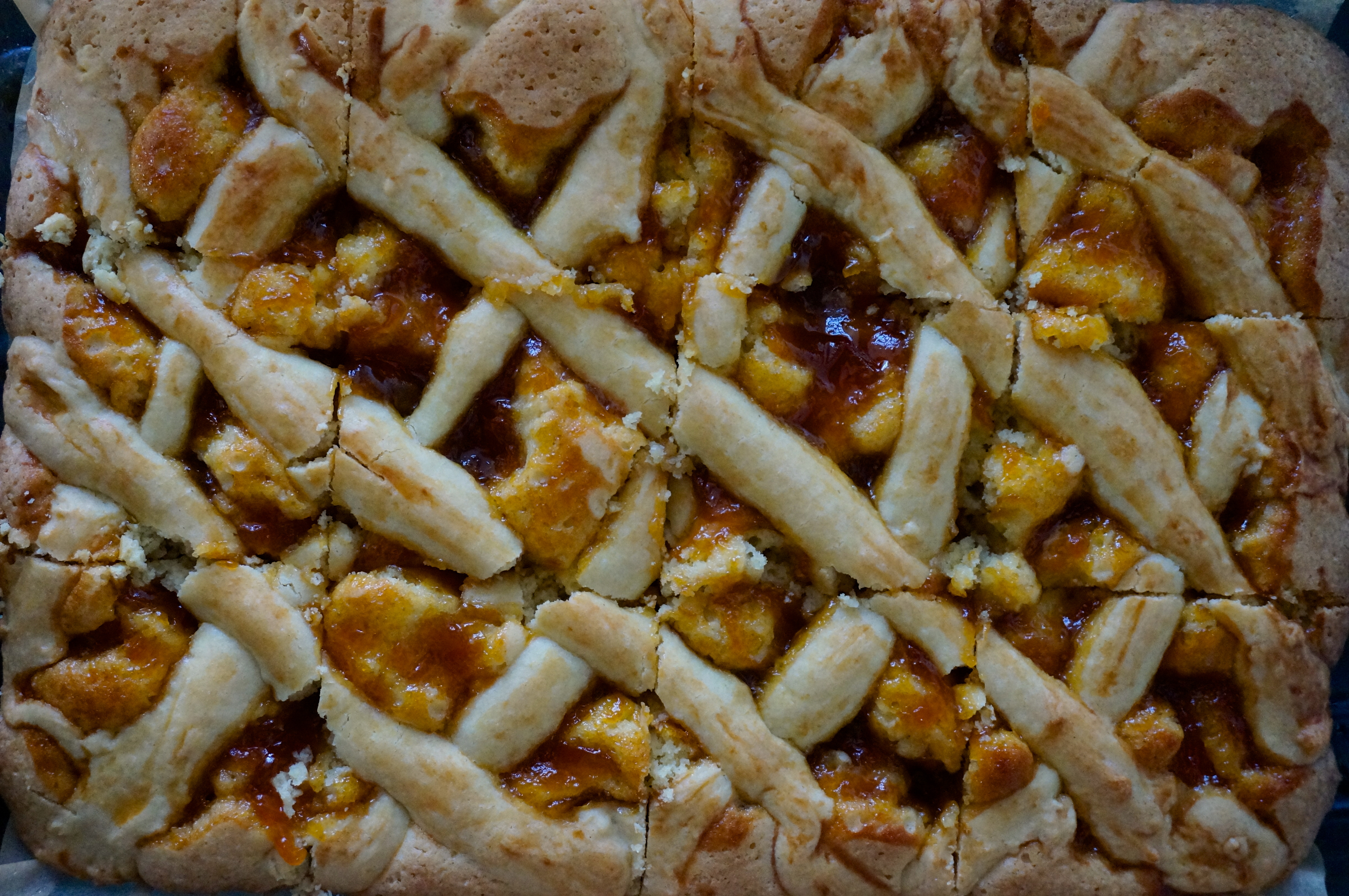
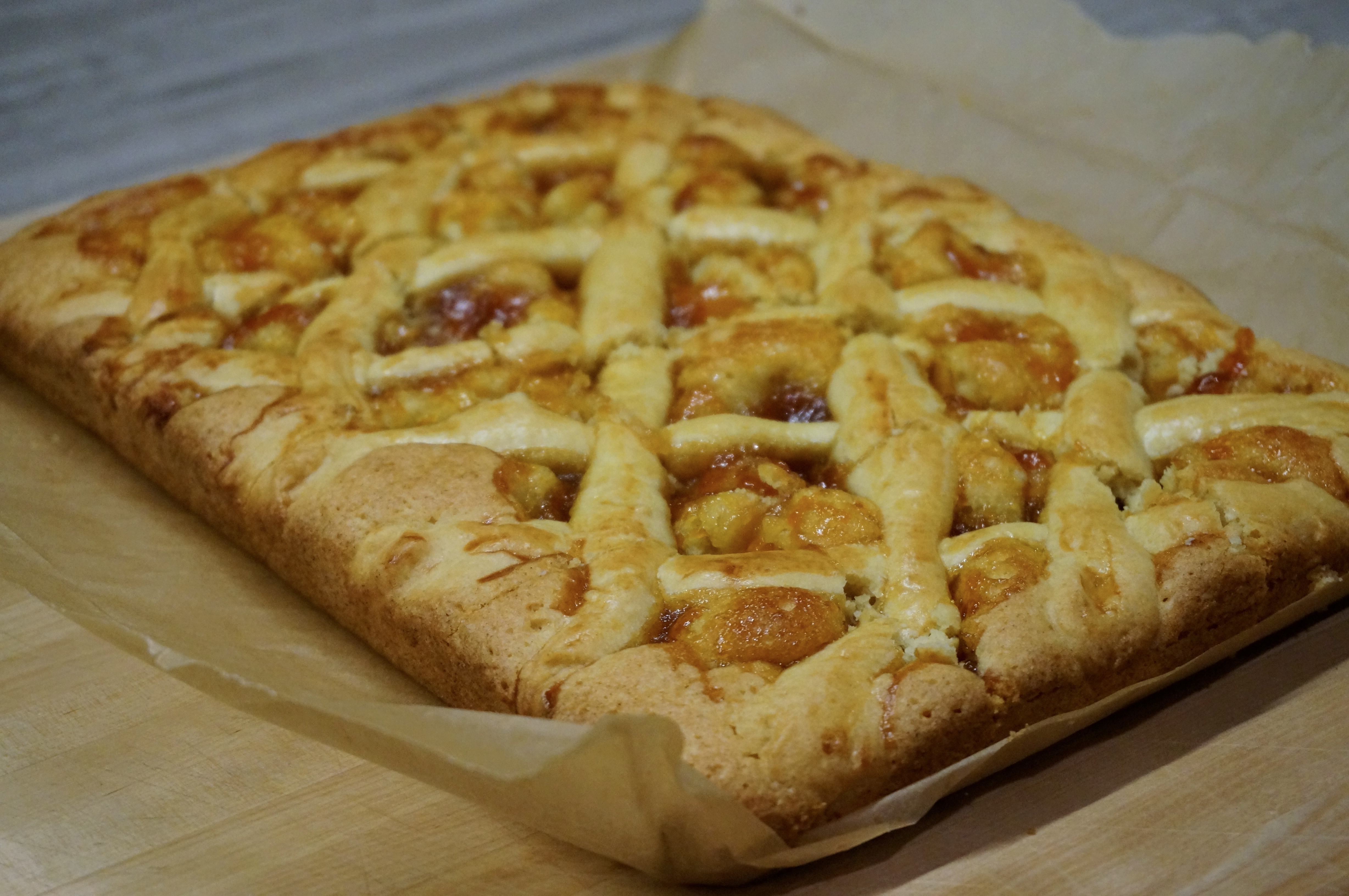
Here’s the bottom line: No matter where this comes from, it’s a winner. This recipe is for the Cypriot version. It makes something more like a coffee cake, with a layer of apricot jam and a lattice crust. It’s simple to prepare and makes a wonderful dessert or even breakfast, no matter where you are from or what part of the world you are eating it in.

DSC01194

Pasta Flora / Παστα Φλωρα (Apricot Jam Coffee Cake – Cyprus Version) – Adapted from Μαγειρεύοντας για φίλους Tόμος α

Ingredients:

2 1/2 cups all purpose flour
3 teaspoons baking powder
pinch of salt
3 large eggs
1 cup sugar
1 cup vegetable oil
1 teaspoon brandy or cognac
finely grated zest of one lemon
1 cup apricot jam
6 tablespoons all purpose-flour
1 egg, lightly beaten with 1 tablespoon of water, for eggwash

Directions:

Preheat the oven to 350 degrees. Lightly grease a 9 x 13 baking pan and line it with parchment paper (alternatively, grease, lightly dust with flour and shake out excess). In a medium bowl, whisk together 2 1/2 cups of flour, baking powder, and salt. Set aside.

In the bowl of a mixer, beat 3 eggs well, until they lighten in color, for 2-3 minutes. Add the sugar and continue to beat for another 2-3 minutes until they thicken and increase in volume. Add the oil, brandy, and zest and mix until combined. Add the flour mixture and using a spatula, fold together just until combined and no dry flour streaks are visible.

Take one cup of the batter out of the bowl and put it in a small bowl.

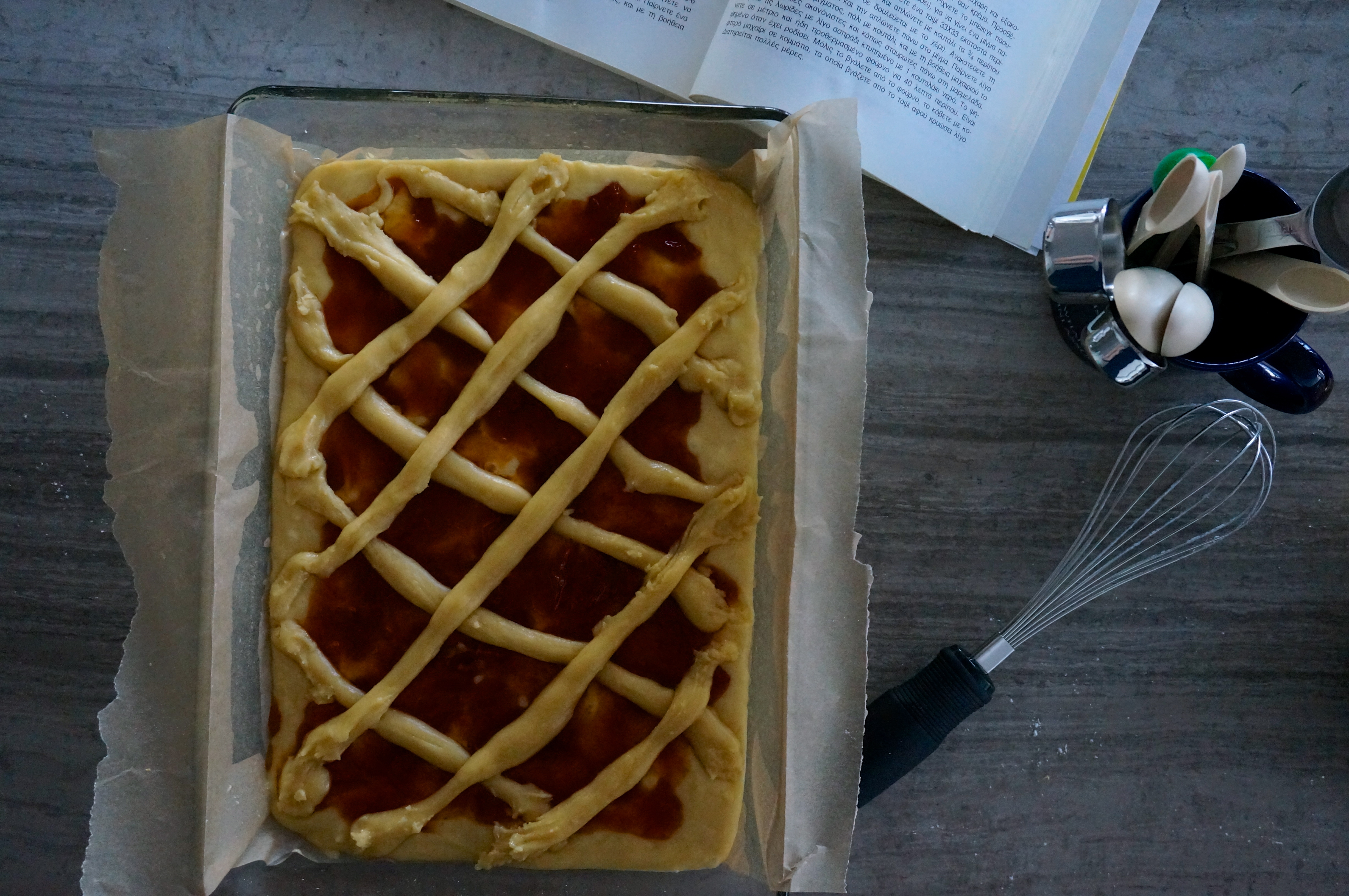
Pour the remaining batter in the prepared baking pan and smooth out the surface with spatula or back of spoon. Stir the apricot jam with a spoon to loosen it up and then carefully spread it on top of the batter in the pan, taking care not to press it into the batter too much. The best way is to just dollop it with a soup spoon and then use the back of the spoon to lightly spread it, leaving about a 0.5-1 inch border around the edge of the pan without jam.

In the small bowl with the 1 cup of batter, add 6 tablespoons of flour. Mix with a spoon until fully combined. The dough will be soft but you should be able to work with it with your hands. If you want, put some flour on your hands to prevent the dough from sticking.  Take a piece of the dough and roll it gently between your hands to create a log about half an inch in diameter. Place it on top of the apricot jam diagonally. Continue until you have created a lattice pattern across the whole pan. Don’t worry too much if your lattice isn’t perfect. When it bakes it will puff up and change shape anyway.

Very gently brush the lattice with the beaten egg. Bake for about 40 minutes until the top is golden brown and a knife inserted in the middle comes out clean.

Let cool for 10 minutes and slice into squares or rectangles. Allow the pasta flora to cool completely before you remove the slices from the pan. Store in an airtight container for 2-3 days or wrap slices with plastic wrap and freeze.

Spaghetti with Garlic, Lemon, and Parsley

The day after our wedding, I began to lose my ability to smell and taste. It happened gradually but quickly. I first noticed that I was having a hard time smelling some of the more nuanced notes in food. At the same time, I started experiencing a phantom smell and taste. It had a strange herbal, slightly toasted quality and I began to smell it in everything. While in Iceland, everything had this strange taste. At first I thought it was a local herb they used in most of their food. We even asked a waitress about it but she had no idea what we were talking about. Steve and I started joking that it was the taste of lamb that was permeating everything, since lamb was so common in Iceland.

DSC01218

By the end of the trip, things had gotten worse. When we got back to New York I pretty much lost the ability to smell anything but the strongest odors and I could only taste strong and basic flavors: sweet, salty, bitter. Some things, like coffee, now tasted and smelled exclusively of that weird toasted herbal phantom flavor. It was obvious something was wrong.

There are times when not being able to smell can be a blessing (yes, I am talking about you, mister I-don’t-wear-deodorant-at-the-gym). But those times are very few. Not being able to taste or smell food was devastating for me. I was trying not to panic but it was hard not to. Beyond the loss of pleasure from food, I started to feel a strange kind of isolation from everything around me. Like I was living in a plastic bubble. I realized how  much our sense of smell helps connect us to our surroundings, much like our sight and hearing.

DSC01209

A quick visit to Dr. Google was not very reassuring (is it ever?). There were lots of Greek words, like anosmia (complete loss of smell), parosmia (inability to correctly smell), and dysgeusia (distortion of sense of taste). The probable causes of my symptoms were many and some were very scary.

So, last Wednesday I went to a real doctor, an ENT. Within 5 minutes I was diagnosed. I had a “giant” (his word) polyp in each nostril which was blocking my olfactory nerves. Fortunately, nothing too serious. He recommended an aggressive treatment with Prednisone and antibiotics for a month, and Flonase “for the rest of my life” (his words again). Surgery would be the next step, if the polyps didn’t respond to the meds.

DSC01212

A quick visit to Dr. Google again (I know, I can’t resist) revealed that nasal polyps are common for people with chronic sinusitis and allergies (that would be me) and that they are especially common among men over the age of 40 (damn you 40s! You are so not the new 30s, no matter what anyone says).

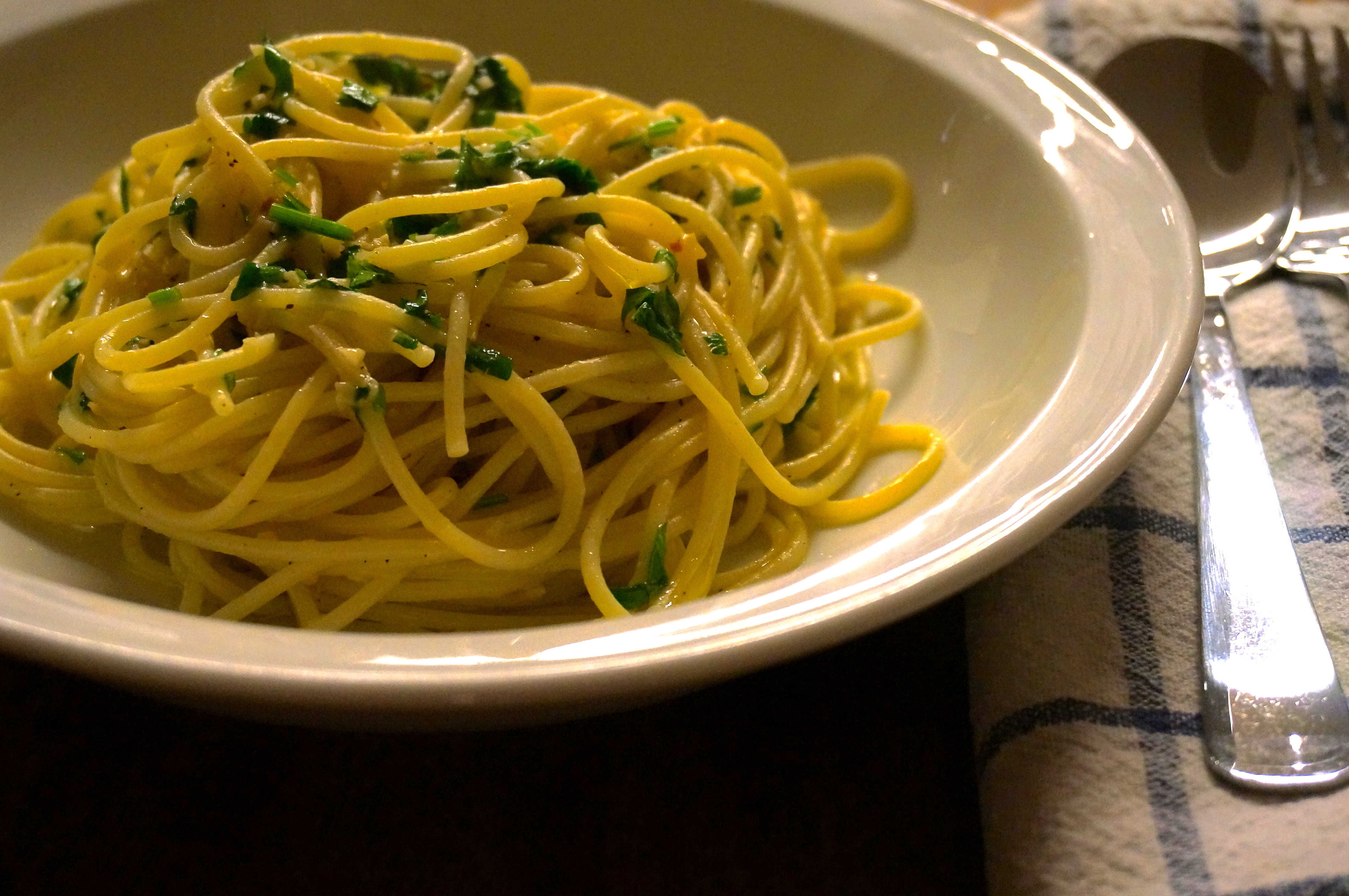
I started the meds on Thursday morning. By Friday night, I was feeling much better. My sinuses were no longer clogged up and I was starting to smell and taste things again. Both Steve and I were immensely relieved. This spaghetti with garlic, lemon, and parsley is what I made and it was the first thing I was able to taste correctly in about 3 weeks. I’ve always liked this dish but on that night I thought it was the best thing I had ever tasted.

DSC01198

Spaghetti with Garlic, Lemon, and Parsley
Slightly adapted from The Gourmet Cookbook: More than 1000 recipes

Serves 4

1 lb spaghetti
1/2 cup extra-virgin olive oil
4 large garlic cloves, minced
1/2-3/4 teaspoon red pepper flakes (optional)
Finely grated zest of 2 lemons
3 tablespoons fresh lemon juice
1 1/2 teaspoons salt
1/2 teaspoon freshly ground black pepper
1/2 cup chopped fresh flat-leaf parsley

Cook pasta in a 6-8 quart pot of boiling salted water (1 T salt for every 4 quarts water) until al dente. Reserve 1 cup cooking water and drain pasta.

Meanwhile, heat oil in a 12 inch heavy skillet over moderately low heat. Add garlic and red pepper flakes and cook, stirring, until garlic is golden, about 3 minutes.

Stir lemon zest into skillet, then stir in juice, salt, pepper, and 1/2 cup reserved cooking water and bring to a simmer.

Toss pasta in sauce with parsley. Add more cooking water if pasta seems dry.
Serve with freshly grated parmesan cheese on top.

Iceland: The Land of Volcanoes, Ice, Waterfalls, and Soup

For our honeymoon, we chose Iceland. We wanted a place that was different, that we’d never visited before, and that was relatively close. We also aren’t big beach goers so a place that was cool and cloudy was fine with us.

In the end, Iceland proved to be not just a great honeymoon destination but one of the best vacations we’ve ever taken. We rented a 4×4 to drive around the country and we ended up putting over 1,000 miles on it. And yet, we were never bored while driving. Not for a second. On every corner and every off-road there was something spectacular to see.

Iceland has a lot of water. There are waterfalls everywhere. Some are huge and majestic, like Gulfoss and Godafoss that we visited. But many others are just small waterfalls sprinkled around the countryside. We must have driven by dozens of them. Water is also important because there is a lot of geothermal activity in Iceland. Most energy produced in the country is 100% clean and uses steam from geothermal sources. And of course, there are thermal baths everywhere. We visited the Blue Lagoon, the famous one outside Reykjavik, which was impressive, though a little touristy.

The other thing you notice in Iceland are the mountains. They are also everywhere, some covered by glaciers, and they resemble giant boulders thrown from the sky. Many of them have flat tops. That’s because almost all of them are volcanic. They whole island of Iceland is actually in flux. It sits right where the North American and Eurasian tectonic plates meet, so there is constant activity. Volcanoes and earthquakes are part of the country’s character.

And along with the imposing mountains come the skies. The climate in Iceland is more temperate than most people think, but it is also constantly changing. Clouds and rain came and went at amazing speeds. We saw cloud formations we had never seen before. And rainbows. Lots of rainbows.

No photograph can do justice to the Icelandic landscape. We walked among lava fields that were barely 30 years old. We could see just where the charcoal black lava ended its destructive run and cooled. We toured bubbling mud pits, where the water literally boils in big holes in the ground. The earth there takes on shades of orange and terracotta, creating an otherworldly view, made even stranger by the strong sulphuric smells.

But enough about the landscape. You’re here for the food, right?

Icelandic cuisine, or at least what we experienced, is representative of the harsh conditions of the island. There’s little local produce (though we heard there’s an area filled with greenhouses) and the most prominent meat is lamb. In fact, we saw sheep everywhere, grazing freely in the vast uninhabited countryside. We wondered often if anyone even owned them, but upon close inspection, we saw they were tagged.

If there’s one thing that is distinctly Icelandic, it’s soup. Soup and bread was an option at every establishment we visited, from restaurants to rest stops to gas station eateries. Pretty much everywhere, the soup was excellent. Even in places you wouldn’t expect it, like souvenir shops in remote areas. We especially loved the lamb soup and asparagus soup we had at the tiny place at the entrance of a volcanic column park we visited. It came with a dark, sweet bread, that was a cross between rye bread and pain d’épices. 

On our first night, we had dinner at a really nice restaurant in Reykjavik called Fridrik V. We got the 5-course tasting menu, which was too much food, but featured ingredients from different regions of Iceland. The staff, all members of one family, proudly explained where everything came from by pointing at a map of Iceland. We got to try puffin (though we never saw any live ones…hmmmm) and reindeer. They also served us something they called lobster bisque cappuccino, which was one of the best things we’ve ever tasted.

At a tiny port town called Stykkisholmur, we got even more adventurous. We had an appetizer that featured shark, dried fish, kelp, and mussels. The shark had such a strong fermented taste, we compared it to formaldehyde. We asked the waiter about it and he explained that it had been buried in the ground and allowed to ferment.

For my main dish, I chose whale. I was surprised to find that whale meet is red and has the texture of beef. In fact, if I hadn’t known it was whale I would have thought it was a regular steak.

Overall, the food in Iceland was really good everywhere. We had one bad meal and that was at a Thai takeout place that we went to because everything else was booked and we were very hungry.

Oh, and one more thing. We discovered Maltextrakt, a delicious soft drink made with malt. It’s non-alcoholic and sweet, with the distinctive toasted taste of malt. We ordered it a lot, when we didn’t want alcohol with our meal.

DSC00680

East Coast Grill Corn Bread

IMG_2673

I know it’s been a while since my last post but I have a good excuse: I was on my honeymoon. Steve and I got married on August 18th and we left the next day to spend eight days in Iceland. I’ll write a separate post on that trip, with some photos and a little about the food there. The wedding was everything we had hoped for and more. It was fun, emotional, intense, and heartwarming all at the same time.

IMG_2672

In fact, the whole week preceding the wedding was like that. There were dinners, a stretch limo ride to a jazz club and a restaurant overlooking the Met opera (for a friend’s birthday), a boat cruise around Manhattan at sunset, bowling while eating pigs in a blanket and drinking beer, and a bagel brunch. The actual wedding ceremony was filled with laughter and tears, followed by scrumptious food, like garlic crusted tuna batons, lobster salad in red endive, baked mac-n-cheese, ancho-rubbed steak with grilled peaches, and so much more.

IMG_2667

So, as I get my act together and start cooking again, I give you a recipe for corn bread that I absolutely love. Corn bread is one of those things that I will always reach for when it’s available. The problem is that sometimes it can be dry or overly sweet or even mushy. This recipe is none of those things. The bread comes out perfect every time and it keeps well in the freezer, cut in pieces and wrapped well.

IMG_2668

The recipe calls for a cast iron skillet to make this and it’s the only way I’ve ever made it. If you don’t have a cast iron skillet, you can probably use a cake pan, though it won’t retain the heat as well as the cast iron one. But seriously, if you don’t have a cast iron skillet, buy one. It will be one of the best purchases you’ve ever made.

East Coast Grill Corn Bread (Slightly adapted from the New York Times)

2 cups all-purpose flour
1 cup yellow cornmeal
3/4 cup white sugar
1/2 teaspoon salt
1 tablespoon baking powder
2 large eggs
1 1/2 cups whole milk
1 1/2 tablespoons vegetable oil
1/4 cup melted butter
2 cups fresh or frozen corn kernels (no need to defrost them first)

1. Preheat oven to 350. Lightly oil a 9-inch cast-iron skillet and put it in the oven to heat up.

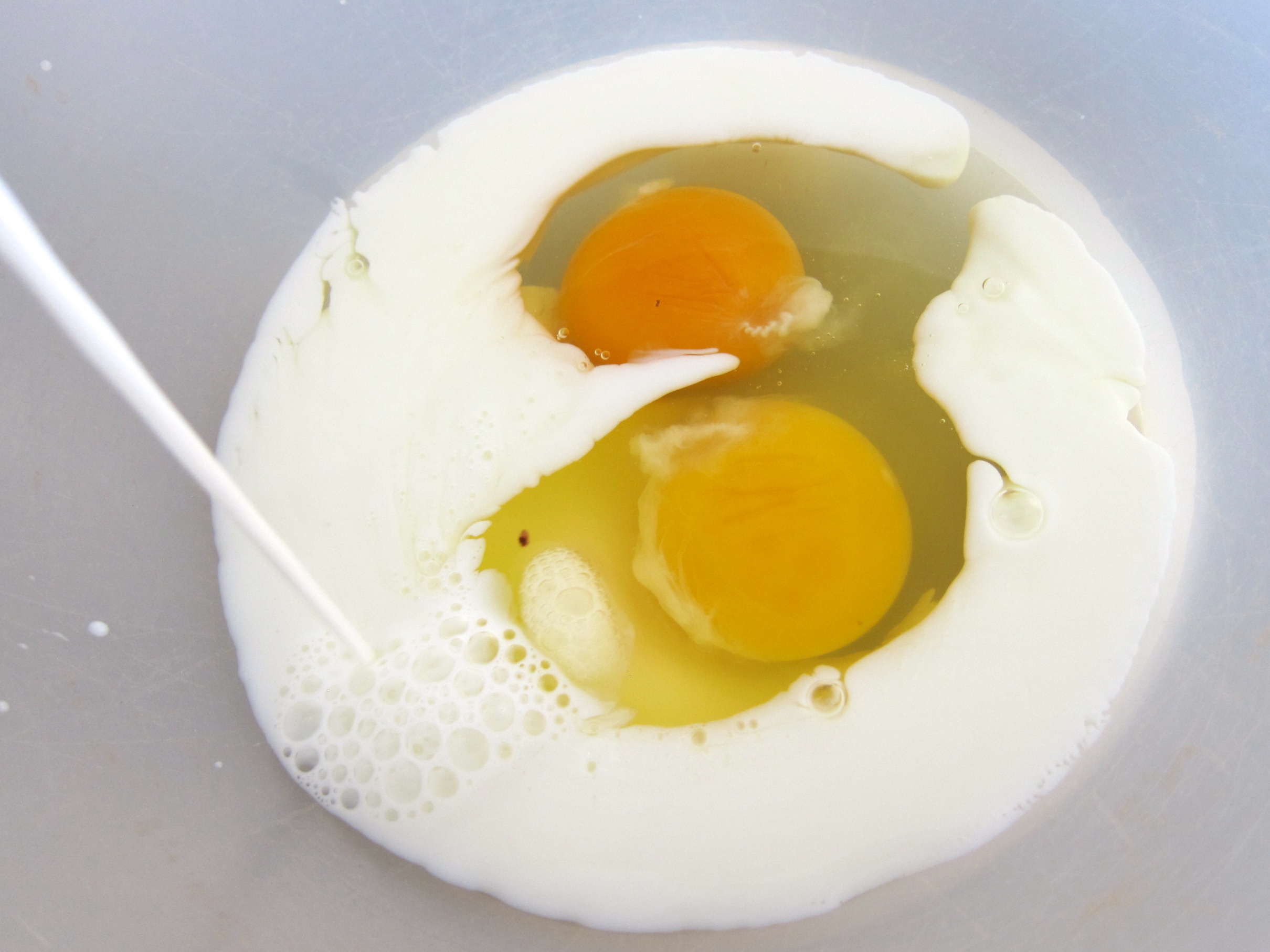
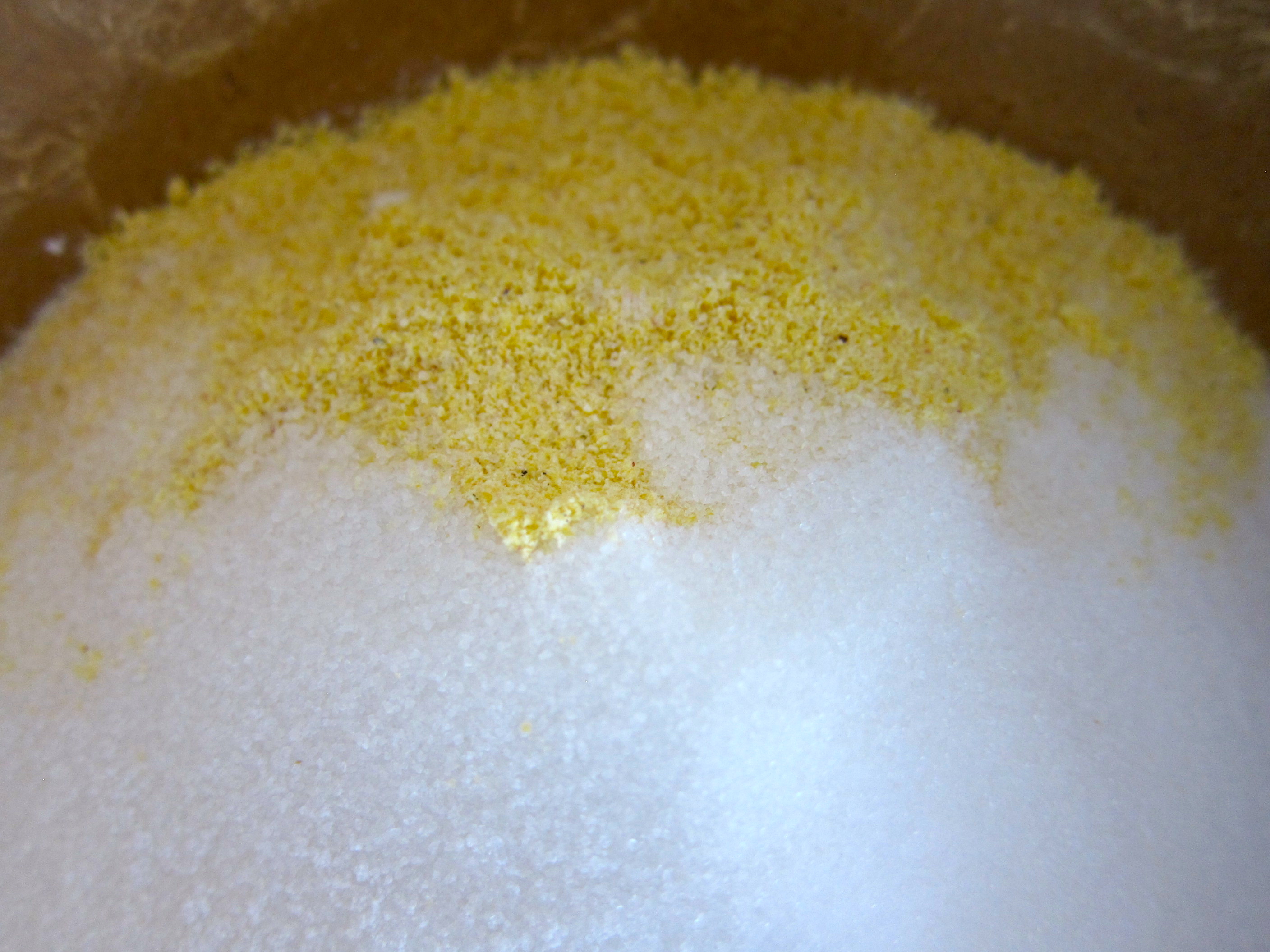
2. In a large bowl, whisk together the flour, cornmeal, sugar, salt and baking powder until combined. In another bowl, whisk together the eggs, milk and oil. Pour the wet ingredients over the dry ingredients, add the melted butter and the corn and stir together until just mixed. Don’t overmix the batter.

3. Remove the hot cast-iron pan from the oven and pour into it the batter, smoothing out the top with a spoon if necessary. Return pan to oven and bake, approximately 1 hour, until the corn bread is browned on top and a toothpick or a thin knife inserted into the top comes out clean.


Lemon Ricotta Pancakes

With out wedding taking place tomorrow, this week has been a whirlwind of activity. Friends and family started to arrive in New York last Sunday and throughout the week more and more people joined them. People have come from faraway places like France, Sweden, and Cyprus or Los Angeles, San Diego, and Indianapolis.

IMG_2526

One of Steve’s colleagues, who recently got married, told him that one of the coolest and strangest things about your wedding is seeing all of your friends and family in one room at the same time. We’re already having that feeling ourselves. The fact that people have made the effort to take planes, trains, and cars to be here with us makes us feel happy and humbled and grateful.

IMG_2518

We are so overwhelmed by all this that we almost forget that tomorrow we’ll be married. There is so much riding on that simple word “wedding.” There are the legal implications, the political issues, the social debates, the catering decisions, the flower choices. But in the end there’s really just this: a celebration. A reason to come together and acknowledge and share the love between two people with those who are important in their lives.

IMG_2530

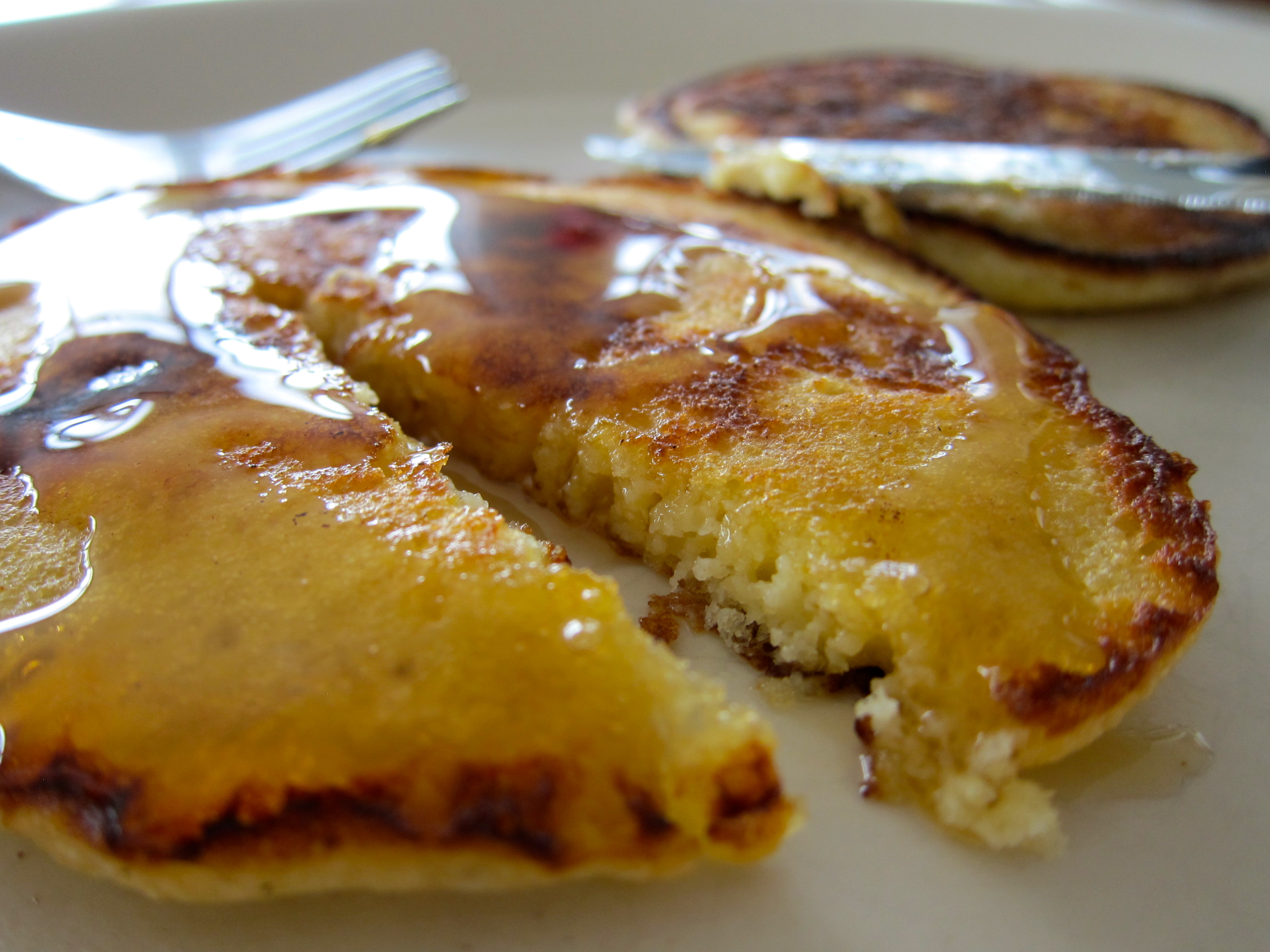
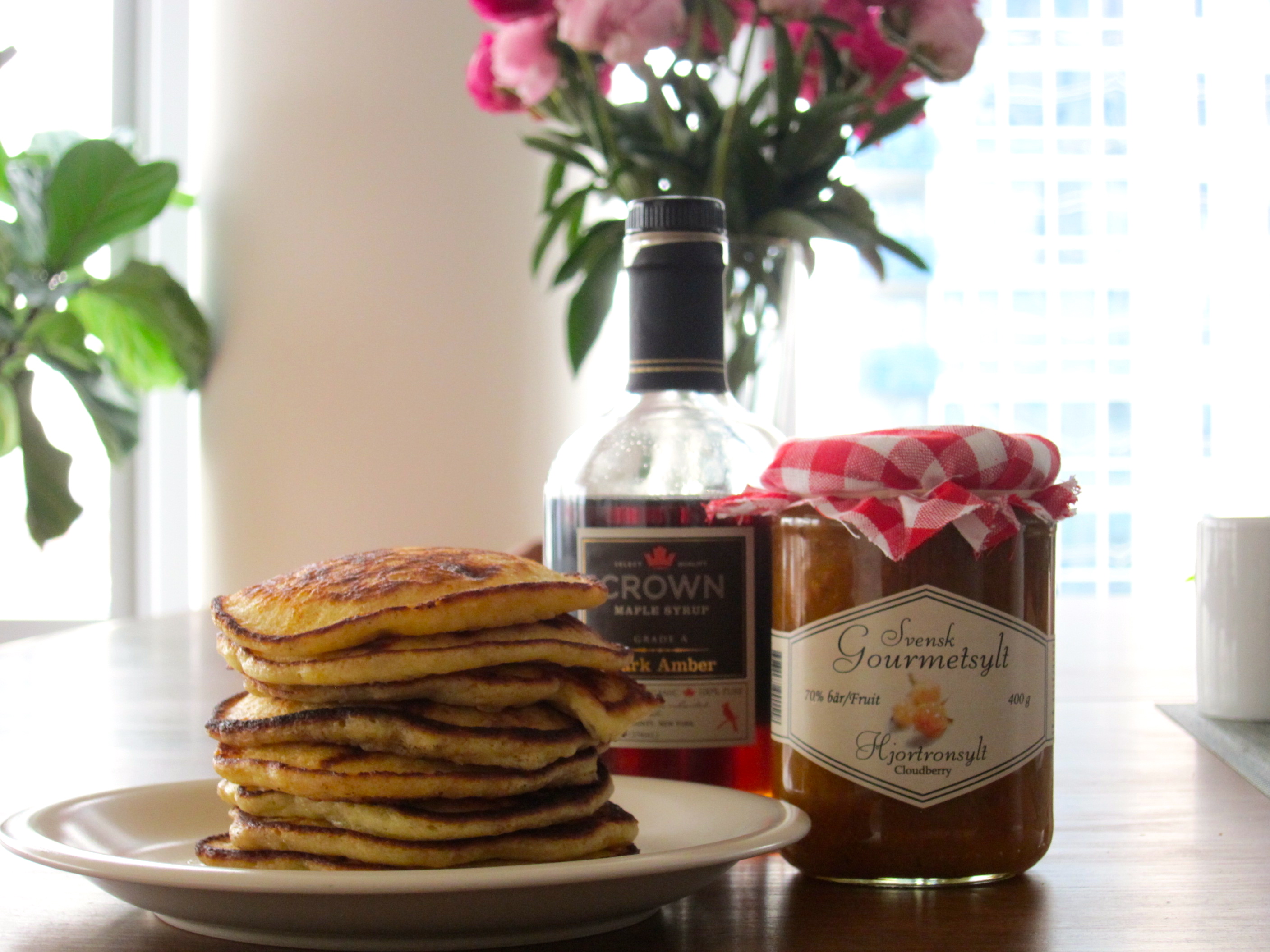
And at the end of this celebration is marriage. For all the ways to describe a marriage, a good and happy one, here’s one that already describes ours. A sunny Saturday morning, sitting at the table, still groggy from a good night’s sleep, ready to eat our lemon ricotta pancakes, and then go out, together, to make the day or own.

IMG_2529

Lemon Ricotta Pancakes – Very slightly adapted from Chow.com

Makes about 16 3.5 inch pancakes

5 tablespoons unsalted butter, plus more for coating the frying pan and serving
1 cup whole milk
1 1/4 cups all-purpose flour
1 1/2 teaspoons baking powder
1 teaspoon fine salt
3 large eggs, yolks and whites separated
2 tablespoons granulated sugar
1 tablespoon packed finely grated lemon zest
1/2 teaspoon vanilla extract
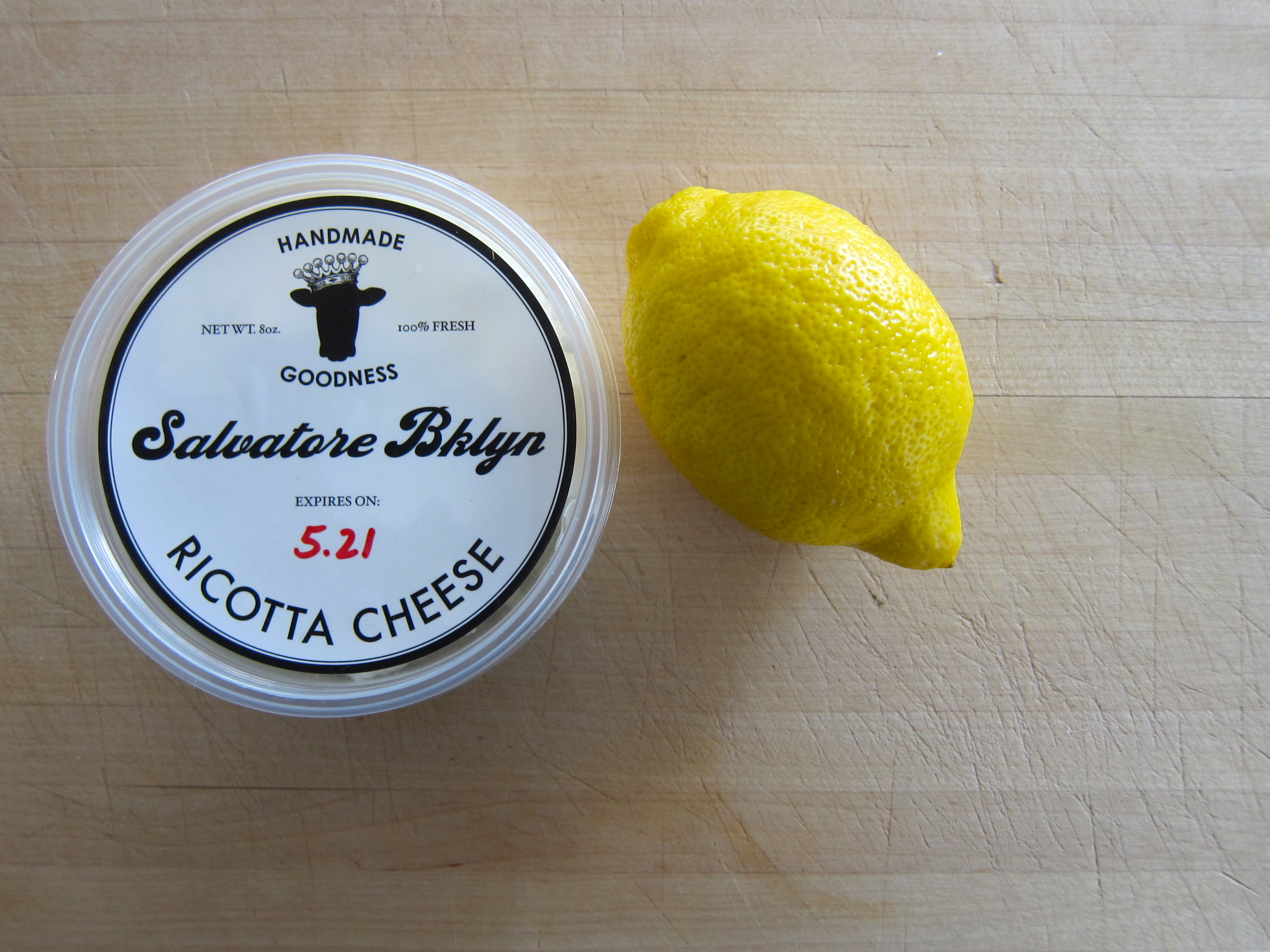
3/4 cup whole-milk ricotta cheese
Powdered sugar, fruit, or maple syrup, for serving (optional)

1. Place butter and milk in a small saucepan over medium-low heat, stirring occasionally until butter has melted; remove from heat and let cool slightly.

2. In a medium bowl, sift together flour, baking powder, and 1/2 teaspoon of the salt; set aside.

3. Place egg yolks, 1 tablespoon of the sugar, lemon zest, and vanilla in a large bowl and whisk to combine. Slowly drizzle ] in a quarter of the milk-butter mixture while whisking constantly (to temper the eggs), then whisk in the remaining milk-butter mixture until smooth.

4. Add the reserved flour mixture and stir with a rubber spatula until just combined (do not overmix); set aside.

5. In a medium bowl, whisk egg whites to soft peaks. Halfway through whisking them, sprinkle in the remaining 1 tablespoon sugar and 1/2 teaspoon salt. Using the rubber spatula, fold the whites into the reserved batter until just combined.

6. Gently fold the ricotta into the batter, being careful not to break down the texture of the cheese (the batter will be lumpy and streaked with ricotta); set aside.

7. Heat a large nonstick frying pan, griddle, or seasoned cast iron skillet over medium heat until hot, about 4 minutes. Test to see if the pan is hot enough by sprinkling a couple of drops of cold water in it: If the water bounces and sputters, the pan is ready to use.

8. Lightly coat the pan’s surface with butter, then use a 1/4-cup measure to scoop the batter into the pan. Cook until bubbles form on top of the pancakes, about 4 to 5 minutes. Flip and cook the other side until the bottoms are golden brown, about 1 to 2 minutes more. Repeat with the remaining batter. Serve immediately with powdered sugar, fruit, butter, or maple syrup.

Key Lime Pie Ice Cream

I am very loyal to chocolate. My love for it is endless and my devotion to it is deep. When going over a dessert menu, I will always gravitate first to the choices that include chocolate. I love dark chocolate, mysterious and a little dangerous, but I also love milk chocolate, sharply sweet and creamy. On occasion, I’ll even enjoy white chocolate, the chocolate impostor.

IMG_2728

There was only one time when my feelings for chocolate almost changed. I signed up for a 5-day, 30-hour course of chocolate making at the Institute of Culinary Education. It meant that every day for five consecutive days, from 9am to 4pm (with a 1-hour lunch break), I was in a kitchen making different kinds of chocolates. The first couple of days it was pure heaven. The third day it started to change. We all noticed that we avoided licking our fingers. By the fourth and fifth day, I started to feel an actual aversion to the smell and taste of chocolate. It was a little disturbing. Fortunately, after a couple of weeks of no chocolate in sight, my feelings for it returned.

IMG_2706

But despite my undying loyalty to chocolate, there is one dessert for which I am always ready to change teams: key lime pie. If it’s on the menu, I don’t care what decadent chocolate concoctions are available, I will choose the pie. The sweet and tangy custard paired with the buttery graham cracker crust are a combination that is so perfect, so enticing, that I simply find it irresistible.

IMG_2708

So the other day I saw some key limes at the grocery store and I had an idea: how about a key lime pie ice cream? I figured it shouldn’t be too hard to create the recipe, since the pie is already a custard. I just had to adjust the quantities and make it a little runnier than it is for the pie. So, I created a first draft of the recipe and I figured that it would need adjustments before I could post it.

IMG_2712

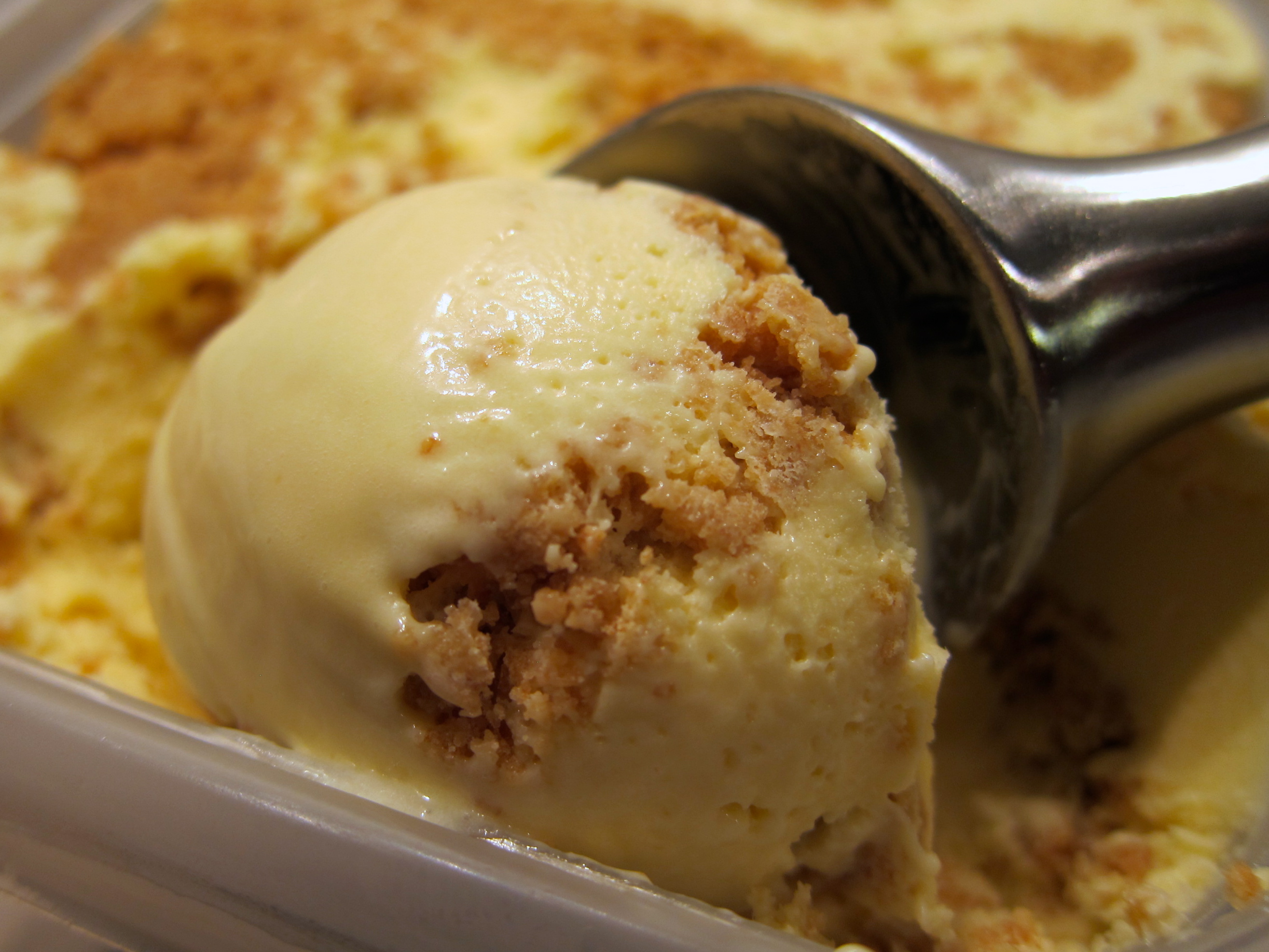
But 24 hours after I churned the ice cream, I took the container out of the freezer and dug in with the ice cream scoop. I couldn’t believe it when the scoop just effortlessly slid through the ice cream. It was a perfect consistency, immediately scoopable (even days later, it was still the consistency of gelato). And the taste? Exactly what I was going for: key lime pie, pure and simple.

Let’s just say that the chocolate ice cream I’ve had in the freezer has been feeling a little ignored for a while.

IMG_2714

Key Lime Pie Ice Cream

For crust:
1/2 cup plus 1 tablespoon graham cracker crumbs (from 5 crackers; you can put them in a ziploc bag and use a rolling pin to crush them into crackers)
1 tablespoon sugar
2 1/2 tablespoons unsalted butter, melted

For ice cream:
1 can (14oz sweetened condensed milk)
1 cup heavy cream
1/2 cup sugar
pinch of salt
3/4 cup freshly squeezed key lime juice (or regular lime juice)
4 large egg yolks

First make the crust:
Preheat oven to 350 degrees. In a small bowl, mix, using a fork, graham cracker crumbs and sugar. Add melted butter and mix with fork until well combined. Press mixture evenly on bottom only (not up to the sides) of 8 inch square glass pan or 9 inch glass pie plate. Bake for 10 minutes. Remove from oven and let cool completely. Break into small bite size pieces. Can be made the day before. Just store in airtight container until ready to use.

Make the ice cream:
In a small bowl, whisk together the egg yolks and the key lime juice. Place a mesh strainer on top of a medium bowl and set aside.

In a saucepan, add sweetened condensed milk, cream, sugar, and pinch of salt. Heat, stirring frequently, over medium heat until combined and bubbles start to form.

Temper the egg yolks by slowly pouring about 1/3 cup of the hot milk mixture into the egg yolks, while whisking constantly. Scrape the tempered egg yolk mixture into the saucepan, again whisking constantly. You’ll notice that the mixture will immediately become thicker. Continue to cook over medium heat for another 4 minutes, stirring constantly with a spatula and scraping the bottom and sides of the pan.

Pour the mixture through the mesh strainer into the medium bowl. Let cool completely and chill thoroughly in the refrigerator.

Churn the ice cream in your ice cream maker according to the manufacturer’s instructions. When it’s finished churning, layer it in a container with the graham cracker crust bits. Start with about one fifth of the ice cream at the bottom of the container. Sprinkle about one fifth of the crust bits. Layer another fifth of the ice cream, followed by another fifth of the crust bits. Continue this way until you finish with the last crust bits on top.