Roasted Sunchokes with Orange, Rosemary, and Pine Nuts

DSC03886

Yesterday was the first day of spring, and here in New York city we got…more snow. Yep, as I am writing this post, I am watching a furious swirl of wet snowflakes covering the oh-so-recently snow-free ground. I can almost hear them: You thought you could get rid of us that easily? <insert evil laugh here>

Nothing describes the absurdity of this winter better than this quote from today’s New York Times: “Snow starts around noon, as temperatures hover just above freezing, and roughs up the evening commute. At 6:46 p.m., spring begins, the snow stops abruptly and twittering robins drape the city with garlands of daffodils.” Steve and I laughed heartily when we read this and then we stopped laughing and each shed a single tear for the loss of our meteorological innocence.

What can I say? Prolonged and brutal winters can make you a little crazy.

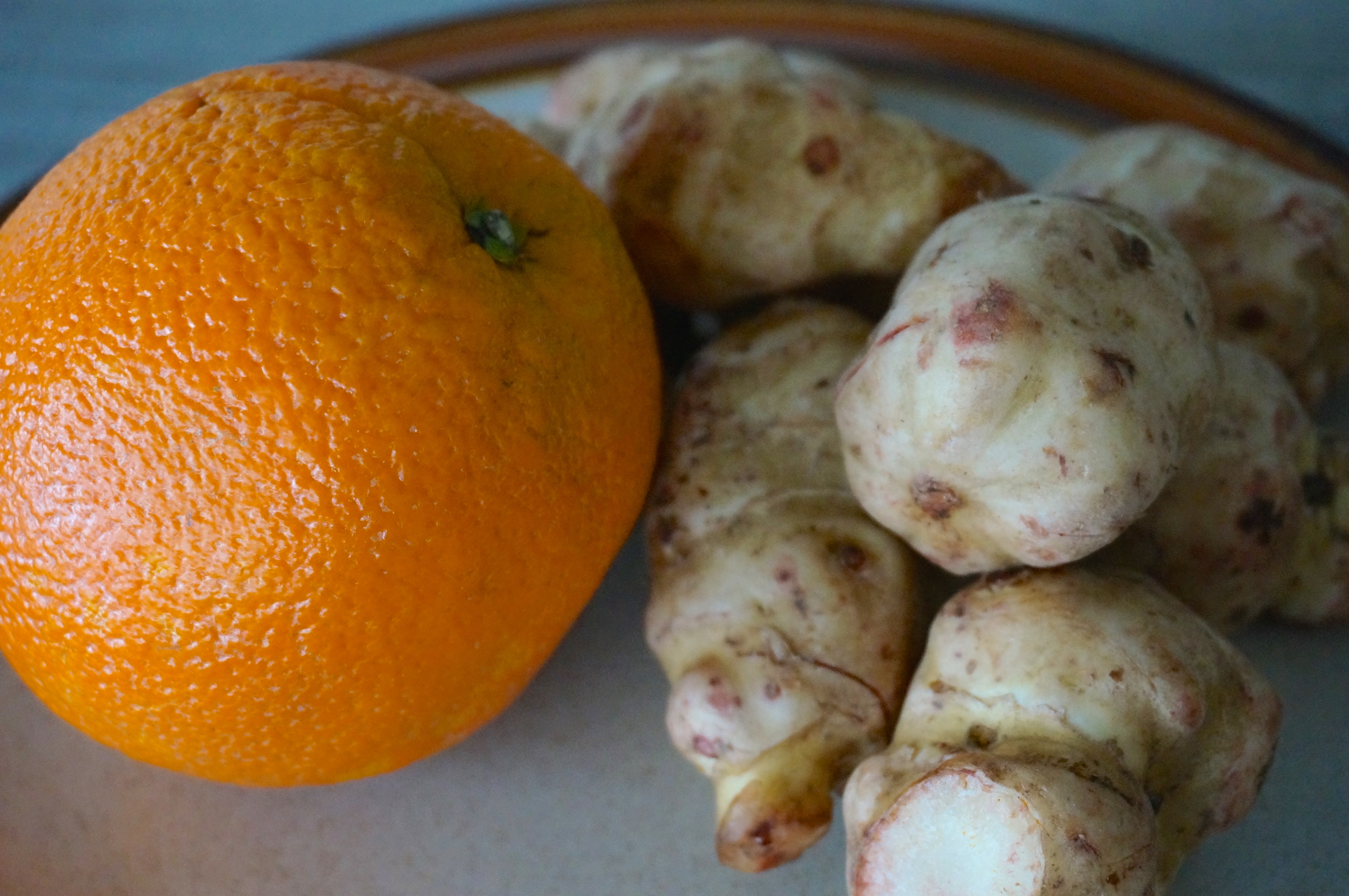
So, just give up on the weather and simply eat and drink to your heart’s delight. To help you with that, here’s an easy recipe for an appetizer that you can make with things you can find right now in your grocery store. Sunchokes are also known as Jerusalem artichokes, for reasons that I can’t fathom, since they are closer to potatoes and carrots than artichokes. In any case, they crisp up in the oven really nicely and they pair very well with toasted pine nuts, orange, and rosemary. A hint of balsamic vinegar adds an additional note of acidity and the final dash of aleppo pepper gives it that unexpected smoky heat that draws you in for one more bite. 
DSC03877Roasted Sunchokes with Orange, Rosemary and Pine Nuts

Makes 4 appetizer servings

Ingredients:

1/4 cup pine nuts
1 lb sunchokes (jerusalem artichokes), washed and scrubbed clean
2 cloves garlic, peeled and slides in thin slices (about 2mm each)
1 teaspoon chopped fresh rosemary
2 tablespoons olive oil
salt and pepper
1 orange
2 teaspoons of good balsamic vinegar
1 teaspoon aleppo pepper

Directions:

Preheat the oven to 425°F.

In a sauté pan, toast the pine nuts over medium heat, tossing frequently, until they give off a toasted smell and they just start to turn golden brown. Immediately remove into a plate and allow to cool.

Slice sunchokes crosswise into 1/4″-1/2″ slices. In a large bowl, toss sunchoke slices with the garlic, rosemary, olive oil, and some salt and pepper. Spread on two large baking sheets, so that all sunchoke slices are lying flat on the pan. Make sure that all garlic slices are on top of sunchoke slices, otherwise they will burn. Roast in the preheated oven for about 30 minutes, without turning, until the bottoms of the slices turn dark brown, but don’t burn. The tops will stay yellow and become soft.

Meanwhile, peel orange and slice crosswise in four 1/2″ slices (there will be some orange left over). Place each slice in the bottom of an individual serving bowl.

Once sunchokes are roasted, pile them on top of the four orange slices. Top with roasted pine nuts, balsamic vinegar, and aleppo pepper, divided among the four bowls. Serve immediately


Pomegranate Aperitif

DSC03813For the last few weeks and until the end of the month I am working on Saturday afternoons. Every Saturday I leave home after lunch and get back around 6pm. As I am leaving work, I send a text message to Steve: “On my way. Cocktails?” I did it the first Saturday I had to work and it’s now become a tradition. I show up around 6pm and we share a cocktail, different each week. This is one of those cocktails. It’s a little tart and a little fizzy and one hundred percent refreshing. It’s the kind of cocktail you gulp down in less than 2 minutes without realizing it. In other words, my favorite kind.

Pomegranate Aperitif – Adapted from Bon Appétit

Makes 6 drinks

Note: If you don’t have boiled cider syrup or saba (wine-grape juice that’s been reduced until syrupy and concentrated), use a few drops of good balsamic vinegar.

Ingredients:

1 cup pomegranate juice
2 tablespoons boiled cider syrup or saba
2 cups Lillet Blanc
4 dashes celery bitters
Club soda

Directions:

Whisk pomegranate juice and cider syrup or saba in a large pitcher, then stir in Lillet and bitters. Pour into rocks glasses filled with ice; top off with club soda.

Miso-Glazed Turnips

DSC03867

I started learning English when I was 8 years old. My parents enrolled me in after-school lessons that took place at a private high school called The English School. In my first two years there, my teachers spoke Greek, so they would explain things that we learned in a language we understood. Towards the end of my second year, though, I found out that starting the following year, my teachers would only speak English. I was terrified. How would they be able to explain things to me? It took one lesson that following year to ease my fears. I hadn’t realized that I had already learned enough English to be able to communicate with the teacher.

DSC03866

One day, our exercise revolved around a fairy tale called “The Enormous Turnip.” It’s an old Russian fable of a farmer who plants a turnip that grows so large that he can’t pull it out of the ground. He calls his wife to help and then progressively more and more people and animals come to help them pull it out. It’s not until the tiny mouse joins them that they are able to finally pull the turnip out of the ground.

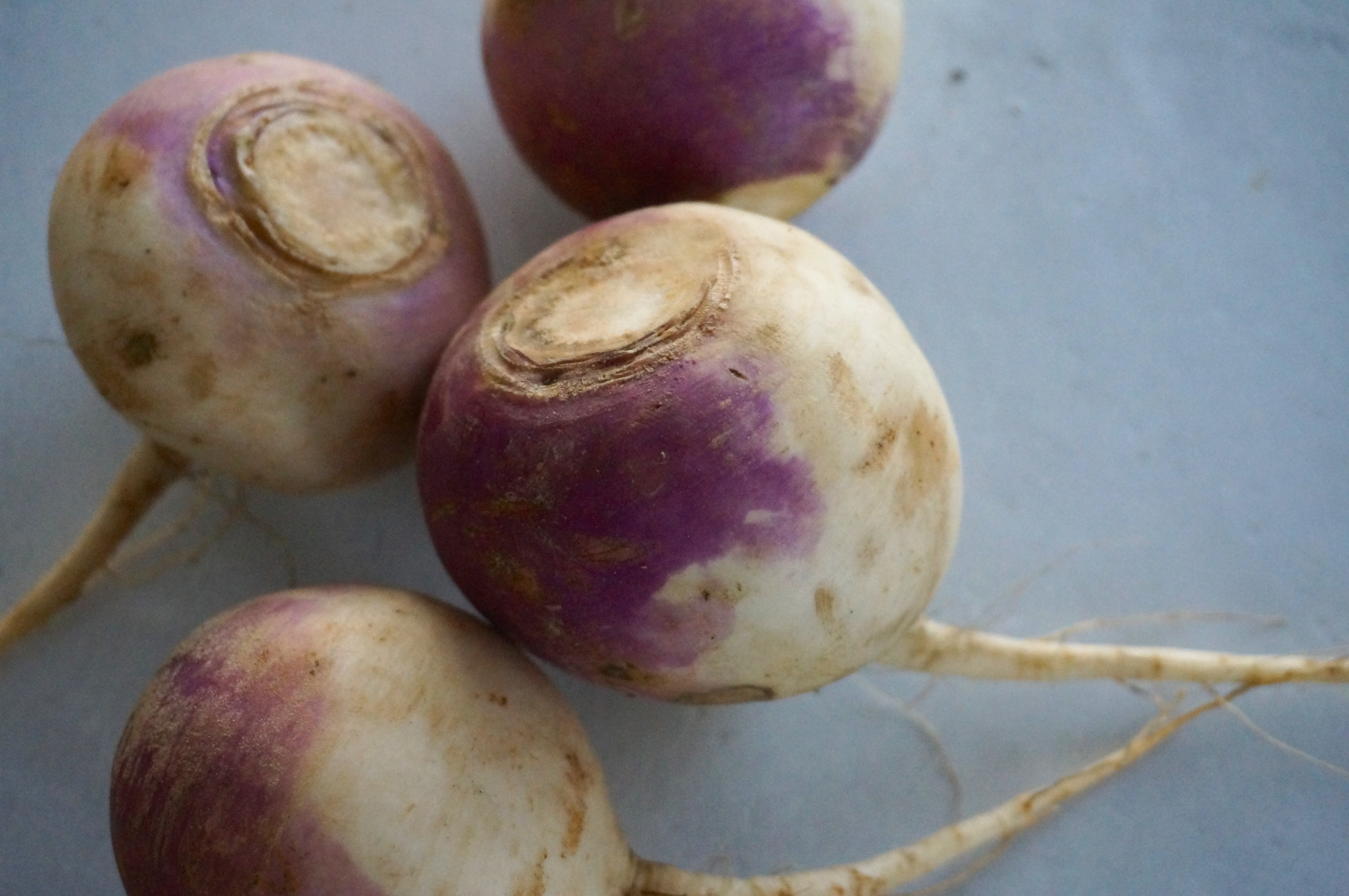
We read the story in class and we all had one question: What the hell is a turnip? We had never seen or eaten one. There wasn’t even a Greek word for it. The teacher struggled to explain that it was a root vegetable like a carrot but round and purple-white. It took a couple of decades for me to finally eat a turnip and when I did, I loved it.

Its pungent, almost medicinal smell is tempered by a sweetness that is especially brought out by roasting it or sautéing it. This recipe is simple but it creates a really flavorful side dish that can accompany either meat or seafood.

turnipMiso-Glazed Turnips – Slightly adapted from Bon Appétit

Ingredients:

1 pound small turnips, trimmed, scrubbed, cut into 1” wedges (peeled or unpeeled)
2 tablespoons white miso
2 tablespoons unsalted butter
1 teaspoon sugar
¾ cup water
Kosher salt and freshly ground black pepper
2 tablespoons fresh lemon juice

Directions:

Combine turnips, miso, butter, sugar and water in a medium skillet.

Bring to a boil over medium-high heat and cook turnips, turning occasionally, until they are tender and liquid is evaporated.

Once all the liquid has cooked off, keep cooking turnips, tossing occasionally, until they are golden brown and caramelized and the sauce thickens and glazes the vegetables, about 5 minutes longer.

Add lemon juice and a splash of water to pan and swirl to coat turnips. Season with salt and pepper.

Key Lime Pie

DSC03696

During my last trip back home, I was talking about something with my mom (I don’t recall exactly what), when she said to me “I remember that during your first year in America, you kept telling me that America isn’t that great and that you’d definitely prefer to return back home.”

I do remember saying something to that extent when I returned back home for my first Christmas break in college. I had been in the U.S. for four months. They were great months, full of experiences and discoveries, new and tenuous friendships, and an unfamiliar sense of freedom. But everything was still an “other” to me. Or, more likely, I was an “other” to them. I didn’t quite belong the way I still belonged back home.

DSC03687

I probably said the same thing to her during my next visit back home, over my first summer break. But I was being, by then, only partly honest with her. I had been bitten by the bug, the American bug, the one of opportunity and might, of huge malls and amusement parks, of college parties and courses on post-modernism, of baby back ribs and key lime pie. But I didn’t have the heart to tell her. So, I probably repeated those same words, not wanting to hurt her feelings.

It wasn’t until the following summer, when “they” became “we,” that she knew she had lost me. I no longer referred to Americans in the third person. It wasn’t they who liked to hang out in malls all day, it was weThey didn’t debate the limits of free speech, we did. It took until my third summer break for my mom to directly confront me with it. “You’re never coming back, are you?” she asked me one day. “No,” I said guiltily “I’m not.” I had crossed over. The key lime pie had won.DSC03690Key Lime Pie – Adapted from Epicurious

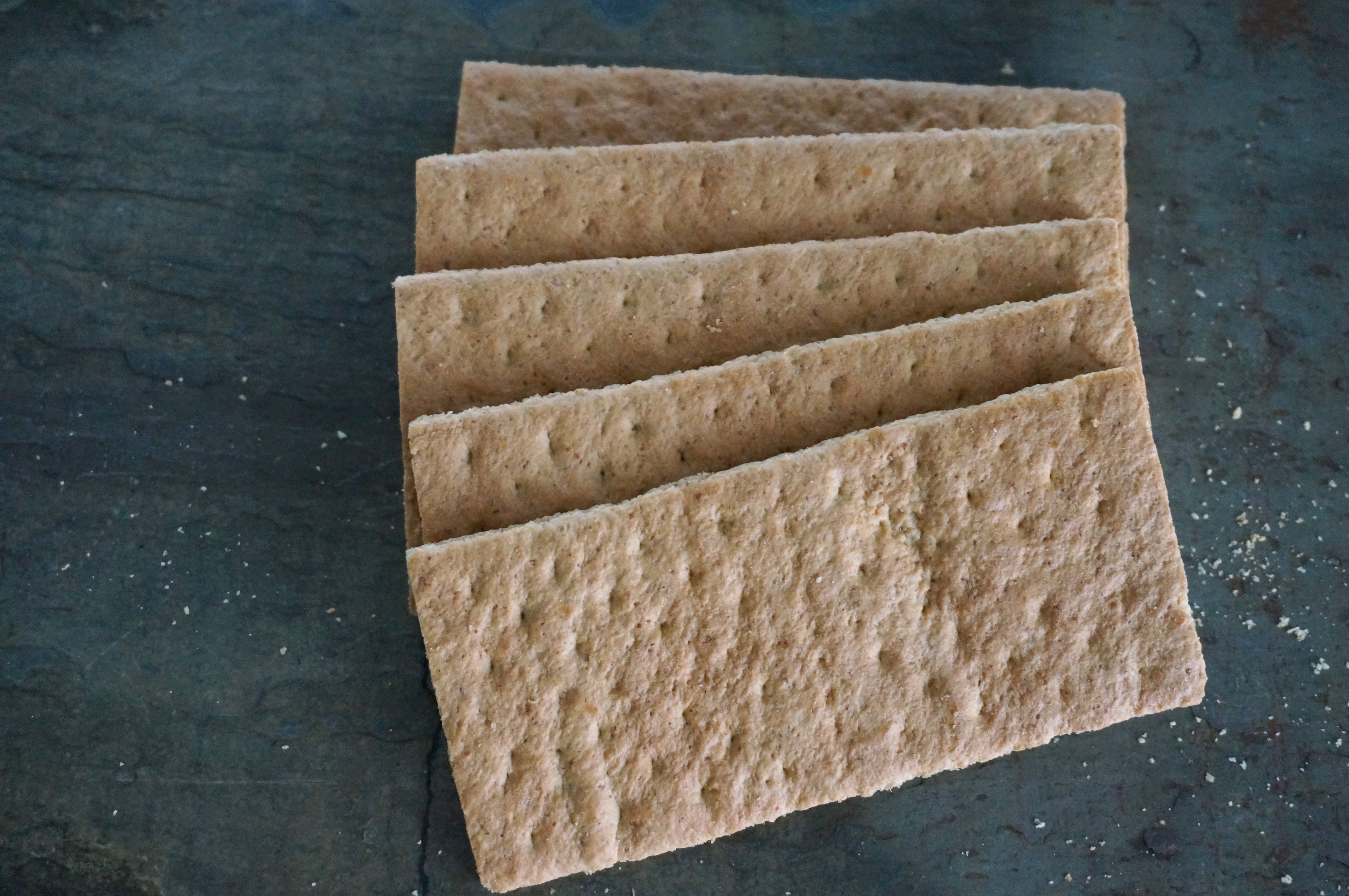
Note: I know everyone says that no dessert is more American than apple pie, but I’m here to tell you that they are wrong. Key lime pie is the national dessert of this country. Or at least it should be. You’ll find a lot of recipes for it online, with all kinds of complex steps and weird variations. Ignore them. Key lime pie should be simple. It must use sweetened condensed milk and egg yolks. It must be made with freshly squeezed key lime or regular lime juice, never from a bottle. The crust must be made with graham crackers. And your should never, ever serve it with whipped cream on top.

Ingredients:

For crust:
1 1/4 cups graham cracker crumbs from 9 (2 1/4-inch by 4 3/4-inch) crackers
2 tablespoons sugar
5 tablespoons unsalted butter, melted

For filling:
2 (14-ounce) cans sweetened condensed milk
8 large egg yolks
1¼ cup key lime juice (or regular lime juice)

Directions:

Make crust: Preheat oven to 350°F.

Stir together graham cracker crumbs, sugar, and butter in a bowl with a fork until combined well, then press mixture evenly onto bottom and up side of a 9.5-inch glass pie plate.

Bake crust in middle of oven 10 minutes and cool in pie plate on a rack. Leave oven on.

Make filling and bake pie: Whisk together condensed milk and yolks in a bowl until combined well. Add juice and whisk until combined well (mixture will thicken slightly).

Pour filling into crust and bake in middle of oven 20 minutes. Cool pie completely on rack (filling will set as it cools), then chill, covered, at least 8 hours.

Cauliflower Parmesan

DSC03825 Damn you Melissa Clark and your beguiling ways in the kitchen! I mean, come on! How do you expect us to watch you making this cauliflower parmesan, with such ease and with your trademark witty humor and not expect us to rush out and buy the necessary ingredients to make it at home? Such seducing tactics in front of a camera and in a kitchen should be illegal.DSC03816 Seriously, though. I never thought that such a thing could even exist. I’ve had eggplant parmesan and chicken parmesan and I like both of them but they often tend to be too greasy and too heavy. One of those meals that you think you definitely want to eat but that you regret the moment you finish the last bite. But cauliflower? It’s perfect. It doesn’t absorb much oil, unlike eggplant that sucks up every last drop when you fry it, and it’s not chicken, that could end up rubbery or tough. Cauliflower retains its own crispy snap but it’s enveloped in crunchy breadcrumbs that provide that brilliant counterpoint to the cheese and tomato sauce that makes a parmesan dish so irresistible. And you, Melissa Clark? You’ve won. I’m already drooling over those lemon bars with olive oil and sea salt that you have once again bewitched me with.DSC03818Cauliflower Parmesan – Adapted from the New York Times

Note: If you don’t have time or the inclination to make your own tomato sauce, use your favorite brand. Avoid anything that has too many strong flavors, like olives or artichokes. Just a simple marinara sauce, with tomatoes and basil is perfect. You will need the equivalent of 5 cups, so about 40 oz.

Ingredients:

Sauce:
2 28oz cans of crushed or diced tomatoes
¼ cup olive oil
6 cloves of garlic, peeled and lightly smashed with side of knife
1 onion, peeled and cut in half
2 large sprigs of basil
2-3 large sprigs of fresh oregano (optional)
4 tablespoons butter

Cauliflower:
½ cup all-purpose flour
4 large eggs, lightly beaten
3 cups panko or plain unseasoned bread crumbs
Kosher salt, as needed
Black pepper, as needed
1 medium head cauliflower, trimmed and cut into 2-inch florets
Olive oil, for frying
1 cup fresh, finely grated Parmesan, preferably Parmigiano-Reggiano
½ pound fresh mozzarella, torn into bite-size pieces

Directions:

First make the sauce. In a large pot, heat the olive oil over medium heat. Add the garlic and stir occasionally until garlic is golden brown. Add the rest of the sauce ingredients, bring to a brisk simmer and cook for 45 minutes, stirring occasionally. Discard onion, garlic and herb sprigs. Taste the sauce and season it with salt to your liking. Make ahead: Sauce can be prepared up to three days ahead and kept in the fridge, covered.

Heat the oven to 400 degrees. Place flour, eggs and panko into three wide, shallow bowls. Season each generously with salt and pepper. Be really generous with the salt and pepper. Only a tiny bit will end up on the cauliflower. Dip a cauliflower piece first in flour, then eggs, then coat with panko. Repeat with remaining cauliflower. Place each piece of breaded cauliflower on a large baking sheet.

Fill a large skillet with about 1/2-inch olive oil. Place over medium-high heat. When oil is hot, fry cauliflower in batches, turning halfway through, until golden brown. Transfer fried cauliflower pieces to a paper towel-lined baking sheet. Spoon a thin layer of sauce over the bottom of a 9-by-13-inch baking pan. Sprinkle one-third of the grated Parmesan over sauce. Scatter half of the cauliflower over the Parmesan and top with half the mozzarella pieces. Top with half the remaining sauce, sprinkle with another third of the Parmesan and repeat layering, ending with a final layer of sauce and Parmesan.

Transfer pan to oven and bake uncovered until cheese is has melted and casserole is bubbling, about 40 minutes. Let cool a few minutes before serving.

Mocha Mousse with Szechuan Peppercorns

DSC03652

Valentine’s day has got me thinking about the nature of love. I’ve always scoffed at the suggestion of love as a natural force like gravity (it was an eye-rolling moment for me in “Interstellar”). But then again, isn’t love the result of chemicals produced and exchanged between our brains’ neurons? Aren’t there hormones involved, and sweat and saliva (among other things)? These are very much real things that require the consumption (and creation) of energy, albeit in small quantities. So, who am I to say that love isn’t a natural force? It certainly is a force of nature.

DSC03644

Or maybe love is a parasite, that infects humans in order to ensure its continued existence.

There is a fungus called ophiocordyceps unilateralis that propagates itself by infecting carpenter ants with its spores. The spores burrow their way into the ants’ brains and take over their behavior (which is why the fungus is also known as the “zombie fungus”). They force the ant to climb up a leaf and bite at the underside of the leaf, unable to unlock their jaw and therefore unable to move or walk away. The ants eventually die, still gripping the leaf. Soon, from the back of the ant’s head grows a long stalk that begins to release spores that land on the ants walking around below, thus ensuring the next cycle of zombie ants.

Creepy, you say? Nothing to do with beautiful love as we know it? To you I say: have you ever seen the irrational, crazy things love makes people do? I wouldn’t throw out the parasite theory just yet.

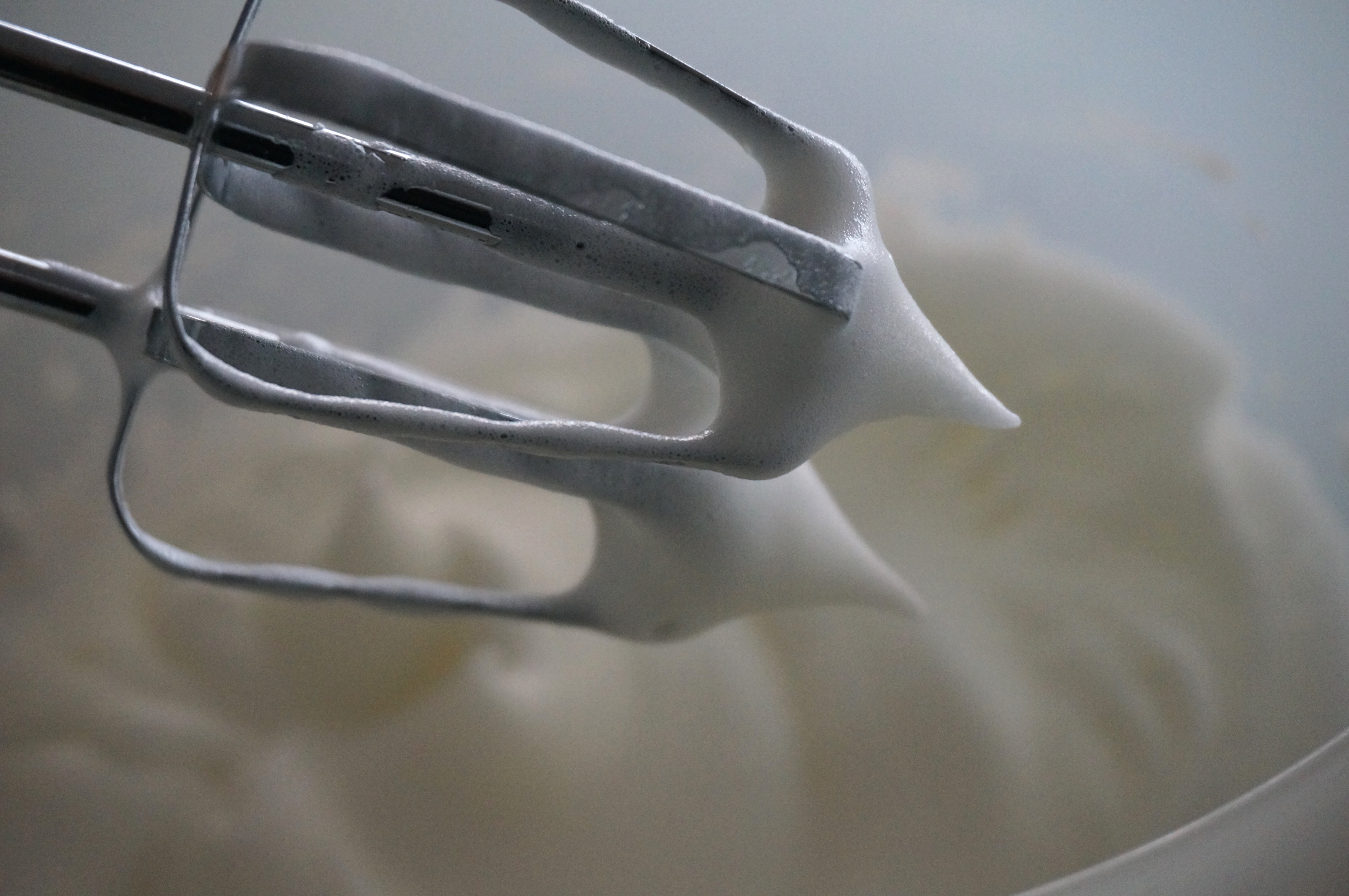
DSC03646But for you romantics out there (and I count myself amongst you), here is a third possibility. Maybe love is just a lovely mystery, something greater than the sum of its parts.I like this idea of love as a peculiar process that enriches and transforms us. A little like the way in which when air is introduced into slimy, pale egg whites, it turns them into dazzlingly white, ethereal clouds, ready to be baked into crispy meringues, transformed into angel food cake, or folded into melted chocolate to make a silky smooth chocolate mousse.

Mocha Mousse with Sichuan Peppercorns – Slightly adapted from Epicurious.com

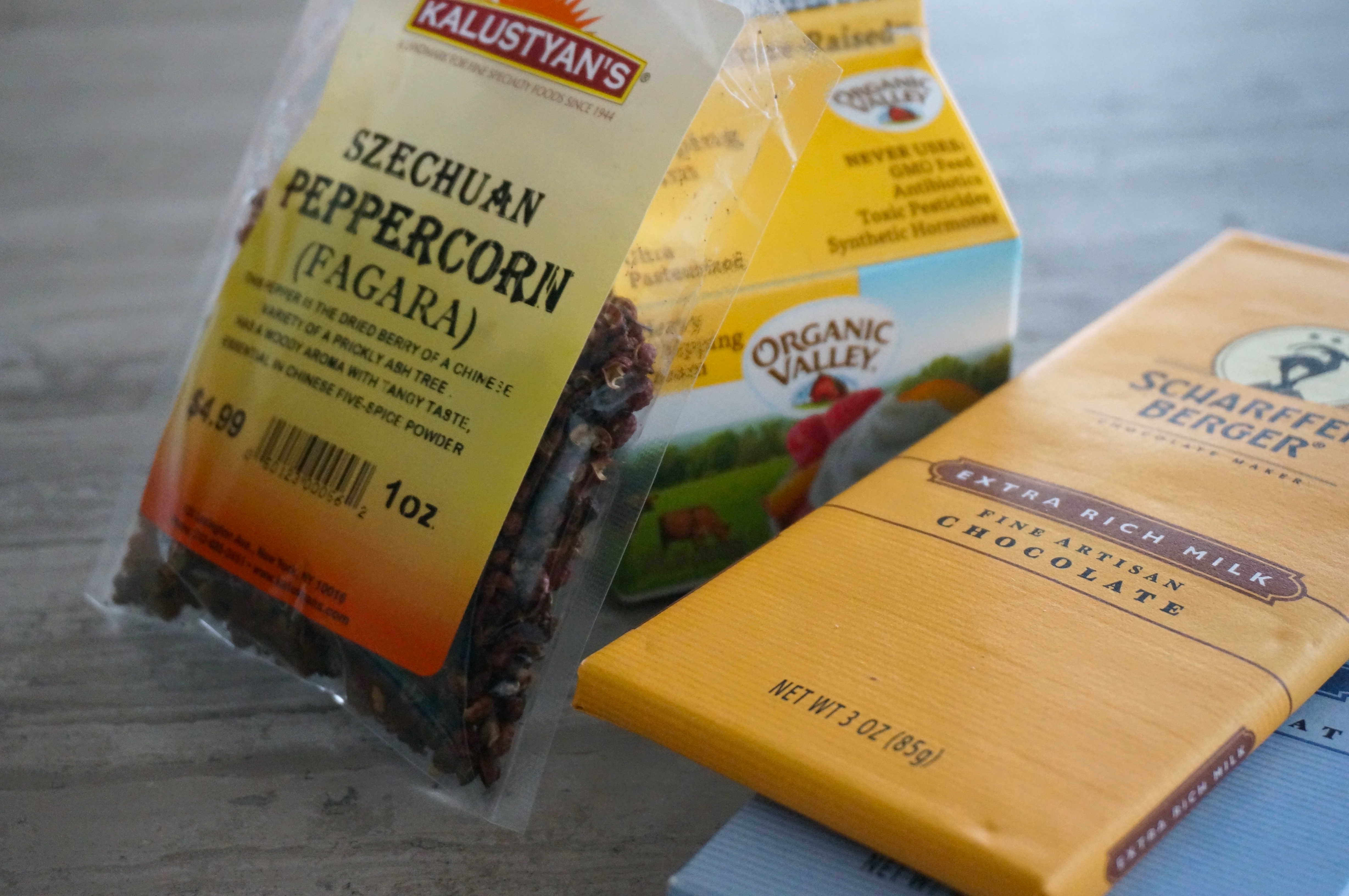
Note: If you can’t find sichuan (or szechuan) peppercorns you can simply omit them. But they do add a nice, subtle zing to the mousse.

Makes 8 servings

Ingredients:

3/4 teaspoon Sichuan peppercorns
1 cup heavy cream
1 1/2 tablespoons ground coffee beans
12 ounces 70%-cacao bittersweet chocolate, chopped
9 large egg whites
3 tablespoons sugar

Directions:

Coarsley grind peppercorns in mortar and pestle or using a bowl and back of a spoon.

Bring cream, coffee, and peppercorns to a simmer in a small saucepan. Remove from heat and let steep, covered, 30 minutes. Strain cream through a fine-mesh sieve into a bowl, pressing on solids.

Melt chocolate in a large bowl. Stir in cream and mix with spoon until completely combined. Cool slightly.

Beat egg whites with sugar using an electric mixer until they just hold stiff peaks. Fold egg whites into chocolate mixture gently but thoroughly (no white streaks remaining).

Spoon mousse into 4oz-5oz serving glasses (it will be runny; it will firm up once chilled). Cover and chill at least 3 hours before serving. Mousse can be prepared ahead and kept in the fridge covered for up to 2 days.

Sweet Potato, Kohlrabi, and Peanut Stew

DSC03750

Over the last couple of years, our diet has slowly shifted away from meat. At first, our meals featured chicken a lot more than red meat. At some point, I found myself ordering fish from Fresh Direct and Good Eggs more and more often, until I cooked some kind of seafood at least three times a week. And in the last few months, I have found myself making a completely vegetarian meal for us at least once a week, sometimes twice. It helps that we have access to great vegetables from both local farmers (thank you Good Eggs and farmers’ markets) and far away ones (thank you Whole Foods and Fresh Direct).

Our go-to vegetarian meal has been my mom’s lentil recipe (sometimes with the addition of a little smoked fish, so…vegetarianish). But I have also cooked beans a few times, boiled in water with potatoes and carrots, that we ate with lots of olive oil and lemon juice (my favorite bean dish as a kid). So for Christmas, I gave Steve a 5lb box of five different kinds of dried beans from Rancho Gordo (isn’t it such a romantic gift? <insert fart joke here>). I’ve been cooking beans once a week since then, experimenting with different ways of preparing them.

DSC03743

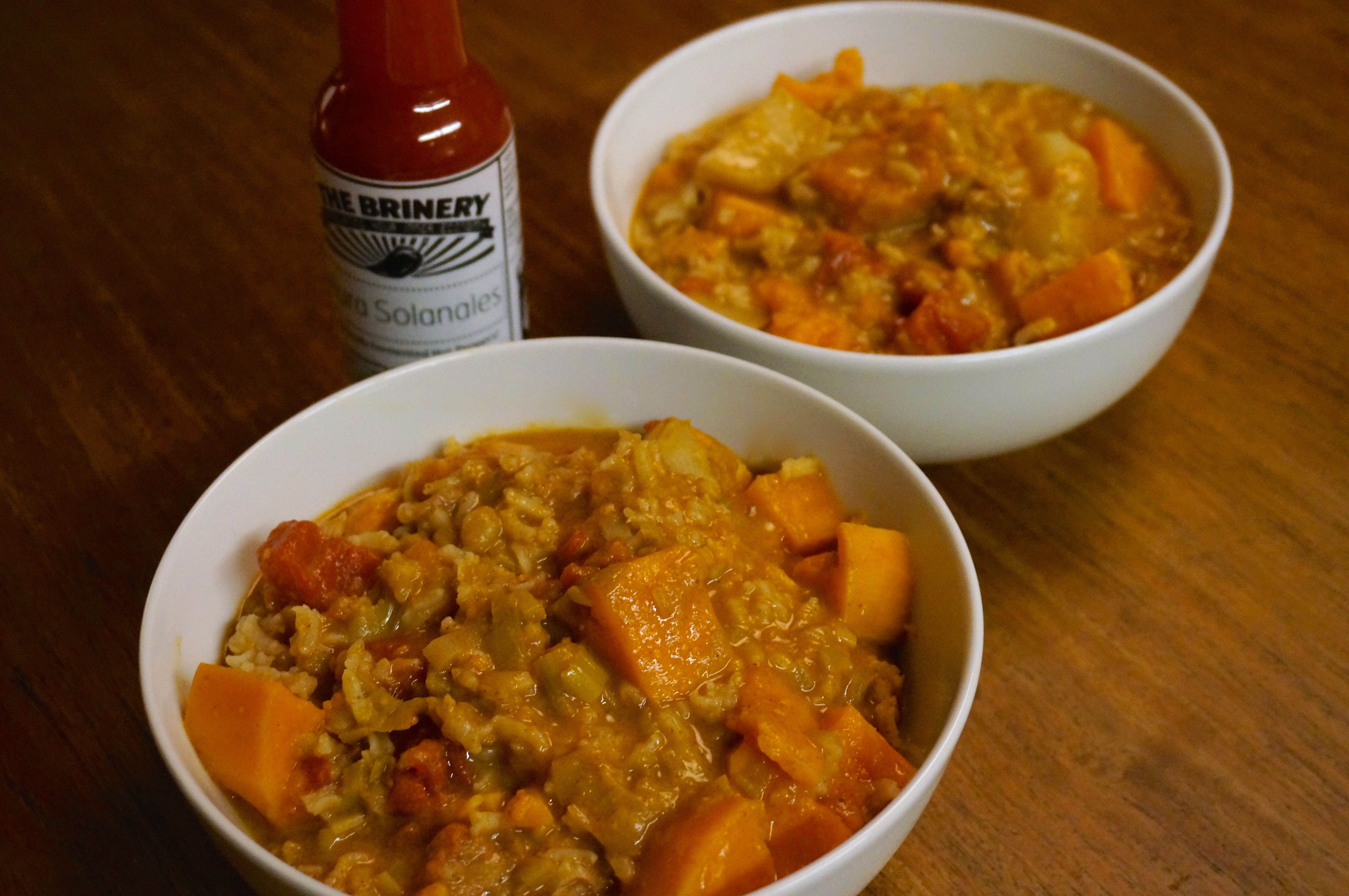
Today’s recipe does not have beens in it, but it’s vegetarian. In fact, it’s vegan. It’s the result of needing to use up a bunch of veggies I bought in preparation for the giant snowstorm that never came last week. I had leeks, kohlrabi, and sweet potatoes. Not an obvious combination of ingredients. For some reason, however, I remembered a stew I used to make many years ago, that was based on a West African dish made with peanuts. I no longer had that recipe but I figured I could make one up myself. And I did. The result was a thick, rich, vegetarian stew that was perfect for a cold winter night. And a nice addition to our list of vegetarian meals.

DSC03745Sweet Potato, Kohlrabi, and Peanut Stew

Note: I’ve noticed that some people have identified that this is a paleo recipe as well, though I thought that peanuts were not paleo. In any case, if you are a paleo enthusiast but you still eat peanuts, this is for you.

Makes 5-6 servings

Ingredients:

2 tablespoons olive oil
3 leeks, dark green parts discarded, white parts sliced thinly crosswise
1/2 tablespoon cinnamon
1/2 tablespoon paprika
3 cloves garlic, finely chopped
5 cups vegetable stock
2 medium sized kohlrabi, peeled and cut into 1″ cubes
2 sweet potatoes, peeled and cut into 1″ cubes
1 14oz can of dice tomatoes
2 bay leaves
1 teaspoon salt
freshly ground black pepper
1/2 cup natural-style (no sugar added) peanut butter (smooth or chunky)
1/2 cup basmati or jasmine rice
hot sauce (optional)

Directions:

Place peanut butter in a medium-sized heat-proof bowl and set aside.

In a large heavy pot, heat oil over medium-high heat. Add leeks and sauté stirring frequently until soft, about 5 minutes. Add cinnamon, paprika, and garlic. Continue to cook, stirring constantly for about 30-45 seconds. Add stock, kohlrabi, potato, tomatoes with their juices, bay leaves, salt and pepper. Bring to a boil, lower heat to medium-low, cover pot and cook for 10 minutes.

Uncover pot and add some of the hot liquid in the bowl with the peanut butter. Use a spoon or whisk to help the peanut butter dissolve. Pour dissolved peanut butter back into pot and add rice. Raise heat to medium-high and bring back to a low boil. Lower heat to medium-low and cook uncovered, stirring occasionally, for about 20 minutes, or until rice and potatoes are fully cooked (kohlrabi will still have a slight crunch). Adjust salt if necessary. Remove and discard bay leaves.

Serve immediately, topped with your favorite hot sauce.