Pasta Flora / Παστα Φλωρα (Apricot Jam Coffee Cake – Cyprus Version)

Pasta Flora / Παστα Φλωρα (Apricot Jam Coffee Cake – Cyprus Version)

There is no better way to experience the inertia of history than through ethnic cuisines. Take the Mediterranean, for example. If you were to take a cruise around the region and sample food from all the countries you visit – Spain, Italy, Morocco, Greece, Cyprus, Israel, Lebanon, Egypt – you’ll start to notice that variations of the same dish have a way of popping up in every place.
DSC01188

Talk to the people of each country and they will tell you that the dish originated with them, brandishing its name as proof or the use of a local ingredient as irrefutable evidence. In reality, so much of the “traditional” foods of those countries come from their past, often going back centuries to empires that ruled the region: the Greeks, the Romans, the Venetians, the Ottomans.

It’s both a comforting and frustrating experience. Comforting, in that it confirms the sameness in all of us, the artificiality of our differences, and our shared roots. Frustrating because it seems unable to bridge differences that have led to wars and conflict. If Israelis and Palestinians could all concentrate on their common culinary tradition, would they be more conciliatory towards each other? Would Greeks and Turks? Doubtful.
DSC01177

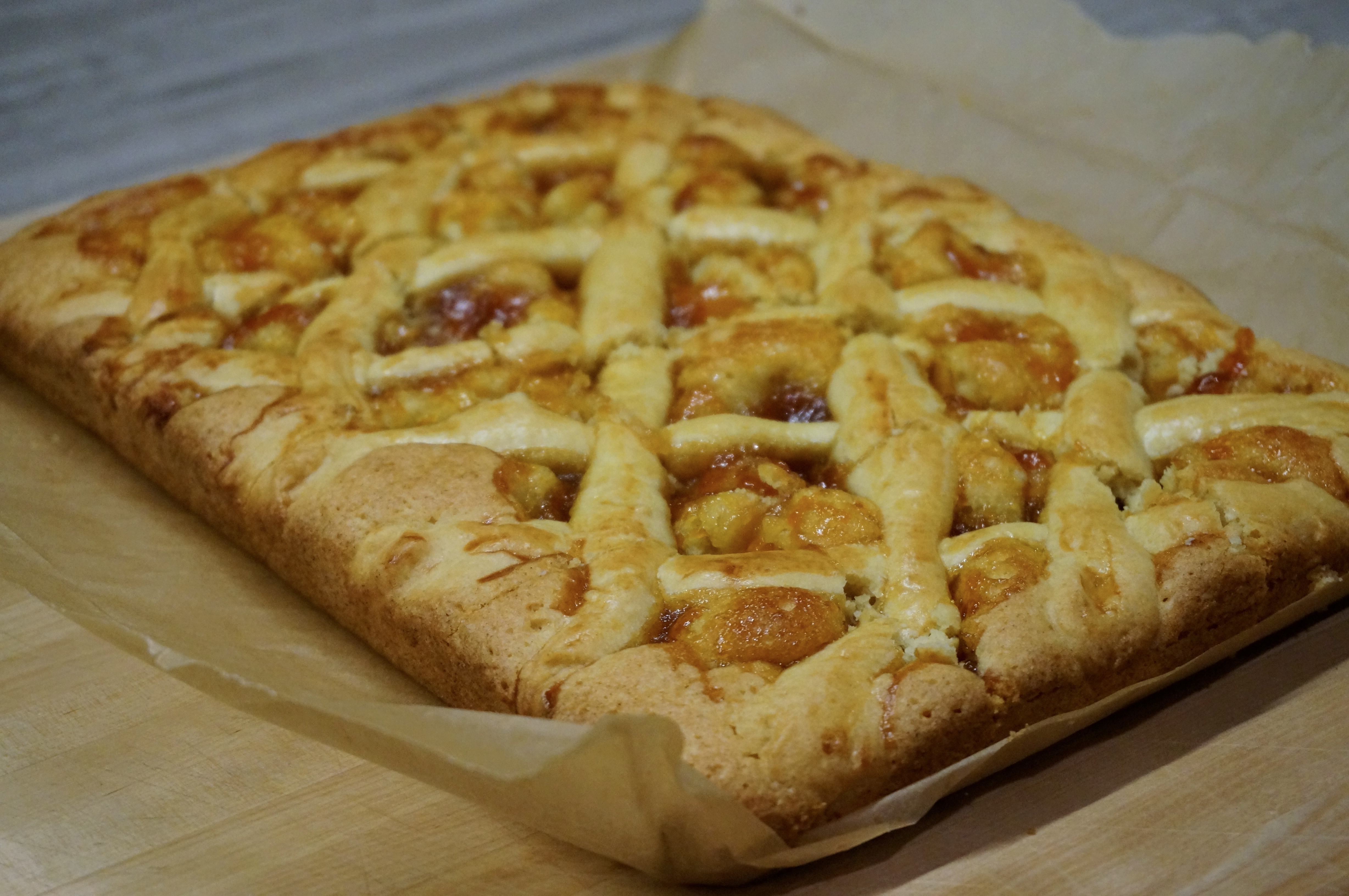
This recipe is for one of those dishes that spans different countries in the Mediterranean. I knew it as a Greek Cypriot dessert called pasta flora. Growing up, my mom made it regularly and it was one of my favorites. At some point, I found out that it was also made in Greece but somewhat differently, with a short, cookie-like crust, instead of the cake base used in Cyprus. Then a few years back, an Italian friend I invited to dinner brought over a dessert she made. As soon as I saw it, I exclaimed “You made a pasta flora!” She smiled and said “a pasta FROLA,” stressing the reversed r and l.
DSC01181

It turned out, it’s an Italian dessert called pasta frola. And today, doing a little bit of research, I found out it’s also an Argentinian dessert, brought over by Italian immigrants, usually filled with quince paste, instead of the apricot jam used in Cyprus.

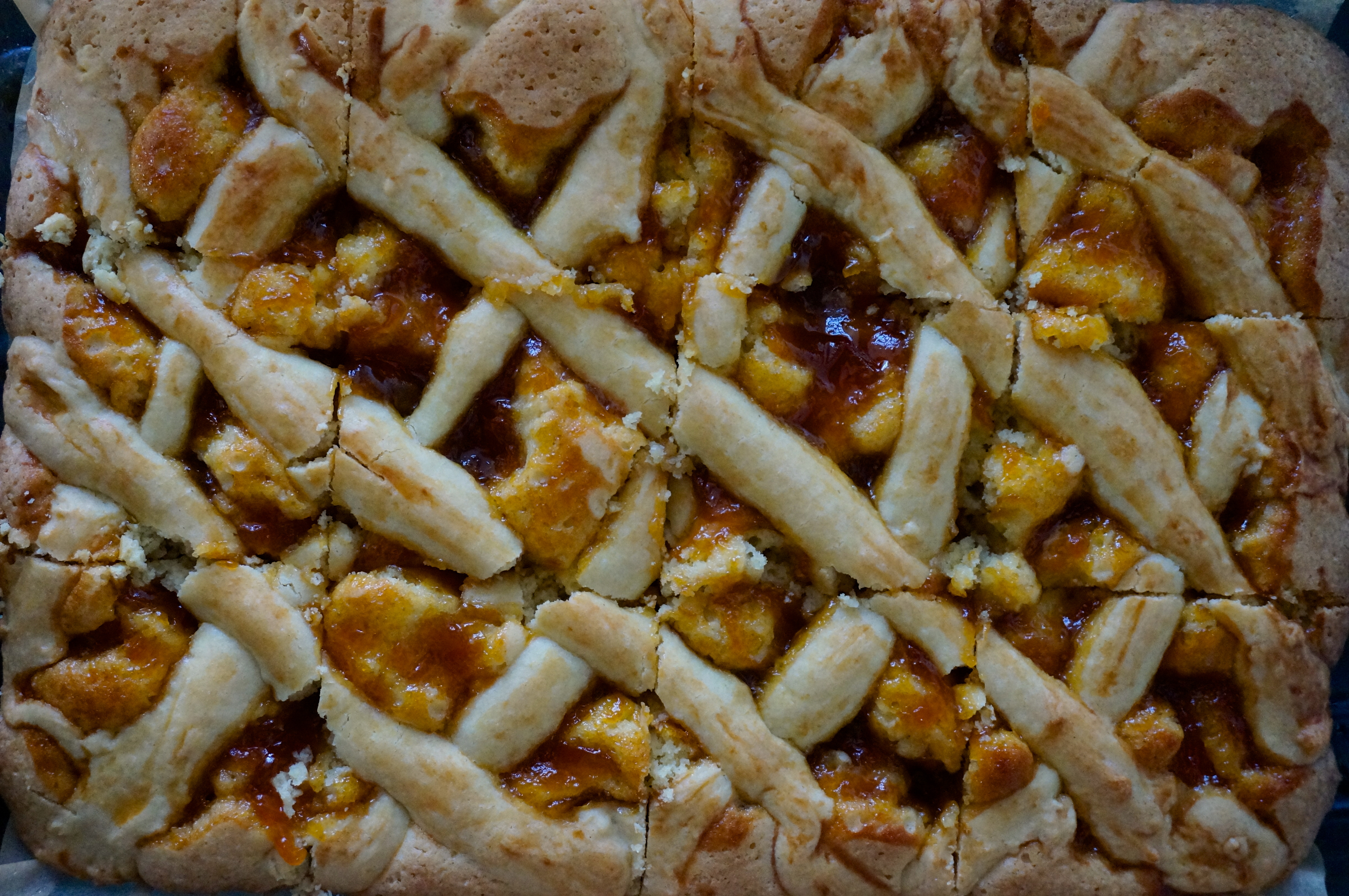
Here’s the bottom line: No matter where this comes from, it’s a winner. This recipe is for the Cypriot version. It makes something more like a coffee cake, with a layer of apricot jam and a lattice crust. It’s simple to prepare and makes a wonderful dessert or even breakfast, no matter where you are from or what part of the world you are eating it in.

DSC01194

Pasta Flora / Παστα Φλωρα (Apricot Jam Coffee Cake – Cyprus Version) – Adapted from Μαγειρεύοντας για φίλους Tόμος α

Ingredients:

2 1/2 cups all purpose flour
3 teaspoons baking powder
pinch of salt
3 large eggs
1 cup sugar
1 cup vegetable oil
1 teaspoon brandy or cognac
finely grated zest of one lemon
1 cup apricot jam
6 tablespoons all purpose-flour
1 egg, lightly beaten with 1 tablespoon of water, for eggwash

Directions:

Preheat the oven to 350 degrees. Lightly grease a 9 x 13 baking pan and line it with parchment paper (alternatively, grease, lightly dust with flour and shake out excess). In a medium bowl, whisk together 2 1/2 cups of flour, baking powder, and salt. Set aside.

In the bowl of a mixer, beat 3 eggs well, until they lighten in color, for 2-3 minutes. Add the sugar and continue to beat for another 2-3 minutes until they thicken and increase in volume. Add the oil, brandy, and zest and mix until combined. Add the flour mixture and using a spatula, fold together just until combined and no dry flour streaks are visible.

Take one cup of the batter out of the bowl and put it in a small bowl.

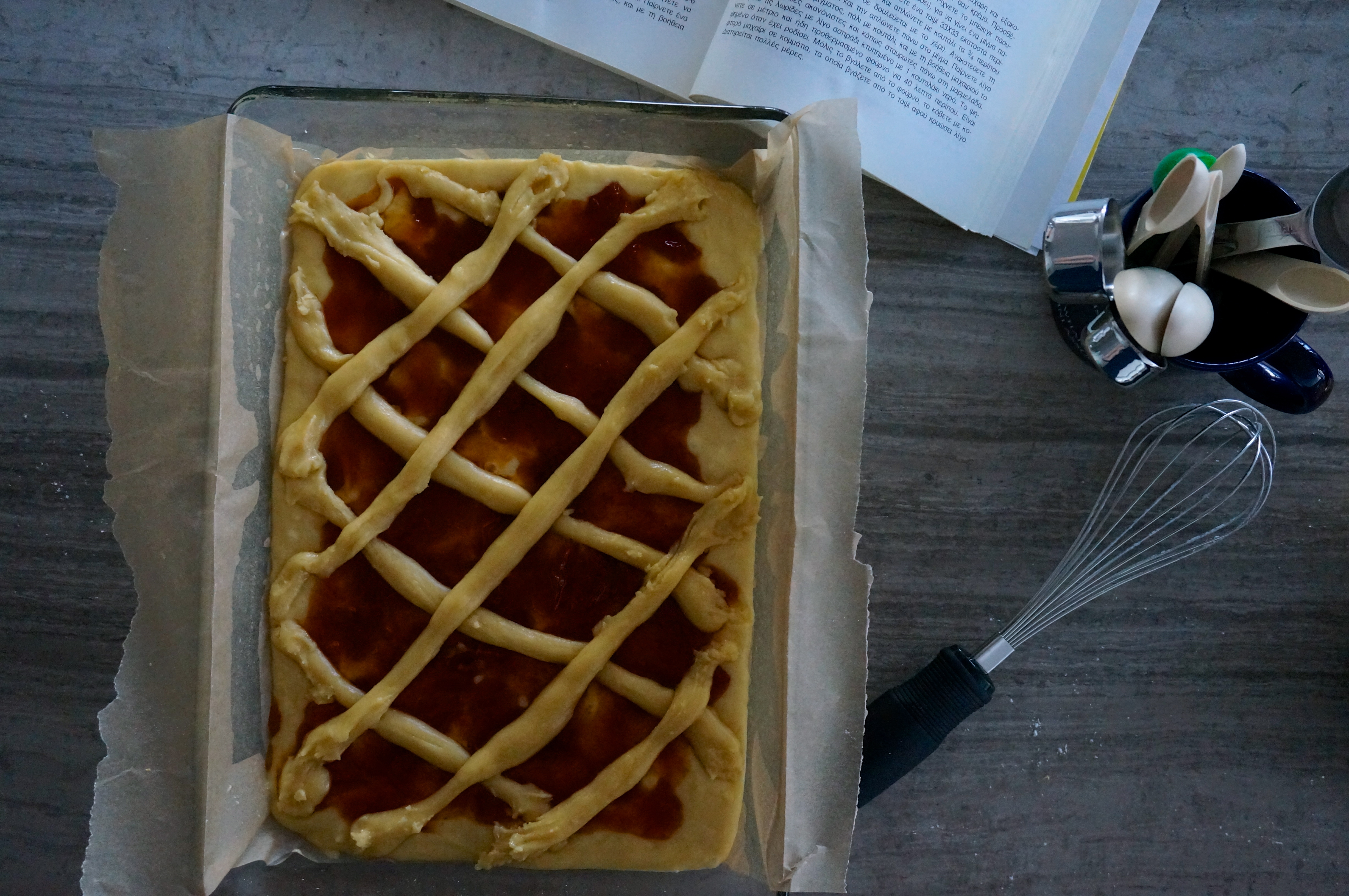
Pour the remaining batter in the prepared baking pan and smooth out the surface with spatula or back of spoon. Stir the apricot jam with a spoon to loosen it up and then carefully spread it on top of the batter in the pan, taking care not to press it into the batter too much. The best way is to just dollop it with a soup spoon and then use the back of the spoon to lightly spread it, leaving about a 0.5-1 inch border around the edge of the pan without jam.

In the small bowl with the 1 cup of batter, add 6 tablespoons of flour. Mix with a spoon until fully combined. The dough will be soft but you should be able to work with it with your hands. If you want, put some flour on your hands to prevent the dough from sticking.  Take a piece of the dough and roll it gently between your hands to create a log about half an inch in diameter. Place it on top of the apricot jam diagonally. Continue until you have created a lattice pattern across the whole pan. Don’t worry too much if your lattice isn’t perfect. When it bakes it will puff up and change shape anyway.

Very gently brush the lattice with the beaten egg. Bake for about 40 minutes until the top is golden brown and a knife inserted in the middle comes out clean.

Let cool for 10 minutes and slice into squares or rectangles. Allow the pasta flora to cool completely before you remove the slices from the pan. Store in an airtight container for 2-3 days or wrap slices with plastic wrap and freeze.
Key Lime Pie Ice Cream

I am very loyal to chocolate. My love for it is endless and my devotion to it is deep. When going over a dessert menu, I will always gravitate first to the choices that include chocolate. I love dark chocolate, mysterious and a little dangerous, but I also love milk chocolate, sharply sweet and creamy. On occasion, I’ll even enjoy white chocolate, the chocolate impostor.

IMG_2728

There was only one time when my feelings for chocolate almost changed. I signed up for a 5-day, 30-hour course of chocolate making at the Institute of Culinary Education. It meant that every day for five consecutive days, from 9am to 4pm (with a 1-hour lunch break), I was in a kitchen making different kinds of chocolates. The first couple of days it was pure heaven. The third day it started to change. We all noticed that we avoided licking our fingers. By the fourth and fifth day, I started to feel an actual aversion to the smell and taste of chocolate. It was a little disturbing. Fortunately, after a couple of weeks of no chocolate in sight, my feelings for it returned.

IMG_2706

But despite my undying loyalty to chocolate, there is one dessert for which I am always ready to change teams: key lime pie. If it’s on the menu, I don’t care what decadent chocolate concoctions are available, I will choose the pie. The sweet and tangy custard paired with the buttery graham cracker crust are a combination that is so perfect, so enticing, that I simply find it irresistible.

IMG_2708

So the other day I saw some key limes at the grocery store and I had an idea: how about a key lime pie ice cream? I figured it shouldn’t be too hard to create the recipe, since the pie is already a custard. I just had to adjust the quantities and make it a little runnier than it is for the pie. So, I created a first draft of the recipe and I figured that it would need adjustments before I could post it.

IMG_2712

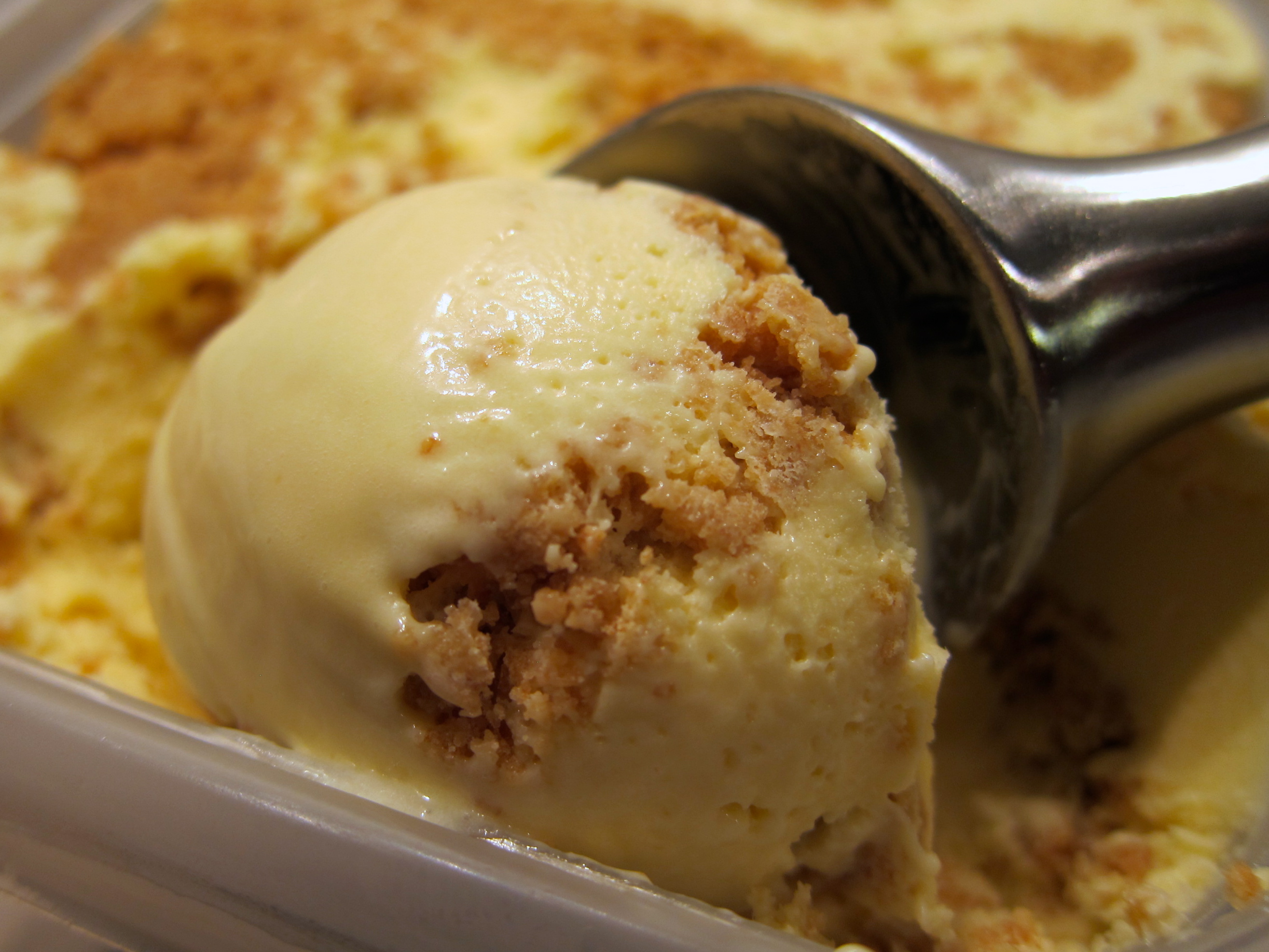
But 24 hours after I churned the ice cream, I took the container out of the freezer and dug in with the ice cream scoop. I couldn’t believe it when the scoop just effortlessly slid through the ice cream. It was a perfect consistency, immediately scoopable (even days later, it was still the consistency of gelato). And the taste? Exactly what I was going for: key lime pie, pure and simple.

Let’s just say that the chocolate ice cream I’ve had in the freezer has been feeling a little ignored for a while.

IMG_2714

Key Lime Pie Ice Cream

For crust:
1/2 cup plus 1 tablespoon graham cracker crumbs (from 5 crackers; you can put them in a ziploc bag and use a rolling pin to crush them into crackers)
1 tablespoon sugar
2 1/2 tablespoons unsalted butter, melted

For ice cream:
1 can (14oz sweetened condensed milk)
1 cup heavy cream
1/2 cup sugar
pinch of salt
3/4 cup freshly squeezed key lime juice (or regular lime juice)
4 large egg yolks

First make the crust:
Preheat oven to 350 degrees. In a small bowl, mix, using a fork, graham cracker crumbs and sugar. Add melted butter and mix with fork until well combined. Press mixture evenly on bottom only (not up to the sides) of 8 inch square glass pan or 9 inch glass pie plate. Bake for 10 minutes. Remove from oven and let cool completely. Break into small bite size pieces. Can be made the day before. Just store in airtight container until ready to use.

Make the ice cream:
In a small bowl, whisk together the egg yolks and the key lime juice. Place a mesh strainer on top of a medium bowl and set aside.

In a saucepan, add sweetened condensed milk, cream, sugar, and pinch of salt. Heat, stirring frequently, over medium heat until combined and bubbles start to form.

Temper the egg yolks by slowly pouring about 1/3 cup of the hot milk mixture into the egg yolks, while whisking constantly. Scrape the tempered egg yolk mixture into the saucepan, again whisking constantly. You’ll notice that the mixture will immediately become thicker. Continue to cook over medium heat for another 4 minutes, stirring constantly with a spatula and scraping the bottom and sides of the pan.

Pour the mixture through the mesh strainer into the medium bowl. Let cool completely and chill thoroughly in the refrigerator.

Churn the ice cream in your ice cream maker according to the manufacturer’s instructions. When it’s finished churning, layer it in a container with the graham cracker crust bits. Start with about one fifth of the ice cream at the bottom of the container. Sprinkle about one fifth of the crust bits. Layer another fifth of the ice cream, followed by another fifth of the crust bits. Continue this way until you finish with the last crust bits on top.


Ispahan Ice Cream (Rose, Raspberry, and Lychee)

This week Steve and I went to the New York City Marriage Bureau to get our marriage license. The city has created a new space in the City Clerk’s building for this purpose, which includes two chapels where couples can get married on the spot. The new marriage bureau is beautiful, with gold crown moulding, marble walls, and gilded light fixtures. It is worlds away from the old room they used as the marriage bureau, where six years ago we went to register as domestic partners .

IMG_2645

On that day back in 2007, we were both excited when we arrived and we approached the bored woman behind the information desk. “What are you here for?” she barked at us without looking up. “We’d like to register as domestic partners!” we both exclaimed, smiles from ear to ear. It had been about 2 years since we’d met and this was a big deal. Same-sex marriage was not yet legal in New York state, and in any case, we weren’t at that point yet. The woman thrust a form at us, told us to to fill it out and go to window 2.

IMG_2645

We filled out the form  right there, in a windowless room, surrounded by walls of peeling paint, harsh fluorescent lighting, and old half-broken chairs. At window 2, a young man in his 20s, wearing a baseball hat backwards, let us through the motions of answering some questions and signing the required documents. When we were finished, there was no congratulations or any other acknowledgement. We needed to get up and let him move on to the next couple.

IMG_2645

Despite the decidedly unromantic circumstances and environment, we were elated. We stepped out into the sunny New York day and we walked half way up the Brooklyn Bridge to celebrate. We took a selfie with one of our cellphones, that we never properly saved and promptly lost.

Things were a little different this time. The beautiful room of the new marriage bureau felt celebratory. People who worked there were polite and attentive. There were many couples waiting their turn, sitting on the green couches that the city provided. Others took pictures in front of the large wall-sized photograph of City Hall. Everyone looked happy and excited. About half the couples we saw were same-sex. And we were there to get a marriage license, for our wedding, which would be legal and real in every sense of the word.

IMG_2645

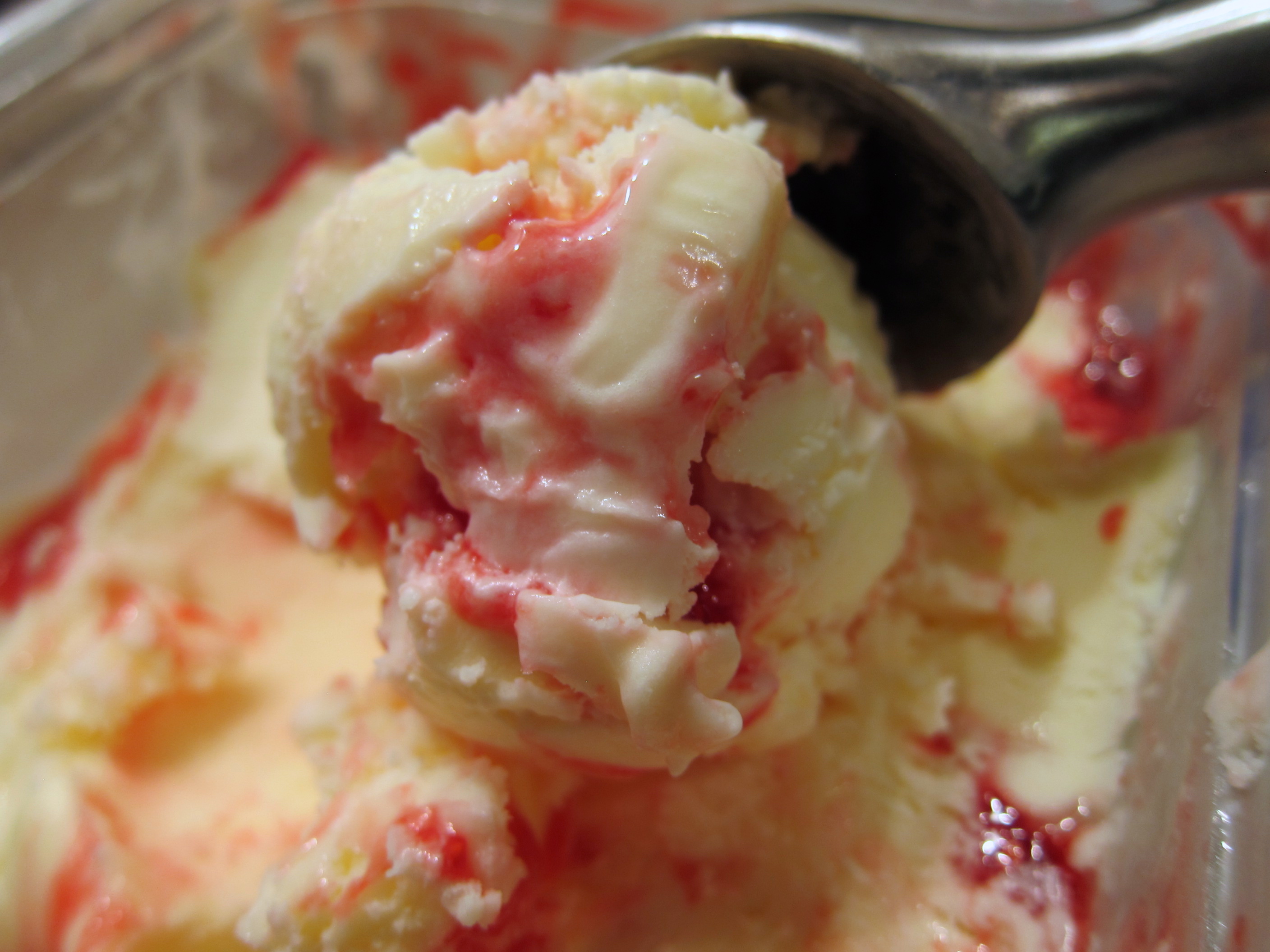
So, with weddings on my mind, today I give you a recipe for an ice cream that screams wedding. It’s inspired by ispahan, an amazing dessert created by Pierre Hermé in Paris that includes rosewater cream, raspberries, and lychees, sandwiched between two rose macarons. The first time I had it a Ladurée in Paris I was amazed. The combination of the floral rose with the slightly tart raspberries and sweet lychee, offset by the crunch of the macarons, was ethereal.

IMG_2645

I decided that I wanted to recreate the experience in an ice cream. The result is the recipe you see here. It’s a little longer than usual because you have to make the two fruit syrups first, but they are easy to make. You can eat the ice cream on it’s own, but to truly get the ispahan experience, I would recommend serving it in meringue nests for that added crunch.

Ispahan Ice Cream (Rose, Raspberry, and Lychee)

For raspberry syrup:
1 cup raspberries
1/2 cup sugar
1 teaspoon kirsch

For lychee syrup:
1 cup peeled, pitted lychees (from about 14-16 lychee nuts), chopped into to small pieces
1/2 cup sugar
1 teaspoon kirsch

For rose ice cream:
1 1/2 cups whole milk
3/4 cup sugar
1 1/2 cups heavy cream
3 tablespoons cornstarch
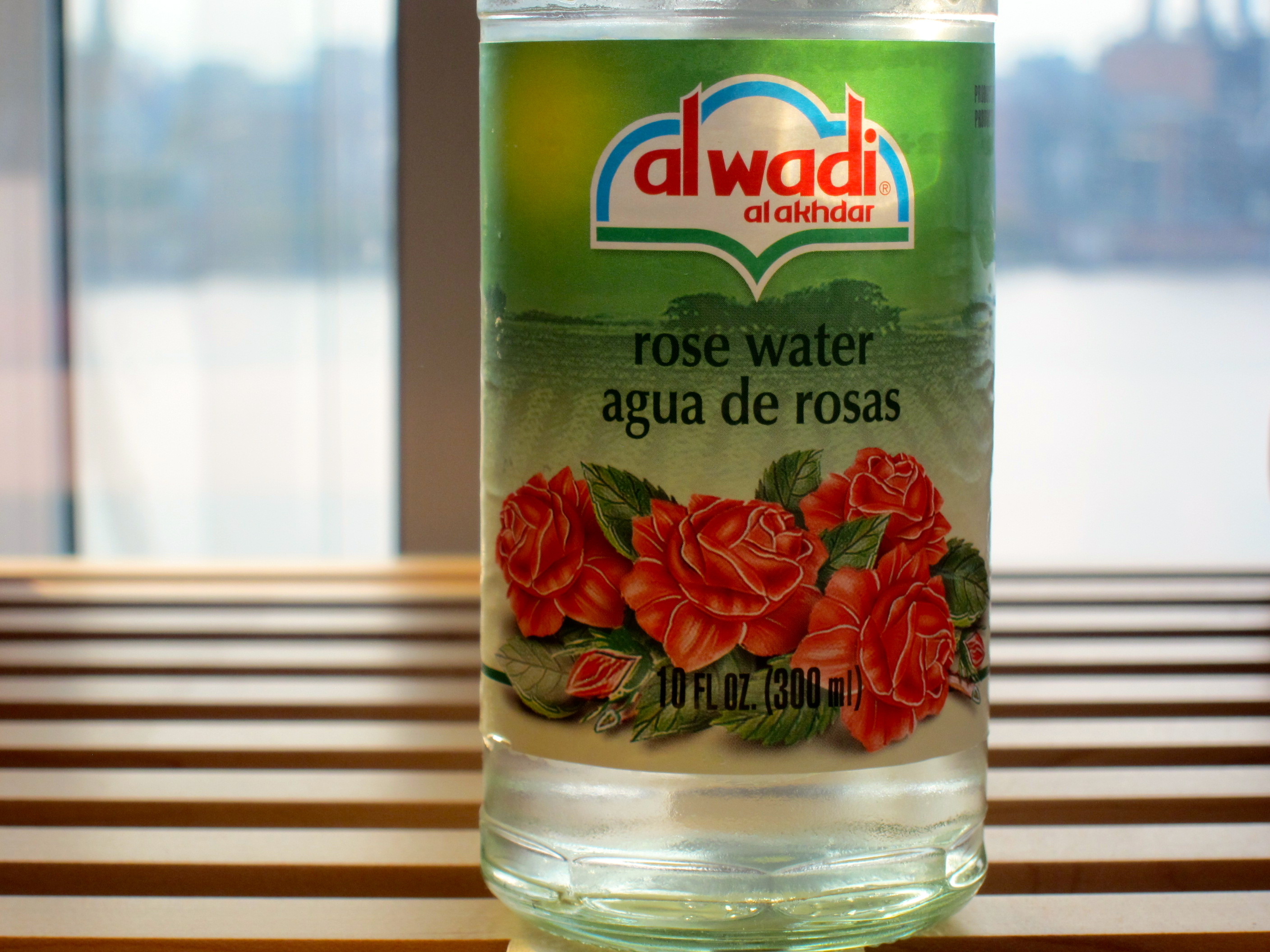
3 tablespoons rose water

First make the raspberry syrup:
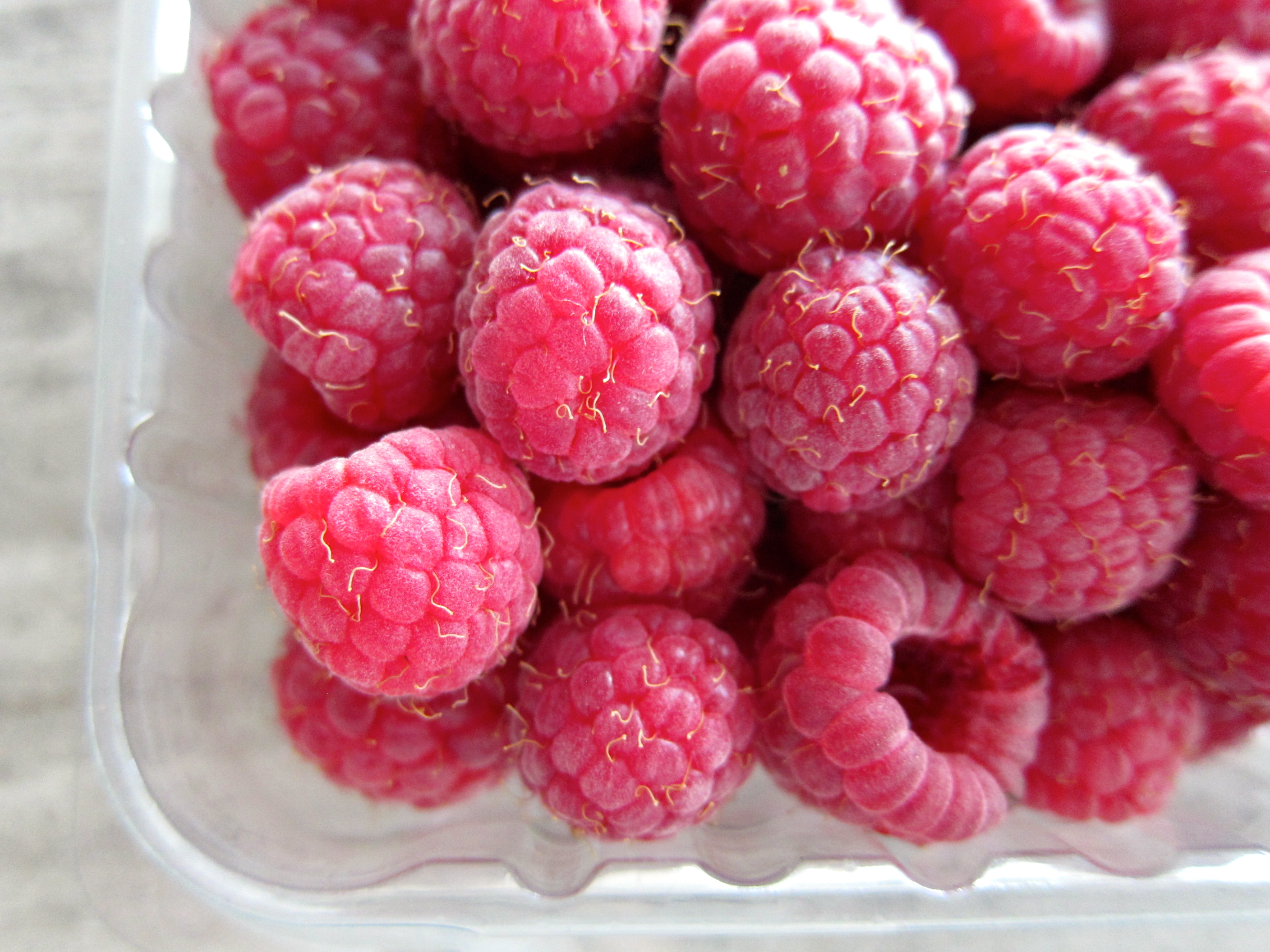
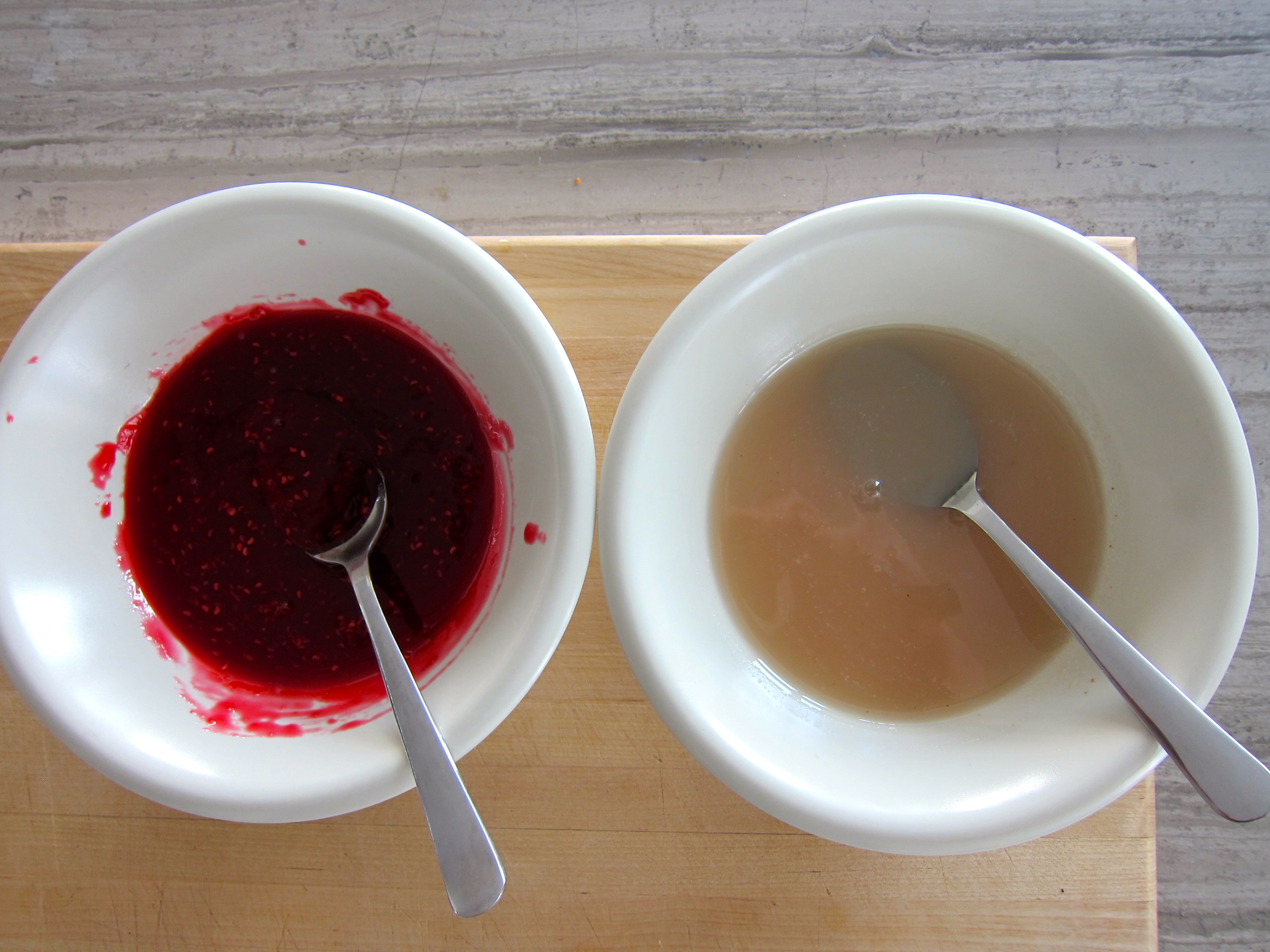
In a small saucepan, combine raspberries, sugar, and kirsch. Bring to a boil over medium-high heat, stirring continuously for about 6-8 minutes. The syrup should thicken a little. Let it cool a little and then force through a fine meshed sieve to remove the seeds. Take about a teaspoon of the seeds and add them to the strained syrup. Cool completely and chill in the fridge. Can be made several days ahead and kept refrigerated. This makes almost double the amount you will probably need for the ice cream.

Make the lychee syrup:
In a small saucepan, combine chopped lychee, sugar, and kirsch. Bring to a boil over medium-high heat, stirring continuously for about 8-10 minutes. The syrup should thicken very slightly . Let it cool a little and then force through a fine meshed sieve. Cool completely and chill in the fridge. Can be made several days ahead and kept refrigerated. This makes almost double the amount you will probably need for the ice cream.

Make the rose ice cream and combine with syrups:
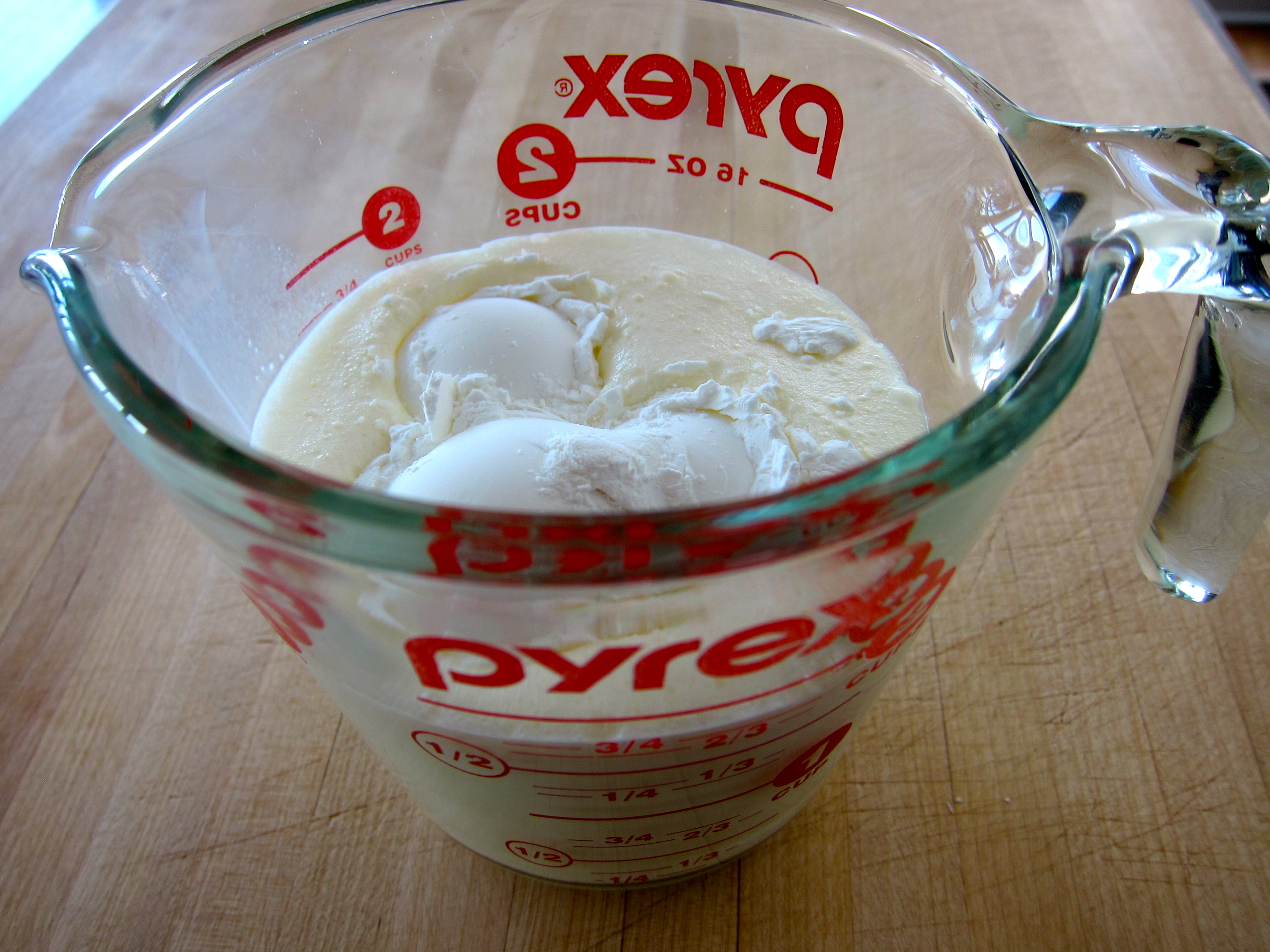
In a small bowl or a 2-cup measuring cup, stir together the cornstarch and heavy cream using a fork, making sure there are no lumps. Place the milk and sugar in a saucepan and bring to a simmer, stirring so that the sugar dissolves. Remove from the heat and stir in the heavy cream mixture. Return the pan to the stove and cook over moderate heat, stirring constantly, until it thickens. It should coat the back of the spatula or spoon. Taste the mixture: make sure it does not have any floury taste, if it does, continue to simmer it until the cornstarch is cooked.

Remove from the heat and add the rose water. Chill the mixture thoroughly in the refrigerator, then churn in your ice cream maker according to your manufacturer’s directions. Place about a quarter of the churned ice cream in the container you will use to store it in. Drizzle about 2 tablespoons of the raspberry syrup and 2 tablespoons of the lychee syrup over it. Repeat the process four times, layering the ice cream and syrups in the container.

Orange Blossom Ice Cream with Pistachios

Memory is a funny thing. The older I get, the more unpredictable it becomes. On the one hand, I have a hard time remembering what I ate yesterday for lunch or what was the plot of the book I just finished reading two nights ago. On the other hand, random memories will be pop up, seemingly for the first time, out of nowhere. The float to consciousness like bubbles from the dark, deep corners of my mind.

IMG_2466

Often, these memories are triggered by a smell or a taste. I am well aware that our sense of smell is tightly linked to our memory function, but still, every time it happens, I marvel at the ability of a group of molecules that reach my nose or tongue to evoke such strong emotional recollections.

The first time I made this orange blossom ice cream, I had exactly this kind of experience. I had just finished cooking the custard base and I added the three tablespoons of orange blossom water that the recipe called for. Since the custard was steaming hot, the smell wafted up to my nose. The memory it triggered was of all the times that my mom made us a simple custard, flavored with orange blossom water (called anthonero), to have as dessert.

IMG_2441

I hadn’t thought of that custard in decades. And yet, as soon as I remembered it, as soon as I smelled it in the bowl and tasted it on the spoon, I had a clear recollection of how it tasted of spring, how its creamy consistency coated our mouths, and how my sister and I always ignored my mom’s warnings to wait until it cooled down to eat it.

IMG_2438

I knew that this recipe would be amazing, even before I chilled the custard in the fridge and froze it in the ice cream maker. I’ve made it many times since then and at some point I decided to add chopped pistachios for a taste and texture contrast, which turned out to be a fantastic idea.

IMG_2452

This is a very easy ice cream to make. It uses cornstarch to thicken cream and milk into a quick custard. The trick is to make sure there are no cornstarch lumps and to cook it just enough time that it thickens and you can’t taste the “floury” cornstarch anymore. And if you are like me, the toughest part is to try not to eat it hot out of the pan, instead of chilling it and turning it into ice cream.

IMG_2454

Orange Blossom Ice Cream with Pistachios

1 1/2 cups whole milk
3/4 cup sugar
1 1/2 cups heavy cream
3 tablespoons cornstarch
3 tablespoons orange blossom water
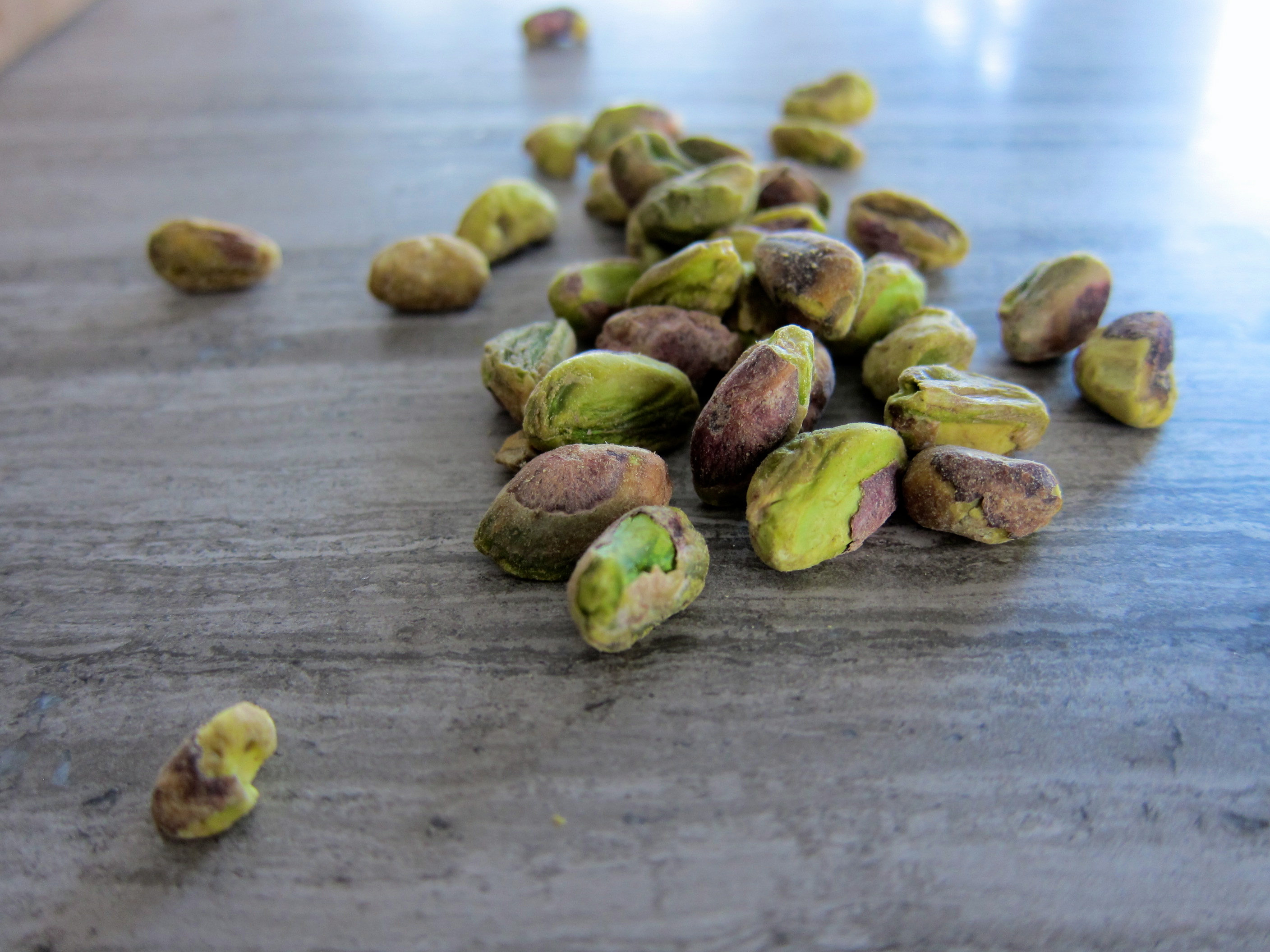
1/3 cup shelled pistachios, chopped

In a small bowl or a 2-cup measuring cup, stir together the cornstarch and heavy cream using a fork, making sure there are no lumps. Place the milk and sugar in a saucepan and bring to a simmer, stirring so that the sugar dissolves. Remove from the heat and stir in the heavy cream mixture. Return the pan to the stove and cook over moderate heat, stirring constantly, until it thickens. It should coat the back of the spatula or spoon. Taste the mixture: make sure it does not have any floury taste, if it does, continue to simmer it until the cornstarch is cooked.

Remove from the heat and add the orange blossom water. Chill the mixture thoroughly in the refrigerator, then churn in your ice cream maker according to your manufacturer’s directions.

Add the chopped pistachios towards the end of the churning or layer them into the ice cream as you spoon it into its container from the ice cream maker.

Julia’s Best Banana Bread

I like my bananas firm and just turned yellow, with a hint of green still visible. Once they fully ripen, get brown spots, and turn super sweet, I don’t want to eat them anymore. What I usually do is blend them with other fruit and some orange juice for a breakfast smoothie.
IMG_2414
I know that most people like to make banana bread with overripe bananas, but I’ve never cared for the banana breads I’ve tasted. They are often cake baritones: heavy, overly sweet, and dense. I always feel like they need some tenor, or even soprano, flavor notes in there. But I never attempted to make one of my own because all the recipes I saw seemed to pretty much be variations on a pound cake with added mashed bananas.

IMG_2404

This changed when Bon Appetit ran an article called “A Slice of Paradise: Andrew McCarthy’s Banana Bread Quest.”In it, the actor Andrew McCarthy (yeah, that Andrew McCarthy, from Pretty in Pink) talks about his search for the best banana bread on the island of Maui in Hawaii. He finds it at a remote, little roadside stand called Julia’s. Fortunately, he leaves with the recipe.

IMG_2405

As soon as I saw the recipe I knew I had to try it. It’s easy, two-bowls-and-a-whisk kind of easy. And it uses no butter, just eggs and oil. Even more important, it calls for just two bananas, not three like most other recipes I have seen. But I decided to make one small but important change. I had bought a bag of coconut palm sugar, a kind of sugar extracted from the nectar of the coconut tree. It’s very trendy right now because it’s supposed to be better for you than regular cane sugar.

IMG_2408

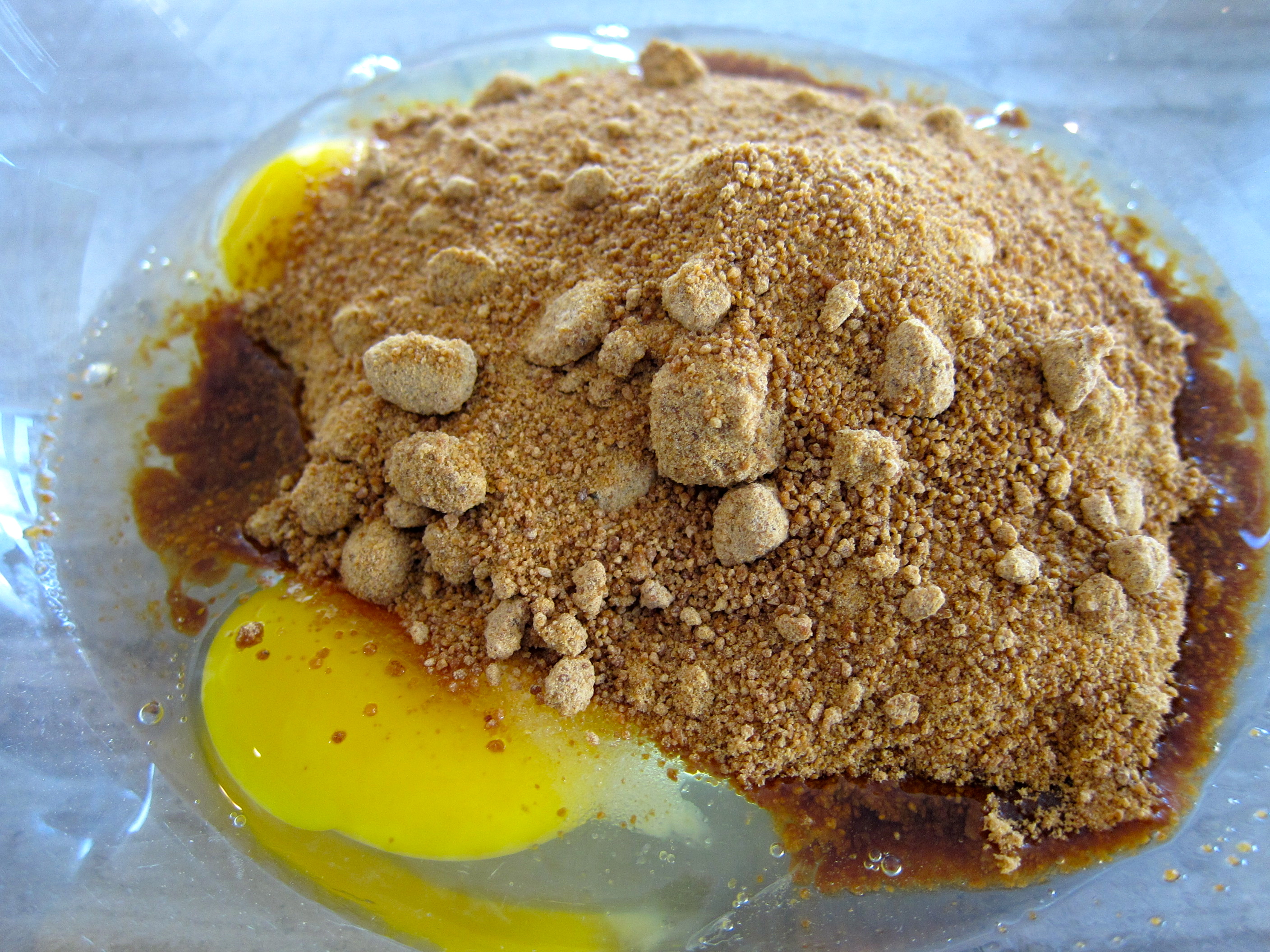
I don’t care much about that claim. What intrigued me about it was its taste. It’s earthy and complex. There is butterscotch and coffee and coconut in there. I thought it would go well in this Hawaiian recipe for banana bread, so I substituted half of the white sugar with it.

IMG_2402

The end result is the best banana bread I have ever tasted, by far. Granted, the benchmark was already low, but this was heavenly. The cake is moist but not dense. The banana flavor is distinct but not overpowering. The coconut palm sugar gives it both darker notes and a little acidity.

No baritones or sopranos here. Just a good old folk singer singing on the beaches of Maui.

IMG_2417

Julia’s Best Banana Bread – Slightly adapted from Bon Appetit

Note: If you don’t have coconut palm sugar, you can use light brown sugar instead. Or you can just use all white sugar, as the original recipe does.

1 3/4 cup all-purpose flour
1 1/2 teaspoons baking soda
3/4 teaspoon kosher salt
3 large eggs
3/4 cup white sugar
3/4 cup coconut palm sugar (break up any lumps with your fingers)
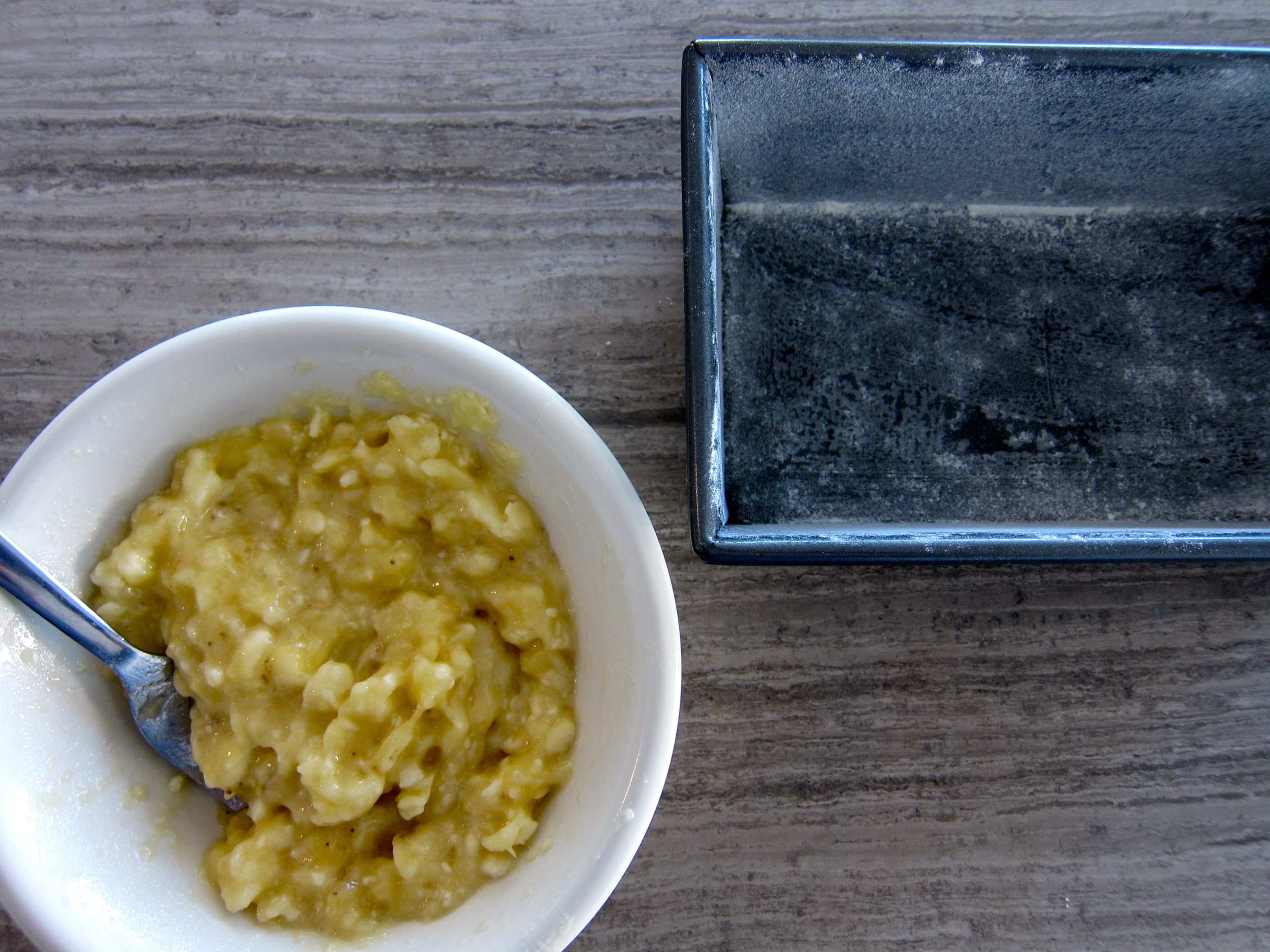
1 cup mashed ripe bananas (about 2 large)
3/4 cup vegetable oil

Preheat oven to 350°. Coat a 9x5x3-inch loaf pan with vegetable oil. Dust with flour and tap out excess.

Whisk flour, baking soda, and salt in a medium bowl. In a large bowl, whisk eggs, sugars, and bananas until smooth. Add dry ingredients to banana mixture and stir gently, just until there no more traces of flour. Pour the batter into prepared pan.

Bake until a tester inserted into the center of bread comes out clean, 60-70 minutes. Transfer to a wire rack and let bread cool in pan for 15 minutes. Run a knife around inside of pan to release the bread. Turn out onto rack and let cool completely.

You can make this 3-days ahead and store it in an airtight container at room temperature. Or you can slice it and wrap individual slices (or pairs) in plastic wrap and freeze them. Take out of the freezer at least two hours before eating and leave on countertop, unwrapped, to defrost.

Quick Dairy-Free Coconut Saffron Ice Cream

Last week, I cooked a three course dinner that was both gluten-free and dairy-free because one of our friends who joined us is allergic to both. Given those constraints, I started thinking about what to make for this dinner a few weeks in advance. I quickly realized that cooking gluten-free and dairy-free is manageable for savory dishes but when you get to dessert, it becomes a serious challenge.

IMG_2391

A challenge I absolutely loved (Top Chef here I come!). Once I decided on the appetizer (pea soup) and the main dish (roast chicken with potatoes and carrots), I started to go over my recipes for desserts. I didn’t want to go the easy way by making a fruit sorbet and call it a day. I wanted to make a dessert that screamed gluten and dairy but without having either of them.

So I chose to make bread pudding, served with ice cream. Yep, I went there.

IMG_2386

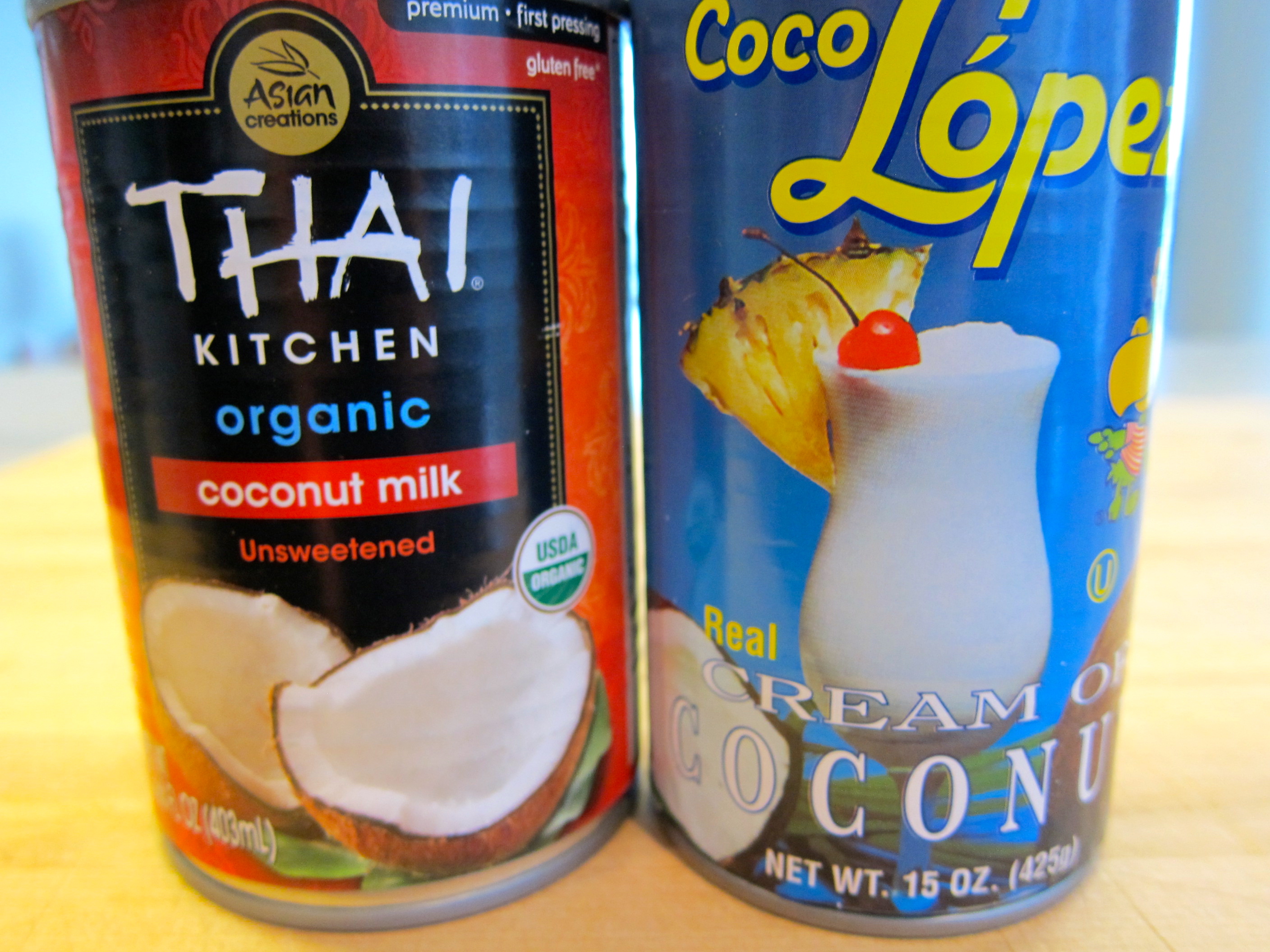
For the bread pudding, I used my go-to recipe (which I’ll share soon) and substituted regular bread for gluten-free croutons that I bought. I also replaced whole milk with coconut milk. The end result was delicious. The ice cream, however, was more of a challenge. I decided to stick with the coconut theme and I found a recipe by David Lebovitz for a quick coconut saffron ice cream that seemed promising. However, it used heavy cream. So, I decided to replace heavy cream with cream of coconut, which is really coconut milk with lots of sugar and a few thickeners (different types of gum) that turn it into a thick, sweet concoction that’s the basic ingredient in Pina Coladas.

IMG_2388

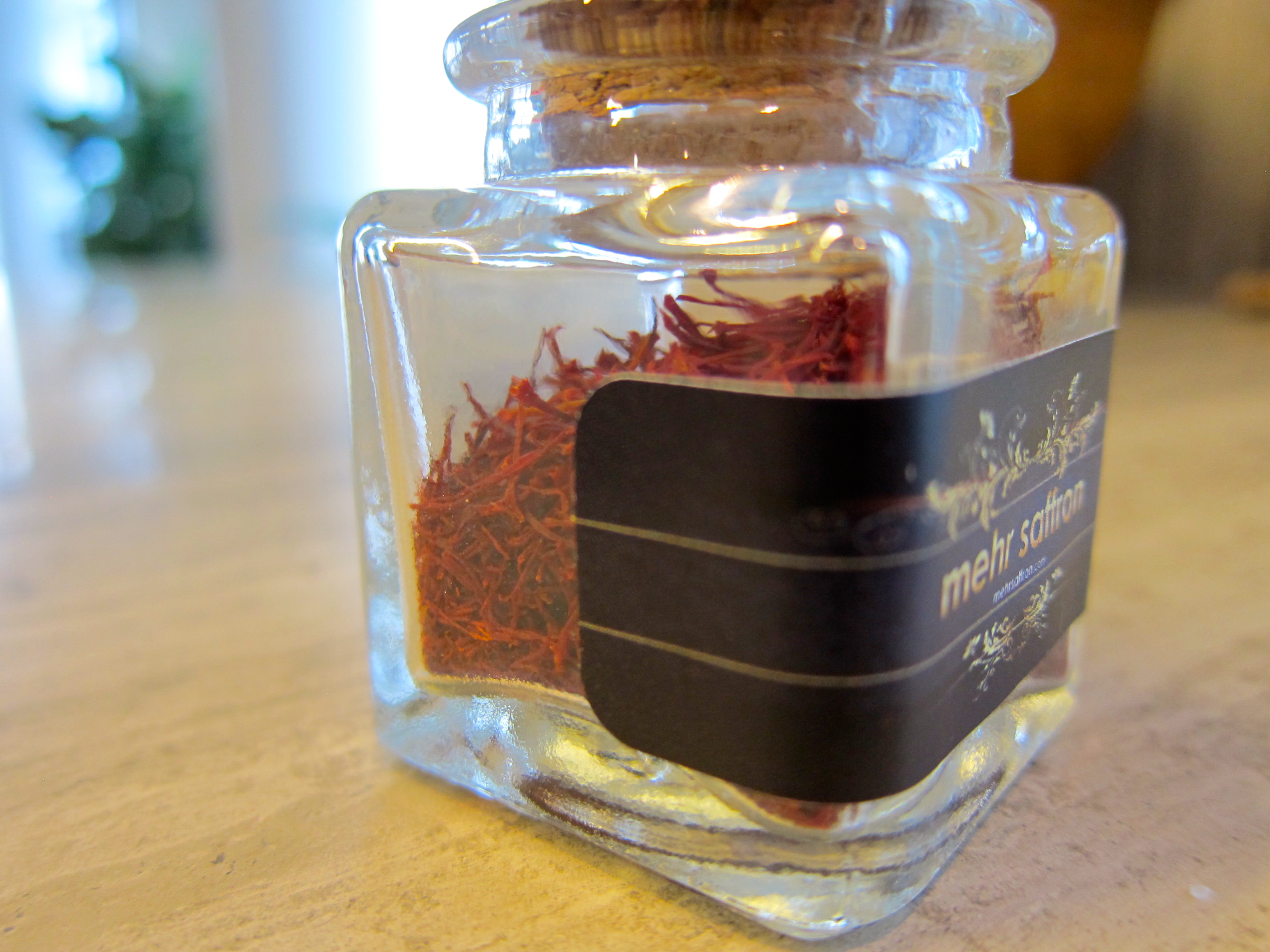
So, I opened a can of coconut milk and a can of cream of coconut, dumped them in a pot, and heated them gently until all the solids melted and it became a smooth liquid. I added a pinch of salt and a bigger pinch of saffron, heated it a little longer to let the saffron steep, chilled it in the fridge, and froze it in my ice cream maker.

I was skeptical on what the final product would be like, especially in terms of consistency. I expected a solid block on ice when I took it out of the freezer the next day. I was amazed when it turned out to be a beautiful, creamy ice cream that you could scoop with a spoon. The saffron had given it a golden yellow color that intensified the illusion that this ice cream was made with actual cream and egg yolks.

The final verdict on the whole dessert? Let’s just say that not a crumb of bread pudding or drop of ice cream was left over in everyone’s bowls.

IMG_2384

Quick Dairy-Free Coconut Saffron Ice Cream

If you don’t have saffron, or if you don’t like it, you can omit it. Though I haven’t tried them, other options for additions are lime zest, chopped dried pineapple or ginger, or chocolate pieces. For all of these alternative options, add them to the ice cream right when it’s finished being churned in the ice cream maker.

1 15oz can of coconut milk, unsweetened
1 15oz can of cream of coconut (such as Goya or Coco Lopez)
pinch of salt
hefty pinch of saffron threads (about half a teaspoon)

In a medium saucepan, combine the coconut milk and the cream of coconut. The cream of coconut is usually separated in the can, with the solid cream on top and the liquid syrup in the bottom. Add the entire contents of the can to the saucepan.

Heat gently over medium heat, stirring frequently until the cream of coconut solids melt and everything becomes a smooth liquid.

Add the salt and saffron and continue to heat gently for 2-3 minutes. The longer you steep the saffron, the deeper the saffron taste of your ice cream will be.

Remove from heat and chill in the refrigerator. Once the mixture is chilled, freeze it in your ice cream maker according to the manufacturer’s instructions.

Chocolate Sherbet

Have you every made your own ice cream or sorbet, put it in the freezer to set, and tried the next day to scoop it out, only to find out it is frozen solid and can’t be scooped or even drilled into? Sure you can let it sit out for 10-15 minutes but first of all, who has the patience, and second, usually the outside will have melted enough but the inside will be still frozen solid.

IMG_2247

There are three ways to avoid that when making ice cream or sorbet. The first way (and this applies mainly to ice cream) is to displace as much of the water in your base with fat. So, the more cream (as opposed to milk, or god forbid, low fat or skim milk) you have in your base, the less your ice cream will become a block of ice.

The second way is with corn syrup. I know, I know. It’s the devil’s milk, that evil corn syrup. Actually, that’s high fructose corn syrup. That’s the really evil stuff. Plain corn syrup (Karo syrup) isn’t that bad for you. And in ice creams or especially sorbets, we’re talking a couple of tablespoons for a quart of ice cream. Since corn syrup doesn’t freeze, your frozen treat remains scoopable when you add some to the base.

IMG_2239

The third way is alcohol. The higher proof, the better. Kirsch, for example, is a great addition to sorbets to keep them soft in the freezer. Again, we’re talking a couple of tablespoons, not a martini glass full of vodka.

IMG_2238IMG_2238

David Lebovitz, who is my ice cream guru, posted a great recipe for a chocolate sherbet on his blog (which is one of my favorite food reads). A sherbet is like a sorbet, except it uses some milk instead of all water. In this case, it’s whole milk. Even though he says you can use low fat or skim milk I wouldn’t recommend it (see my point above about water vs. fat in your base).

IMG_2244

The milk helps the sherbet stay a little softer in the freezer but it’s not enough. He also recommends two tablespoons of your favorite coffee-flavored liqueur. Though he says it’s optional, for me it’s essential in order for the sherbet to have great texture. The result is a luxurious frozen treat. The cocoa gives it an intense, dark chocolate flavor that’s not diluted by cream or eggs. We love to eat it with a little sea salt sprinkled on top right after we (easily) scoop it out of the container where it happily lives in the freezer.

Chocolate Sherbet – Slightly adapted from DavidLebovitz.com

2 cups (500ml) whole milk (I’ve also used coconut milk successfully, which turns this into a vegan dessert)
1/2 cup (100g) sugar
a pinch of salt
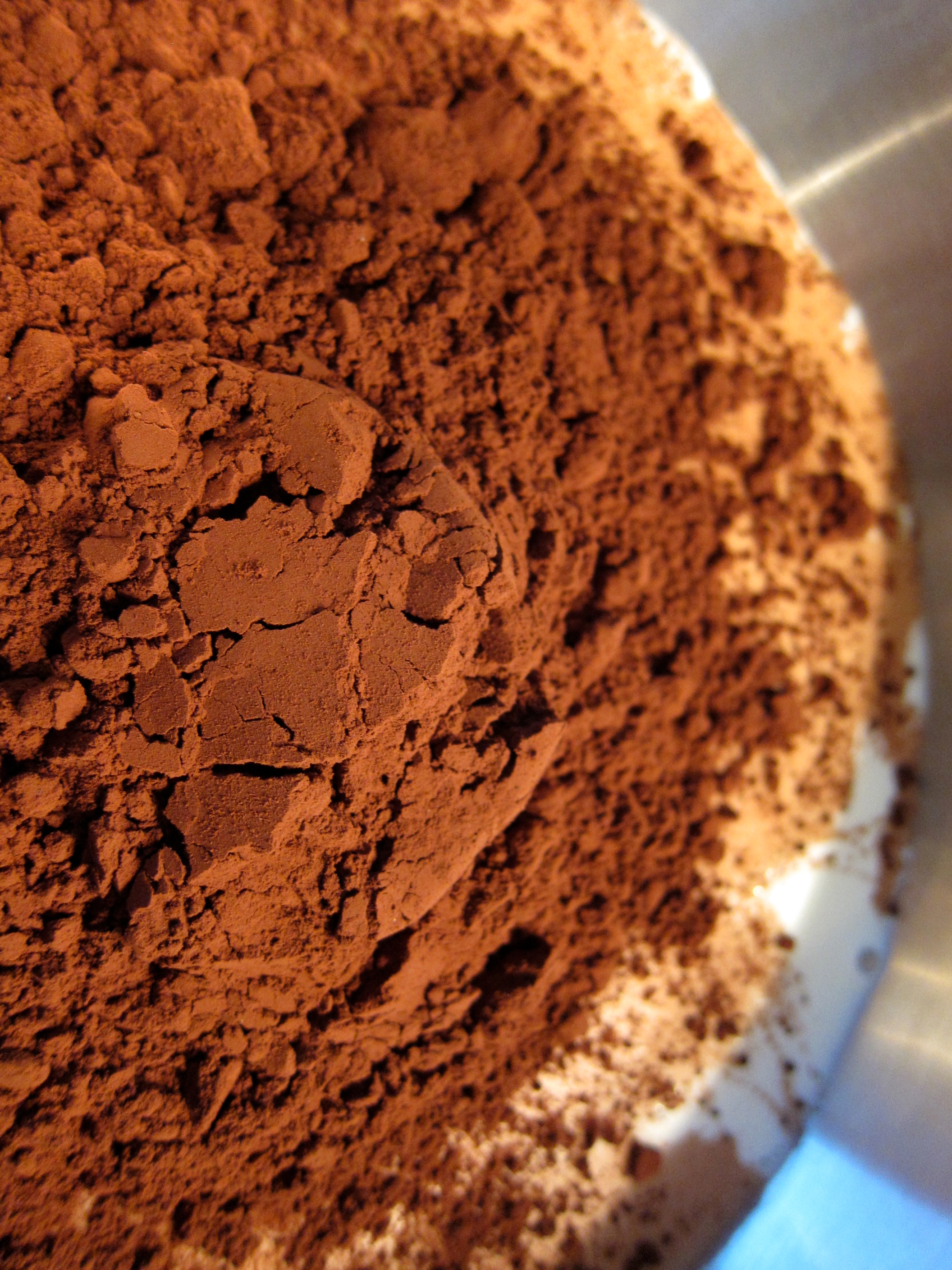
1/2 cup (50g) unsweetened cocoa powder (use good quality cocoa; my favorite is Valrhona)
4 ounces (115g) semisweet or milk chocolate, chopped (I usually prefer the Extra Rich Milk Chocolate by Scharffen Berger)
1/4 teaspoon vanilla extract
2 tablespoons coffee-flavored or chocolate-flavored  liqueur

Put chopped chocolate in a heat-proof medium-sized bowl and set aside.

In a medium-sized saucepan, add 1 cup of milk, sugar, salt, and cocoa powder. Over medium-high heat, bring it to a full boil, whisking frequently to dissolve the cocoa and prevent scorching in the bottom. As soon as it comes to a full boil (careful because it can boil over), reduce the heat and simmer it gently for 30 seconds. This will “bloom” the cocoa powder, intensifying its flavor.

Pour cocoa mixture over the chopped chocolate and stir with the whisk until it has all melted. Add the vanilla, the liqueur, and finally the other 1 cup of milk. Stir to combine.

Chill the mixture thoroughly, then freeze in your ice cream maker according to the manufacturer’s instructions.