Seared Tuna with Olive Tapenade Relish

One of the first school field trips I remember taking as a kid was to an eleotrivio, a traditional olive oil mill. I have vague visual memories – a dark room, the circular fiber disks that are filled with olive paste and pressed to extract oil, the round millstones in the grinder – but it’s the memory of how it smelled that has stuck with me through the decades. A wet and grassy smell, pungent from the slight fermentation of the leftover olive paste, it was exciting and a little overwhelming for my young olfactory nerves. Like in a duckling seeing its mother for the first time, the smell imprinted itself in my brain, so that every time I open a jar of olive tapenade I flash back to that dark and musty eleotrivio of my younger years.

IMG_3255

The recipe I have here calls for tuna steaks but you can substitute any fish steak (sword fish would work well, or even salmon). The real star is the olive tapenade relish. It’s thick, earthy, and a little sour, with a healthy kick from the shallots. You’ll find yourself thinking of the tuna as the supporting player, the implement you use to get the relish in your mouth, instead of the main player in the dish.

IMG_3254

You can make more than you need and keep it covered in the fridge for several days. It’s another one of those sauces in my cooking arsenal that I can whip up quickly and dress up a weeknight meal into something special. And as an added benefit, just opening the jar of tapenade takes me on a mini time-travel trip to a time when the simple smell of crushed olives was a discovery to be cherished for years to come.

IMG_3257

Seared Tuna with Olive Tapenade Relish – Adapted from Epicurious.com

1/2 cup olive tapenade or olive spread (I use black olive tapenade but you can use the green kind or a mix)
1/2 cup finely chopped shallots (you can also use red onion or 1/3 cup white onion)
5 tablespoons extra-virgin olive oil
1/4 cup white balsamic vinegar (or red balsamic vinegar if you can’t find white)
2 teaspoons finely grated lemon zest (from organic, unsprayed lemons; preferably grated on a Microplane zester)
salt and pepper
4 6-ounce tuna steaks (3/4 to 1 inch thick)

Mix tapenade, shallots, oil, vinegar, and lemon zest in medium bowl; season with salt and pepper.

Brush tuna on both sides with a little olive oil and sprinkle with salt and pepper. Heat a large nonstick skillet over medium-high heat. Add tuna steaks and cook to desired doneness, 1-2 minutes per side for medium-rare.

Serve tuna steaks with relish on top. Accompany with a simple salad or roasted vegetables.

Garlic Lime Vinaigrette

IMG_2218

Sometimes people ask me “Do you cook every night?” When I tell them yes, I cook almost every night, some shake their heads or widen their eyes in amazement. But it’s really not that impressive because most of the time, what I make takes less than 30 minutes of work. It’s often a protein that’s cooked simply (fish sautéed in olive oil for 5-6 minutes; pork chops roasted in the oven) along with some kind of vegetable, raw or cooked. What really helps, though, is having a number of tasty, simple sauces and dressings in my arsenal. That way, the same protein or veggie (say, chicken and brussel sprouts) can become different meals depending on what you pour over them after they’re cooked.

IMG_2219

This recipe is one of those invaluable dressings. It takes minutes to make, it’s simple and healthy, and it perks up just about every roasted vegetable you can imagine (we especially love it over roasted cauliflower or acorn squash). It’s also great drizzled over grilled chicken breasts.

IMG_2220

Garlic Lime Vinaigrette

You can double or triple the recipe if you want. This makes enough for two people.

1 1/2 tablespoon lime juice
2 tablespoons olive oil
1 garlic clove pressed in garlic press or grated over microplane zester/grater
salt and pepper

Add lime juice, olive oil, and garlic in a small bowl and use a whisk or a fork to mix them until they come together. Garlic is a natural emulsifier so it will help bind the lime juice and olive oil. Add salt and pepper to taste. Taste the vinaigrette and add more oil or lime juice if you prefer.

Poor Man’s Brioche

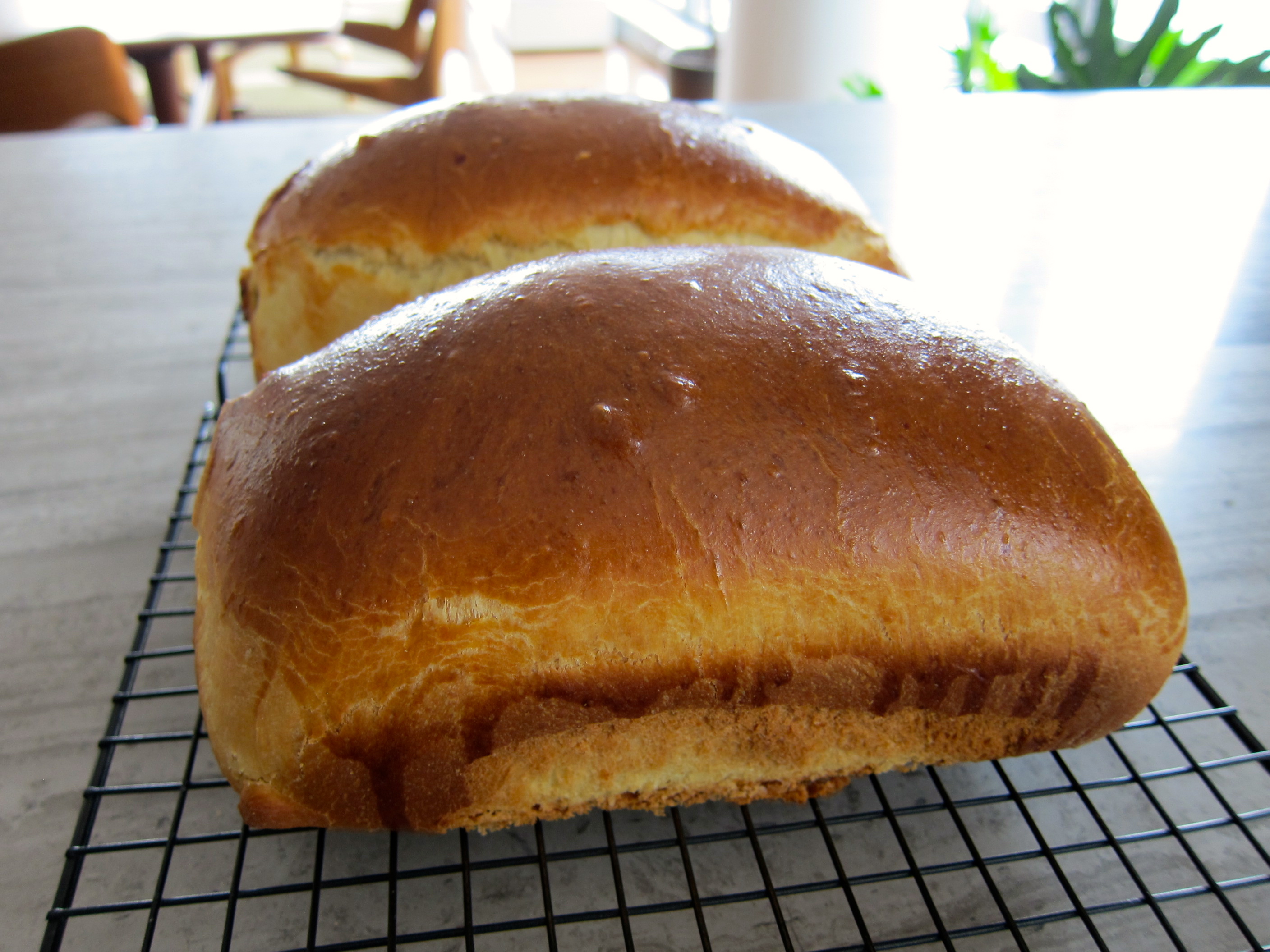
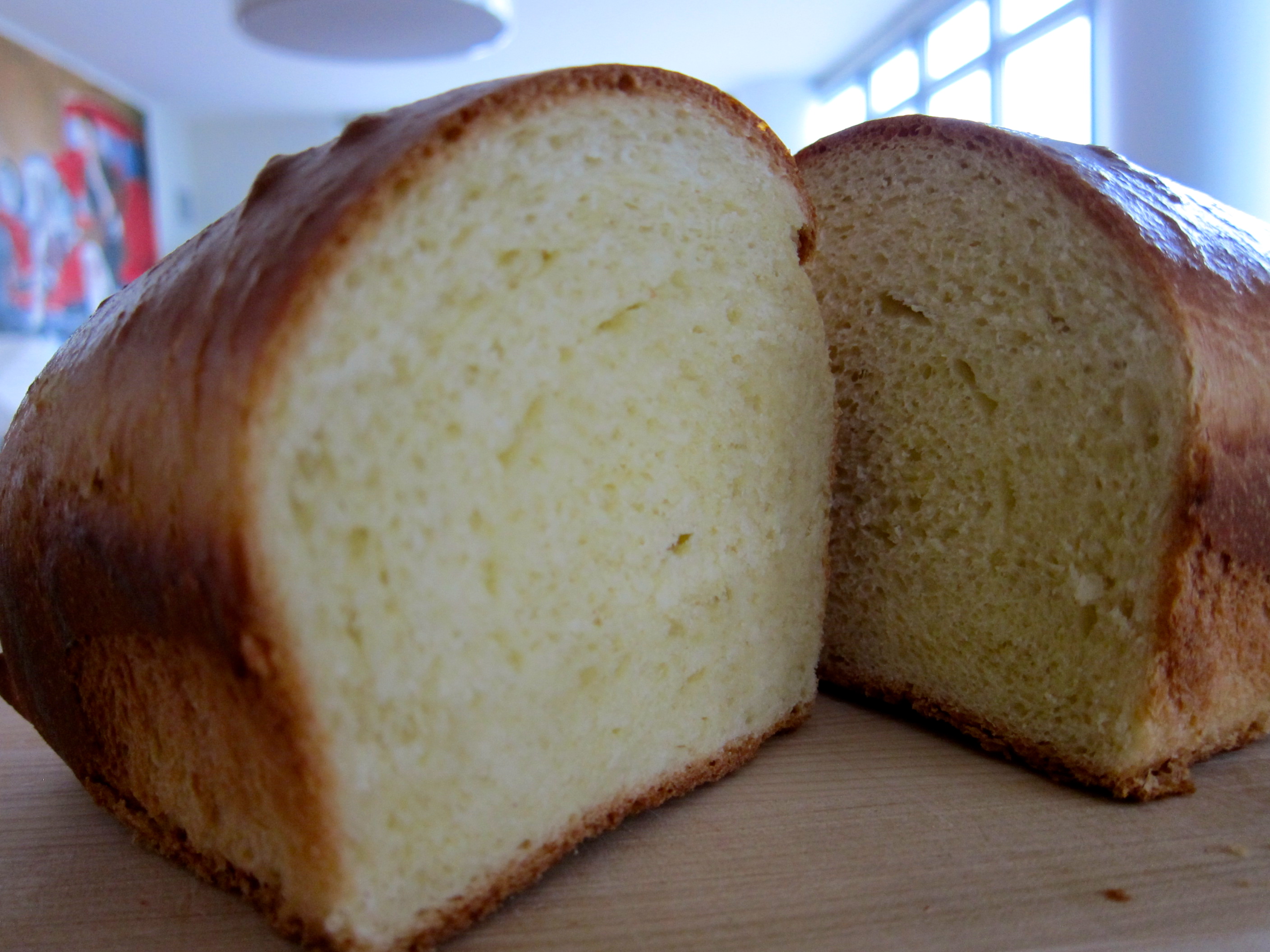
Do you like brioche bread? Yeah, I thought so. Who doesn’t like the rich, sweet taste of the golden yellow crumb and the faint bitterness of the caramelized crust, right? You know why you love brioche so much? This is why:

IMG_2212

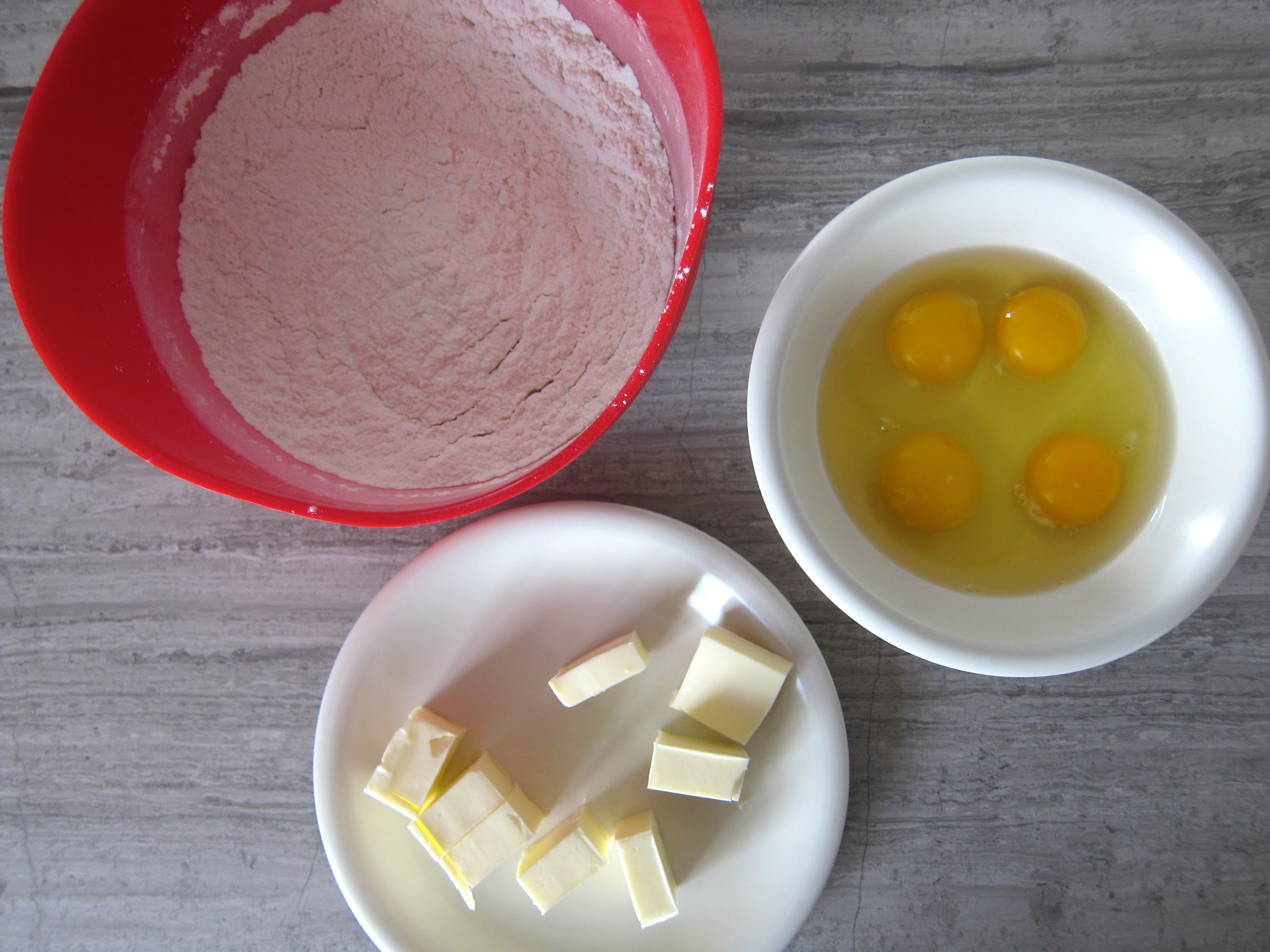
Yeah, brioche is what’s known as an enriched bread, which means it’s not just flour, yeast, water, and salt, but it’s also butter and eggs and milk or cream. The good stuff! But who cares, right? Toasted brioche slices with butter and honey or brioche french toast with maple syrup is the stuff that make life worth living. Too bad that finding good brioche is so tough. And don’t tell me they sell it at the grocery store in a plastic bag because if you take a look at the ingredients list, you’ll see that you’re eating high fructose corn syrup with some flour thrown in for texture.

IMG_2201

Well, guess what? You can make your own brioche and it’s easy! Actually, it’s as easy as throwing stuff in a mixer, waiting, and folding a letter in thirds. No kneading and no fancy dough shaping.

Let me explain.

Making real brioche is tough. In The Bread Baker’s Apprentice: Mastering the Art of Extraordinary Bread by Peter Reinhart (one of the best books on bread making out there), there is a traditional recipe for brioche that takes two days and includes 2 cups of butter and 5 eggs for three brioche loaves. Yikes! But he also provides a recipe for what he calls a “Poor Man’s Brioche” which takes only a few hours and includes just 1/2 cup of butter and 4 eggs for two brioche loaves.

Yes, I said a few hours. I told you the recipe was easy. I didn’t say it was quick! But seriously, the vast majority of that time is just waiting for the dough to rise, so this is a perfect recipe for a lazy Sunday or a day off from work. I’ve adapted it here for you and I’ve included more detailed instructions so that even if you’ve never made bread or never baked anything, you can still do it.

You can thank me later 😉

Poor Man’s Brioche – Adapted from The Bread Baker’s Apprentice: Mastering the Art of Extraordinary Bread

1/2 cup (2.25 oz) flour (preferably bread flour but all purpose is fine too)
2 1/2 teaspoons active dry yeast or 2 teaspoons instant yeast
1/2 cup (4 oz) lukewarm whole milk (90°-100° F)
4 large eggs
3 1/4 cups (14.75 oz) flour (preferably bread flour but all purpose is fine too)
2 tablespoons sugar
1 1/4 teaspoons table salt
1/2 cup (one stick) unsalted butter at room temperature
1 egg, whisked till frothy for the egg wash

Lightly grease two 8.5 x 4.5 inch loaf pans. Dust with flour and shake out excess flour. Set aside.

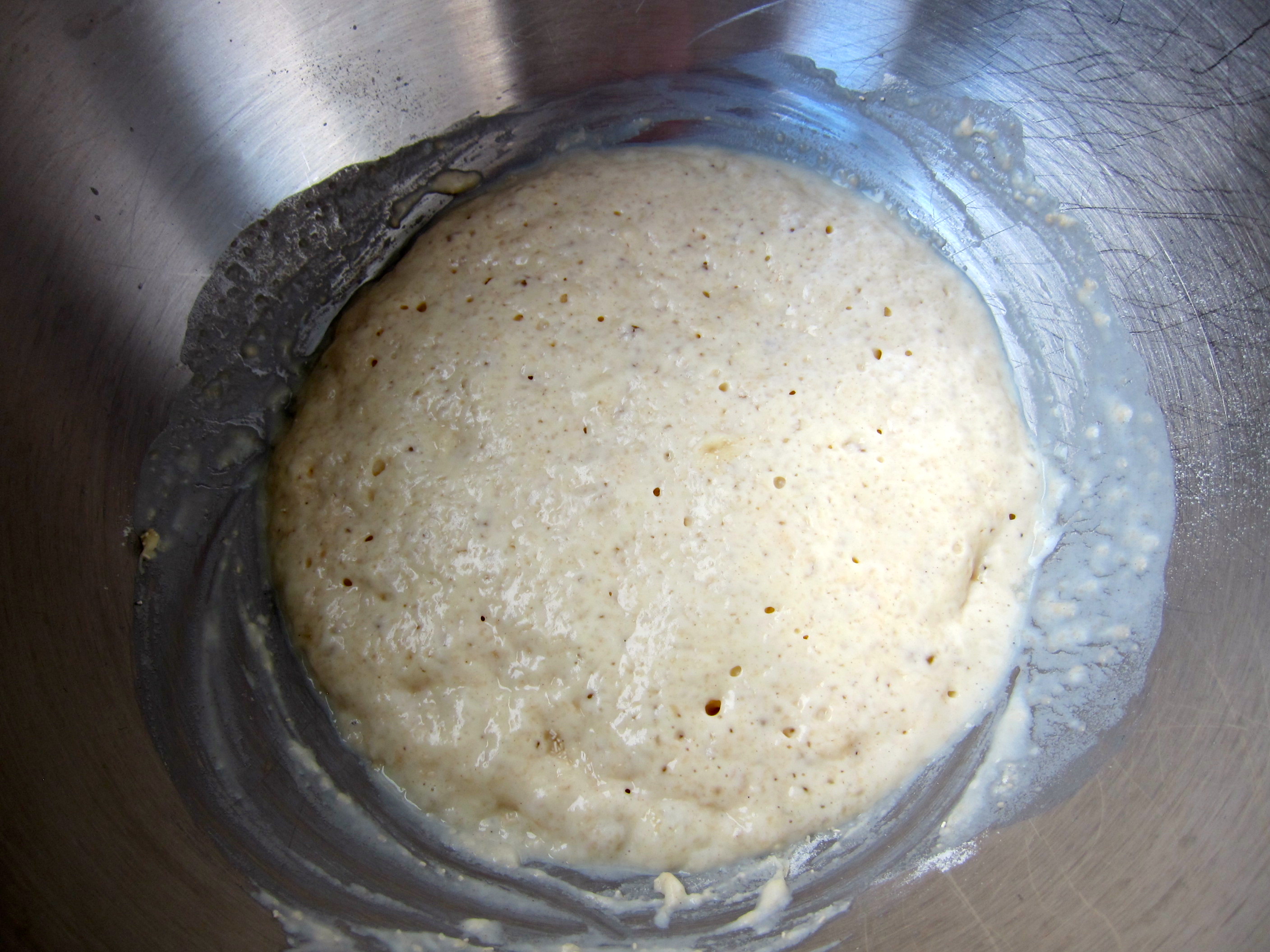
In your mixer bowl, add the 1/2 cup flour, yeast, and lukewarm milk and stir with spoon until combined. Cover with plastic wrap and let it rise for 30-45 minutes until it looks frothy and risen. It should be pocked with burst bubbles. If it doesn’t seem to rise at all, put it somewhere warm (like your oven with just the light on). Don’t worry too much about how much it has risen. You just want the yeast to start working. This is now called the sponge:
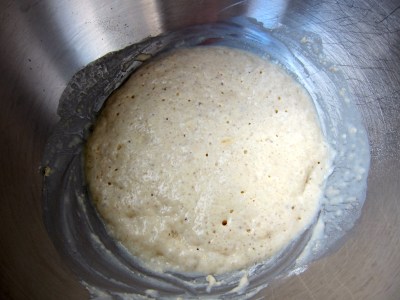
IMG_2200
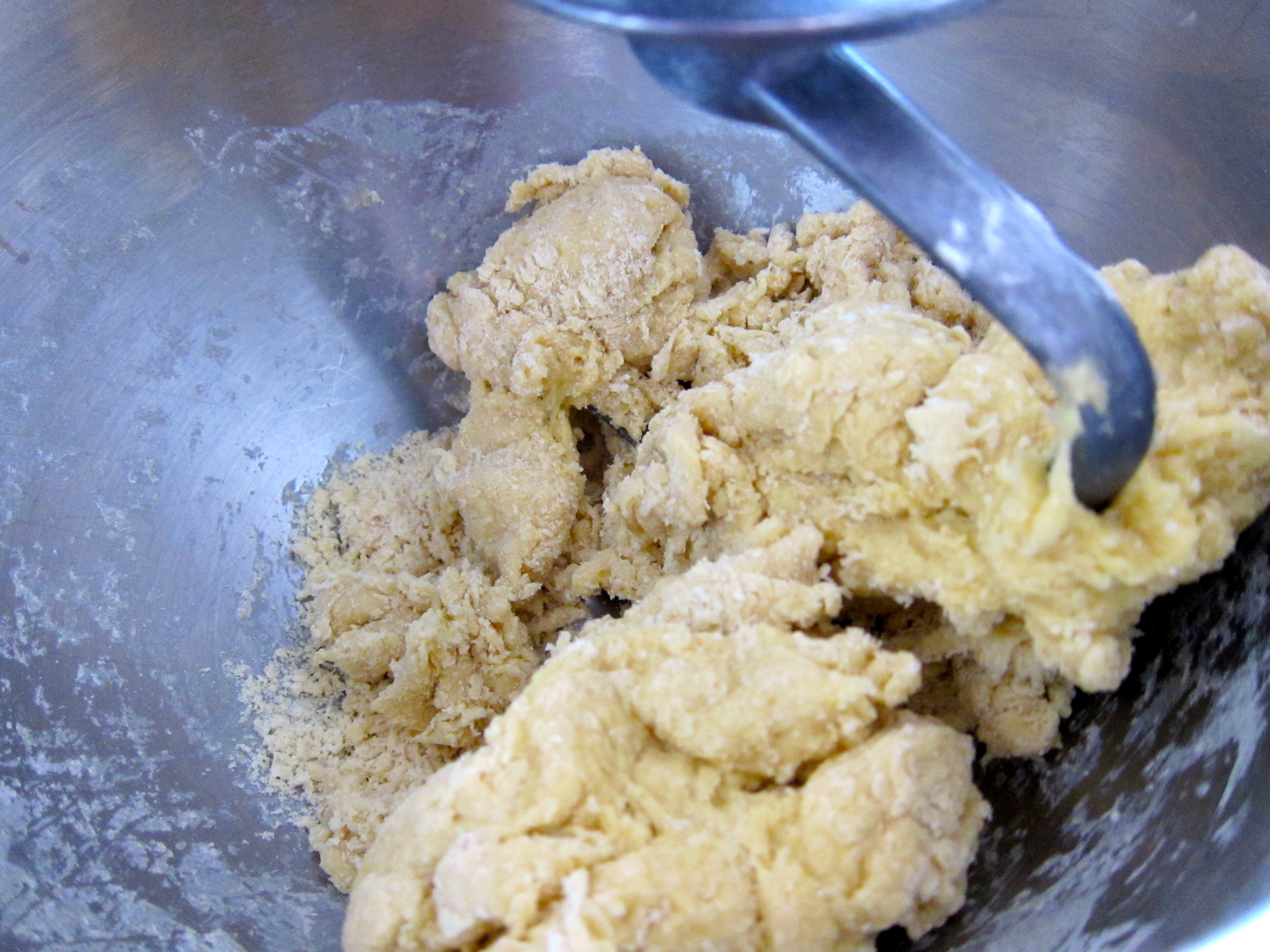
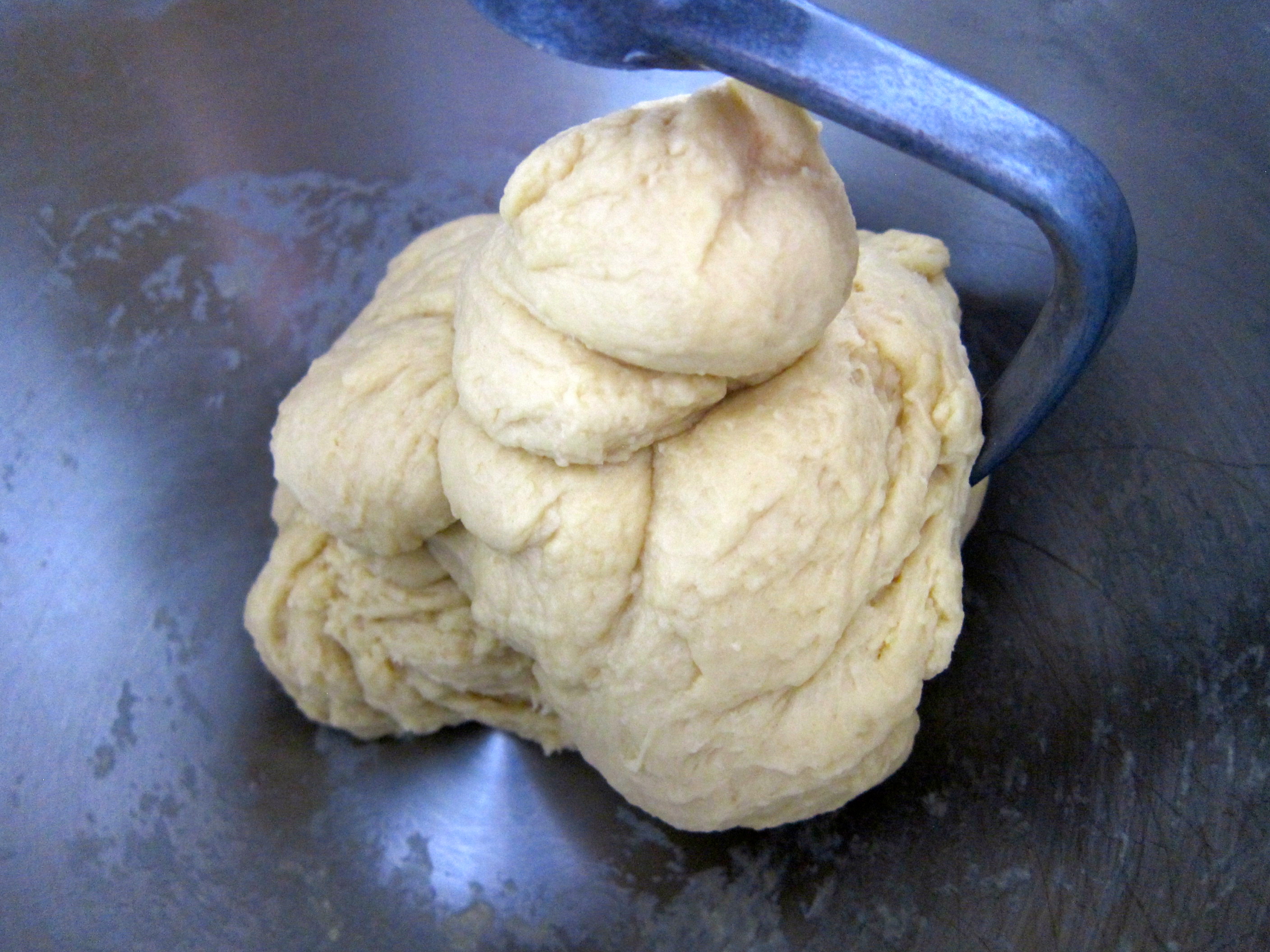
Add the four eggs to the risen sponge and whisk until everything is combined. Put the bowl onto the mixer and use either the paddle or the dough hook. In a separate medium bowl, stir or whisk together the 3 1/4 cups of flour, sugar and salt. Add everything to the mixer bowl and mix at low speed for a couple of minutes until everything is combined. At this point you’ll have a dry and shaggy dough. That’s fine. Stop the mixer and let it rest for 5 minutes.
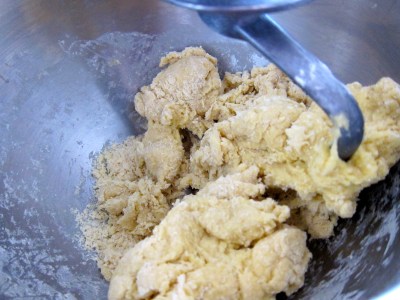
IMG_2202

If you were using the paddle, switch to the dough hook. Start the mixer again and add the butter two tablespoons at a time. Wait until the butter is completely mixed in before you add the next two tablespoons. Once all the butter is mixed in, increase the speed to medium low and mix for about 6 minutes, until you get a smooth dough that clears the sides and bottom of the bowl.

IMG_2203

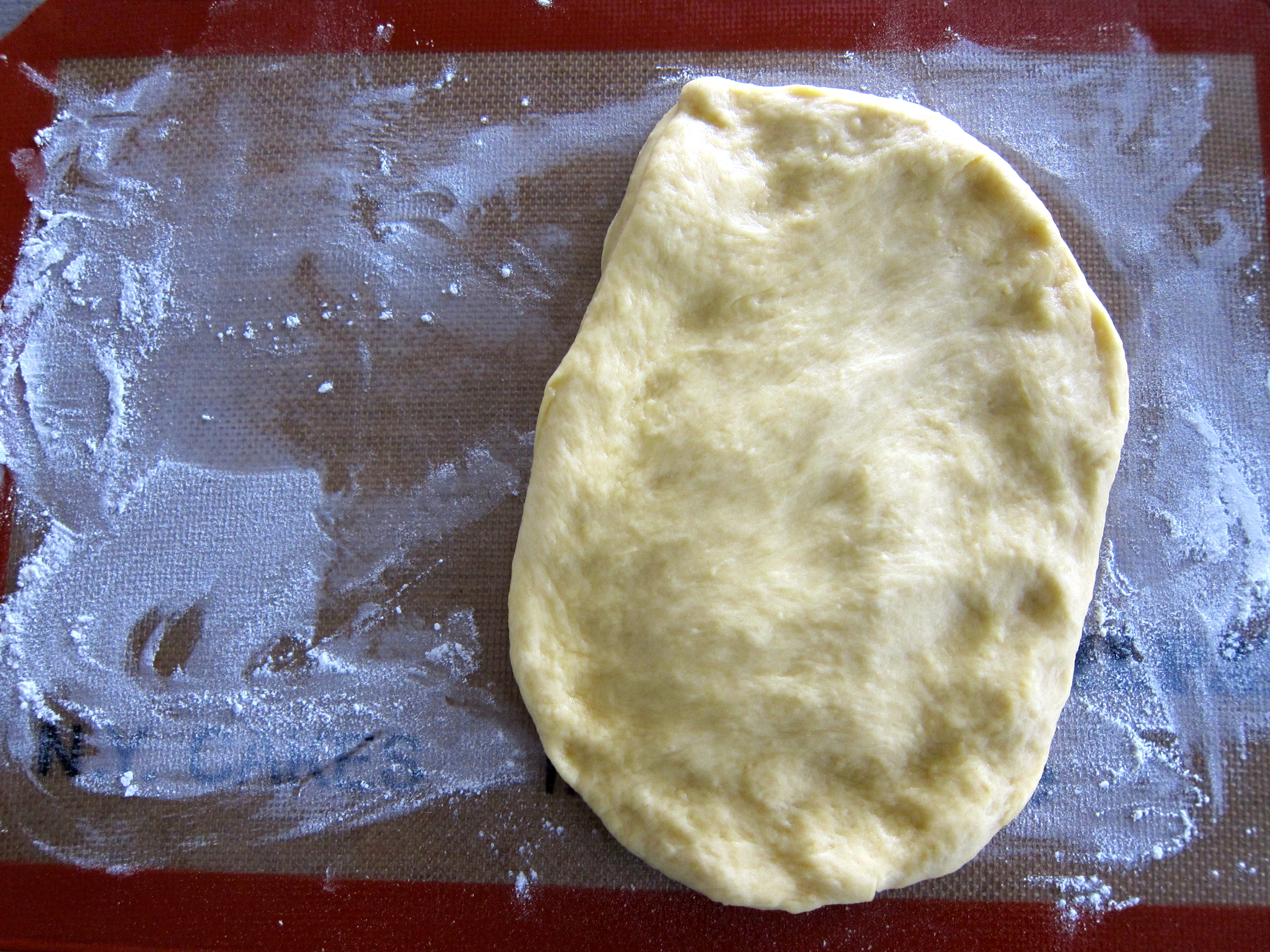
Take the dough out of the mixer bowl and put it in a lightly oiled bowl. Cover it with plastic wrap and let it rise for 90 minutes or until it doubles in size. Then comes the fun part. Take the risen dough out of the bowl and divide it into two equal pieces. Take one piece and place it on a lightly floured surface. Using your fingertips, pat it into a rectangle about 6 by 8 inches.

IMG_2205

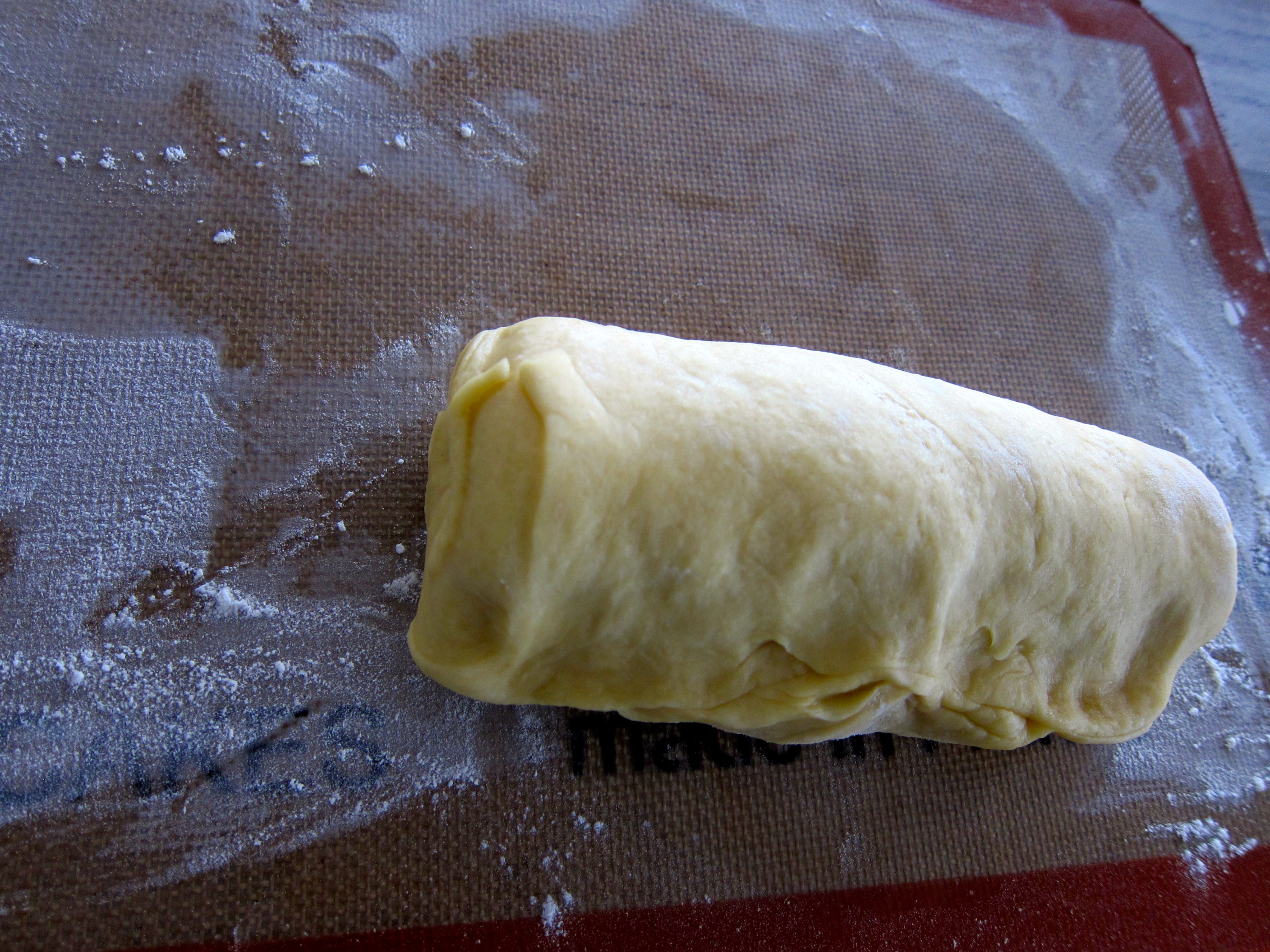
Now, take the top and fold it halfway towards the bottom , like you would a letter. Use your fingertips to lightly press the edge into the dough.
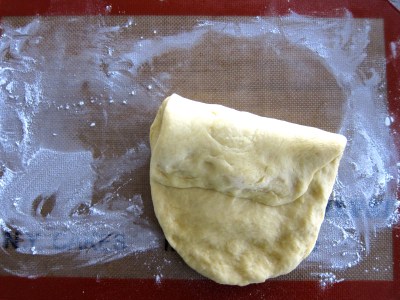
IMG_2206

Now take the top edge again(the one that’s now double in thickness) and fold it down to meet the bottom edge. Use your fingertips again to press the dough edges together.

IMG_2207

That’s it. You can tuck in the side edges if you want but it’s not essential. Place the dough, seam side down, into the loaf pan and repeat with the other half of the dough. You’ll probably notice that the dough doesn’t even come close to filling the pans. That’s ok. This dough will rise a lot. You want it to be much smaller than the loaf pans, otherwise it won’t have to room to rise.
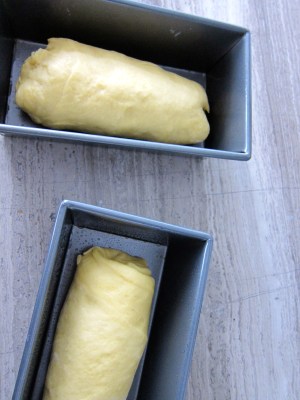
IMG_2208

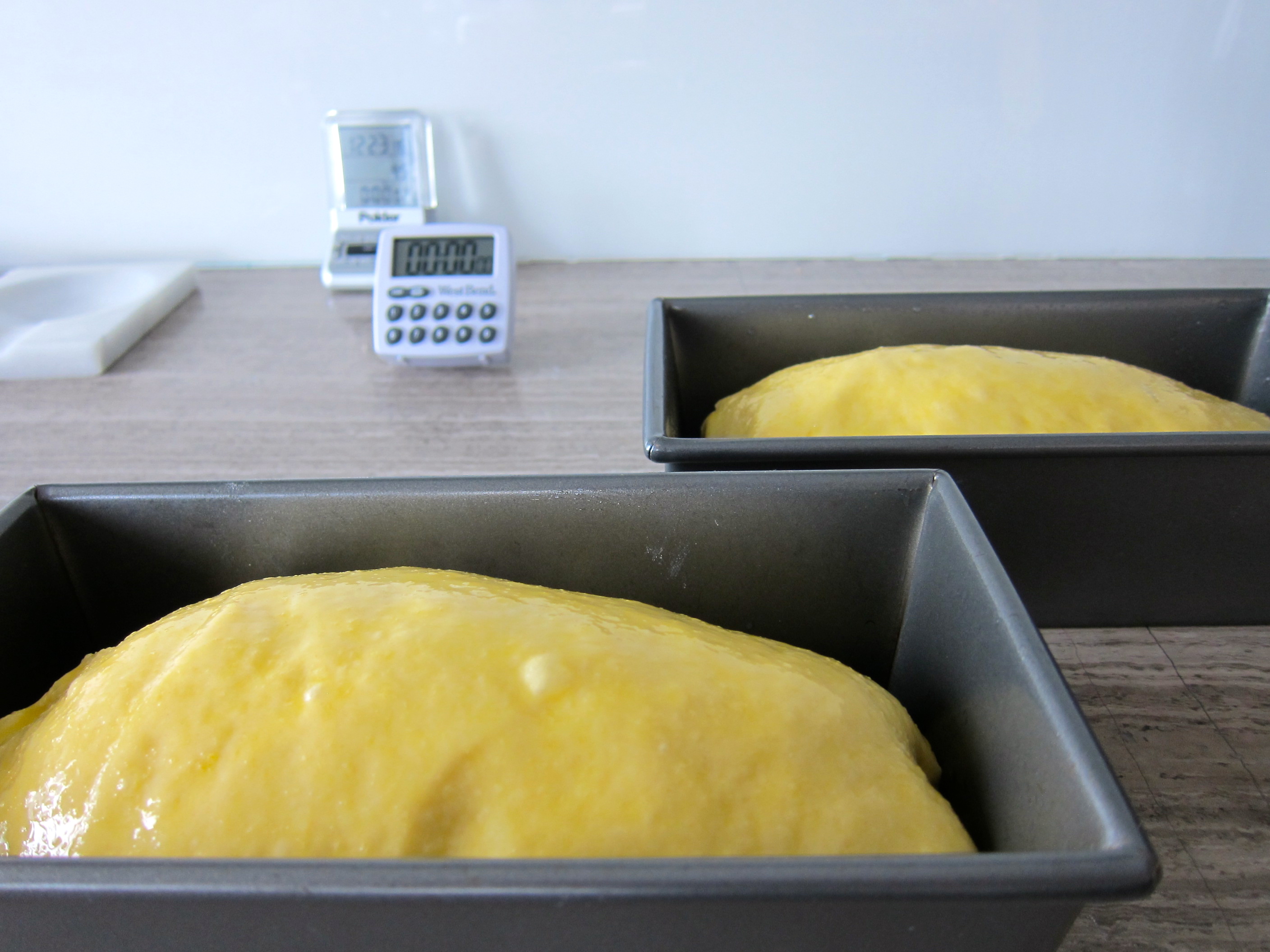
At this point, preheat your oven to 350° F. Cover the loaf pans with plastic wrap and let them rise for about 60-70 minutes until the dough comes just above the rim of the loaf pans. Brush the tops with the beaten egg wash.
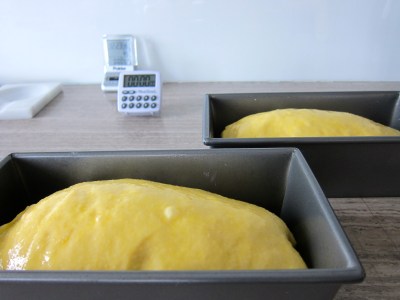
IMG_2211

Bake the two loaves for 35-40 minutes until the tops are dark golden brown. If you want to be really certain they’re done and you have a thermometer, you can stick it in the bottom of one of the loaves. If the internal temperature is above 190° F, they’re done. Let them cool in the pans for 15 minutes and then take them out and cool them completely on a rack.
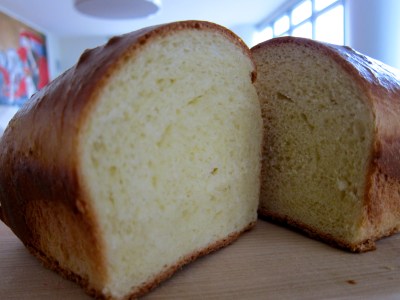
IMG_2214

Brioche freezes very well. Wait until it’s completely cool, wrap it in tin foil and freeze it. When you want to have some, take it out and leave it on the countertop for at least 4 hours or overnight.

Kitchen tip: Measuring spoons

IMG_3241

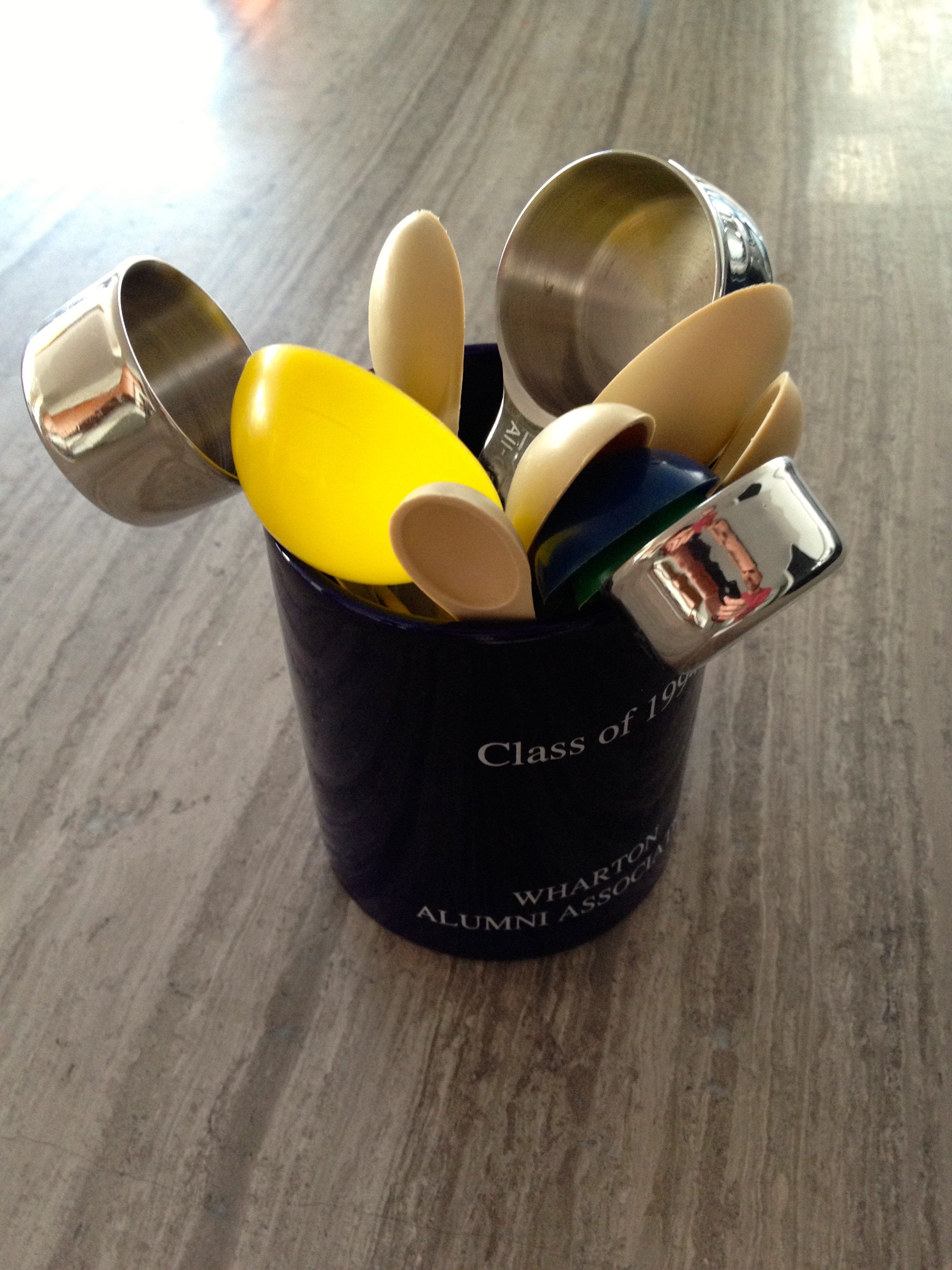
For years I suffered from the curse of the hard-to-find measuring spoons. You know what I mean. Either you keep a set of them around a loop, like a set of keys on a key chain, which creates all kinds of issues because while you use one of them, the other dangle unhelpfully or all of them get dirty at the same time. Or you separate them and keep them in a drawer with a bunch of other stuff, so when your hands are covered in flour and you need to find that half-tablespoon measure, you need to touch every single thing in the drawer to find the right measuring spoon.

So here’s a tip. Take all of your measuring spoons and put them spoon-side up in a mug or glass. Whenever you want to bake or cook, take the mug and put it on the countertop. That way, all of them are available at once and easily identifiable.

Oh and, by the way, those silve measuring spoons in the photo? They are unconventional ones: a two-teaspoon, a one-and-half-tablespoon, and a two-tablespoon one. Steve gave them to me one Christmas and I use them constantly.

Navettes (Orange Blossom Cookies)

IMG_1459

A couple of years ago, Steve and I visited Cyprus for a few days. We rented a car and drove around, visiting some of the villages that have been experiencing a renaissance, after many years of neglect. Agrotourism has opened up investment opportunities and as a result old houses have been restored, traditional foods have resurfaced, and a few are even moving back to the villages, abandoning the cities.
IMG_3239

We were there around the end of April, which is a perfect time to go. The brutal heat of the summer hadn’t started yet and everything was in bloom. The mountainsides were solid green, broken by large patches of poppies and daisies. It was also the time when citrus trees were in late bloom. Orange and lemon orchards were everywhere. One day we were driving through a village with our windows down and as soon as we approached, we were immersed in the scent of orange blossoms.


IMG_3244

If you’ve never experienced walking through a blooming orange orchard, put it on your list of things to do. The scent is intoxicating. It resembles that of jasmin or honeysuckle but it’s less cloying, more like…well, what you would expect orange blossoms to smell like. But if you don’t have access to an orange orchard, you can have the experience by buying a bottle of orange blossom water. IMG_3248

You’ll find orange blossom water in most middle eastern or italian food stores, or some large supermarkets like Whole Foods. It has a strong orange blossom flavor and aroma but it’s unsweetened. A little goes a long way. It also lasts for a really long time in the fridge. IMG_3249

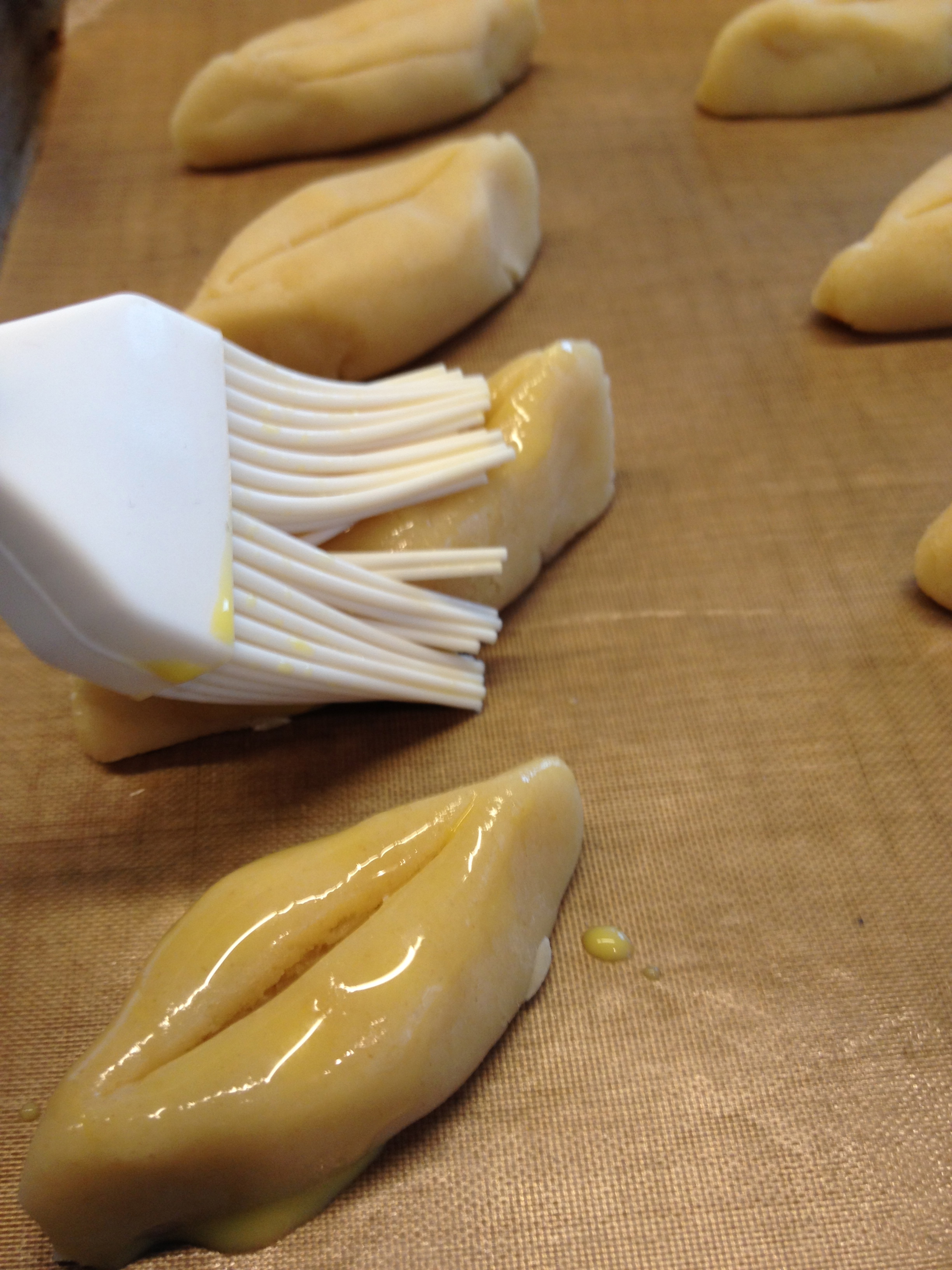
There are many things you can do with it (like add a little in a fruit salad) but I have a couple of favorite recipes I can share with you. One is an ice cream that I will post later. The other one is a cookie from the south of France called navette. It means little boat (because of its shape, though they also look like lips to me) and its very simple to make, right in the food processor. The cookies will last for at least a couple of weeks in an airtight container, if you haven’t finished them off by then. The perfect pairing for them? Jasmine tea. Try it. It’s sublime.

Navettes: Orange Blossom Cookies – Adapted from Chocolate and Zucchini: Daily Adventures in a Parisian Kitchen

4 tablespoons (1/2 stick) unsalted butter at room temperature
1/2 cup sugar
1 large egg, lightly beaten
3 tablespoons orange blossom water
2 cups all-purpose flour
1/4 teaspoon salt
1 egg yolk, lightly beaten with 1 tablespoon water

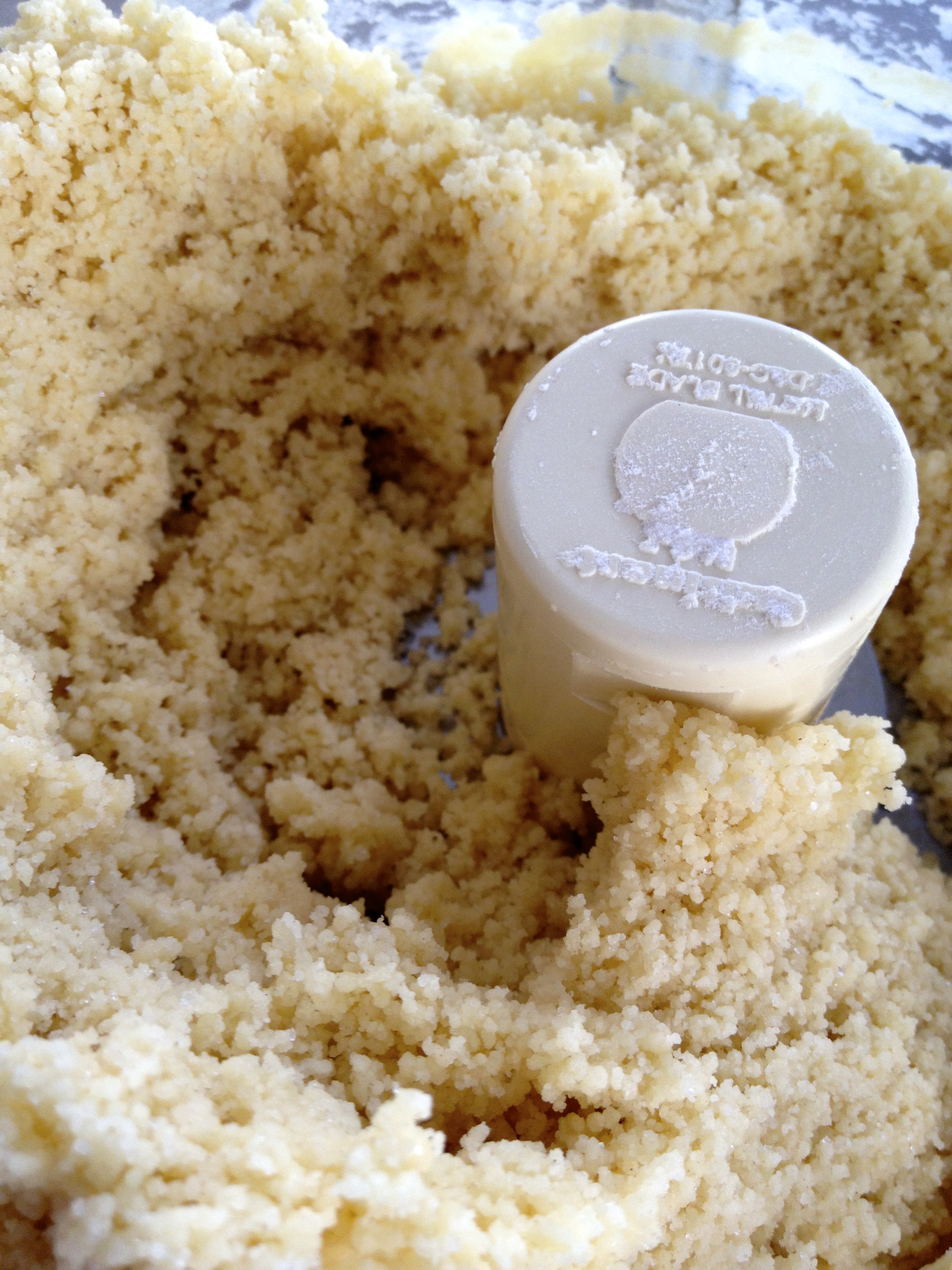
Combine the butter and sugar in a food processor and process a few seconds until they are fluffy. Add the egg and orange blossom water. Pulse a few times until everything is blended. Add all the flour and salt and process a few seconds until mixed. The mixture may be crumbly but if you take a little and press it between your fingers, it should come together.

Empty the dough on a lightly floured surface and knead it gently until it forms a ball. Add a little more flour if the dough is too moist, or a little ice-cold water, one teaspoon at a time, if it’s too dry. Divide the dough into two disks, wrap each half in plastic, and refrigerate for at least an hour, or up to a day.

Preheat the oven to 350F and line a baking sheet with parchment paper. Take one disk of dough out of the refrigerator and divide it into 8 equal pieces. Roll each piece with the palm of your hand on the work surface until it forms a log, about 3 inches in length. If the log comes apart, just squeeze the pieces together. The logs don’t have to be perfect.

Cut the log in two with a knife so you have two 1 1/2 inch logs. Repeat with the other pieces until you have sixteen small logs. Pinch the ends of each small log and flatten the top slightly, to form a boat shape. With the tip of a butter knife, carve a deep slit lengthwise down the centre, not quite reaching the other side or the ends. Arrange the cookies on the baking sheet and repeat with the second half of the dough. The cookies don’t rise or expand so you can put  them fairly close to each other, though not touching.

Brush the cookies with the egg yolk mixture. Bake for 15 minutes, until golden and slightly browned at the tips. Transfer to a rack to cool completely. The dough can be frozen for up to a month. Defrost overnight in the refrigerator before forming and baking the navettes.

Thai Chili Vinaigrette

When I first came to the U.S., I was a bright-eyed 19-year-old with a suitcase and a thirst for exploration. The first few months of my life in Philadelphia as a freshman in college seem like a dream today. I was discovering so many cool and interesting things that I had never experienced before: Roller coasters; The Awesome Blossom deep fried onion at Chili’s; and heat. Not the radiator kind but the pepper one.

At the age of 19, I was so unaccustomed to hot food that ground black pepper was too hot for me. But it didn’t take me long to figure out that I liked heat and that with a little practice I could tolerate hot sauces and peppers. Today I relish them.

IMG_3237

My favorite hot pepper is the Thai red pepper. Not only because of its fruity, pleasant taste but also because of where its heat hits you. It’s concentrated at the very front of your mouth and the lips. After eating something with Thai red peppers in it, your lips prickle and buzz, like the aftermath of an extraordinary first kiss.

IMG_3234

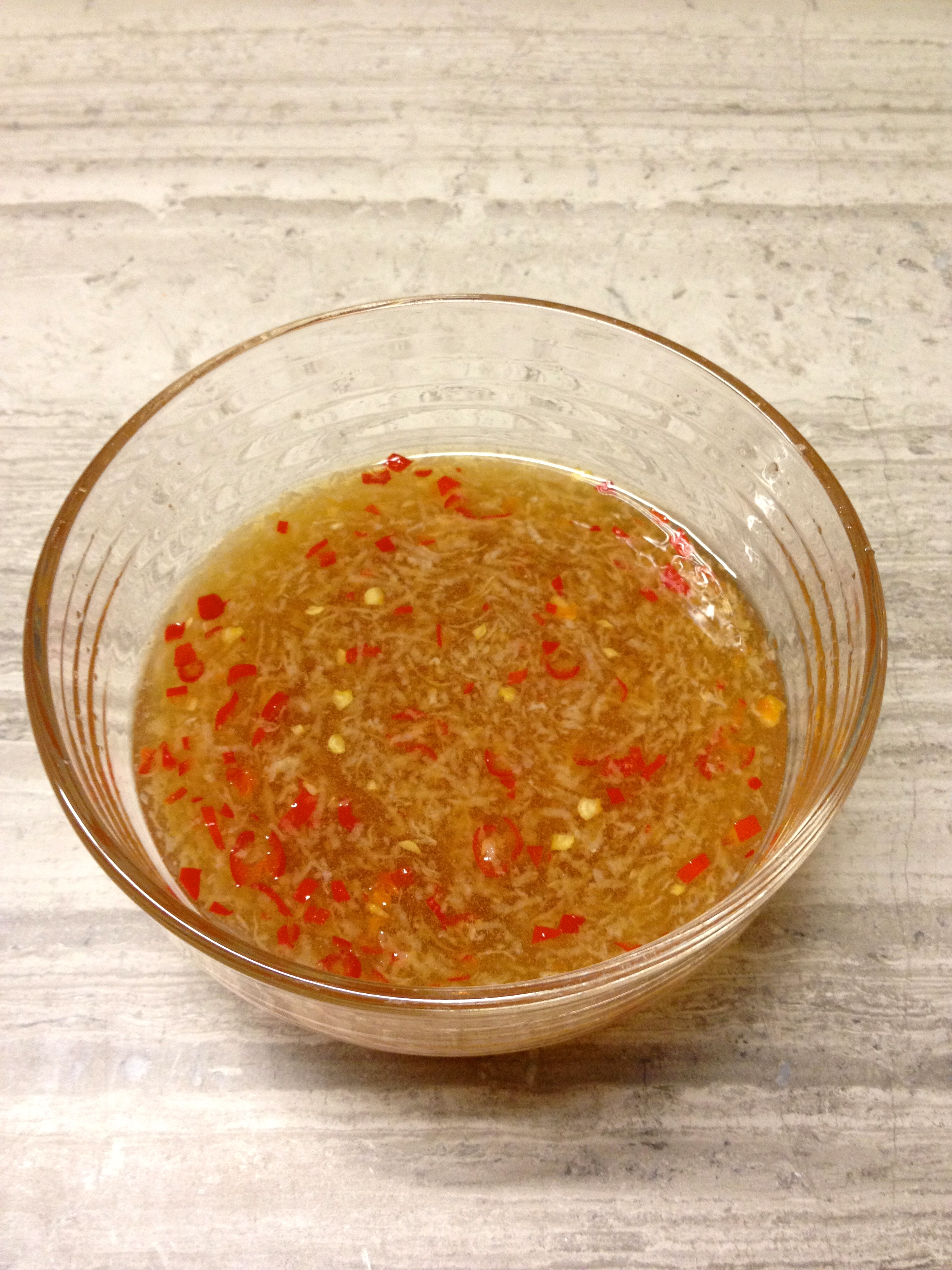
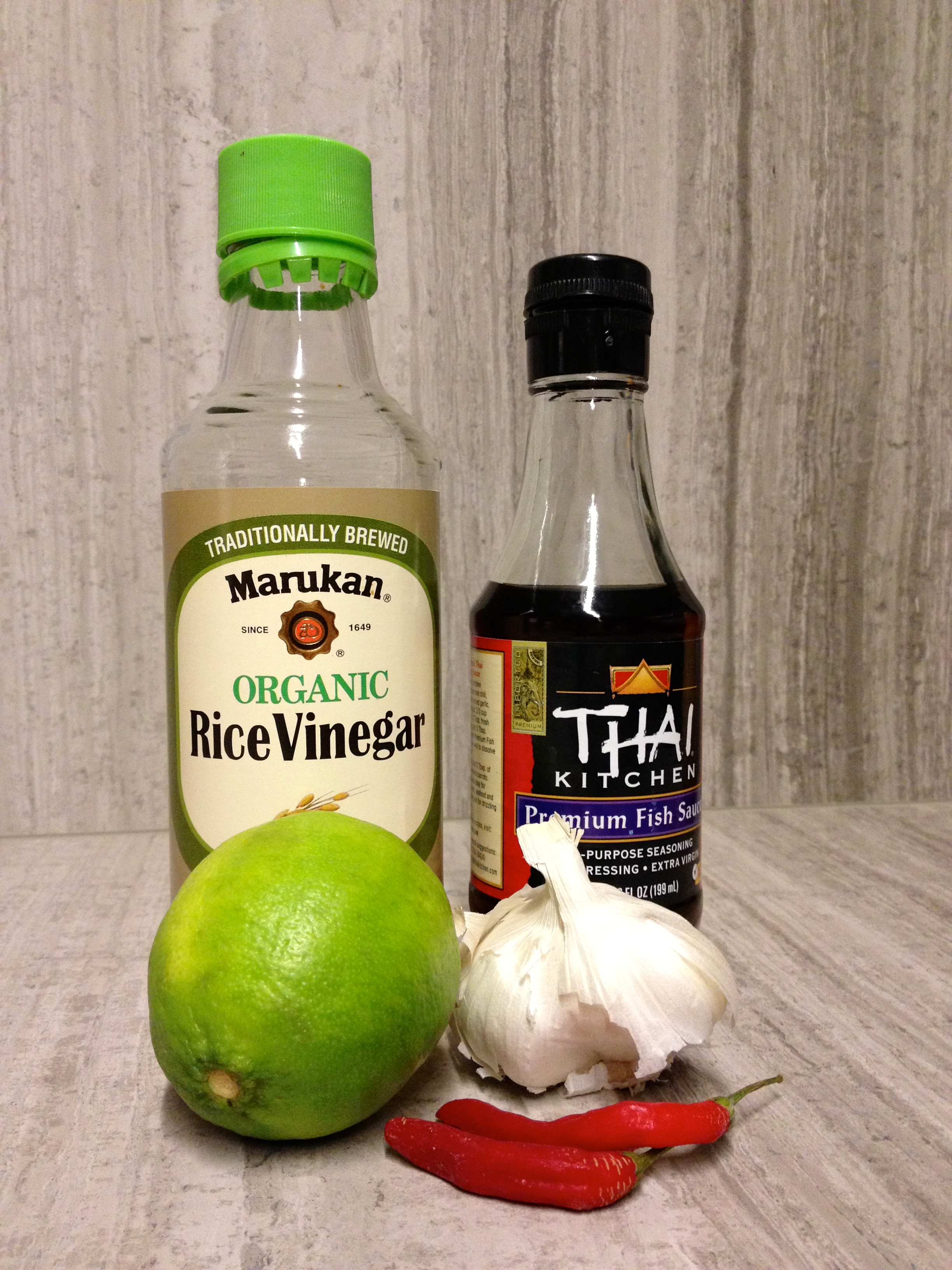
This recipe is for a very basic vinaigrette that is in fact a common table condiment in Thailand called Nam-Pla Prik. It’s easy to make and it has the characteristic flavor combinations of Thai food: heat, salt, sweet, sour, and umami. It’s absolutely delicious tossed with roasted vegetables (like brussel sprouts or winter squash) and it transcends any fillet of fish that has been simply cooked in a sauté pan or in the oven.

IMG_3235

Thai chili vinaigrette

3 tablespoons fish sauce (adjust to your taste)*
2 tablespoons water
1 tablespoon rice vinegar (or rice wine vinegar)*
juice of 1/2 lime
2 tablespoons sugar
1 small garlic clove (or 1/2 large) pressed in garlic press or grated on microplane zester
1 Thai red chili (red bird’s eye chili), very thinly sliced, seeds and all**

* You can find fish sauce and rice vinegar in almost any supermarket, in the international foods section
** I usually buy a bunch of Thai red chilis and I keep them in a ziploc bag in the freezer (they keep for months). I slice one when I need it without even defrosting it first.

Combine all the ingredients in a bowl and whisk until combined and sugar has dissolved. Alternatively, you can put everything in a jar and shake until sugar is dissolved.

Extra sauce will keep in the fridge for a while.

Carrot Salad (with blueberries…maybe)

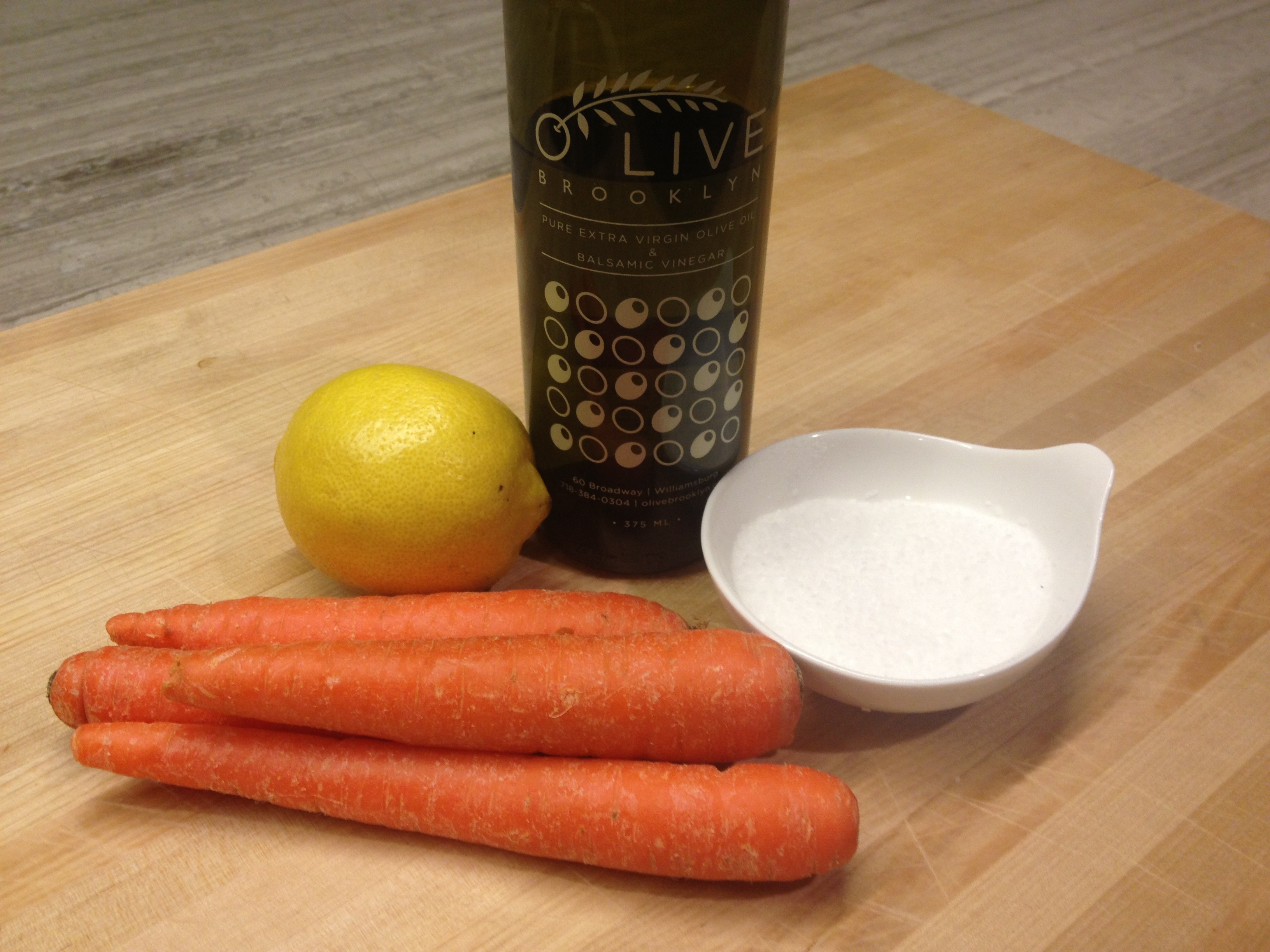
This isn’t much of a recipe. That is, the ingredients aren’t anything special and there are no strict measurements for them. But there are a few things that are important, and if you follow them, this simple combination of carrots, lemon juice, olive oil, and salt become something ethereal but snappy, light but hearty.

20130219-195014.jpg

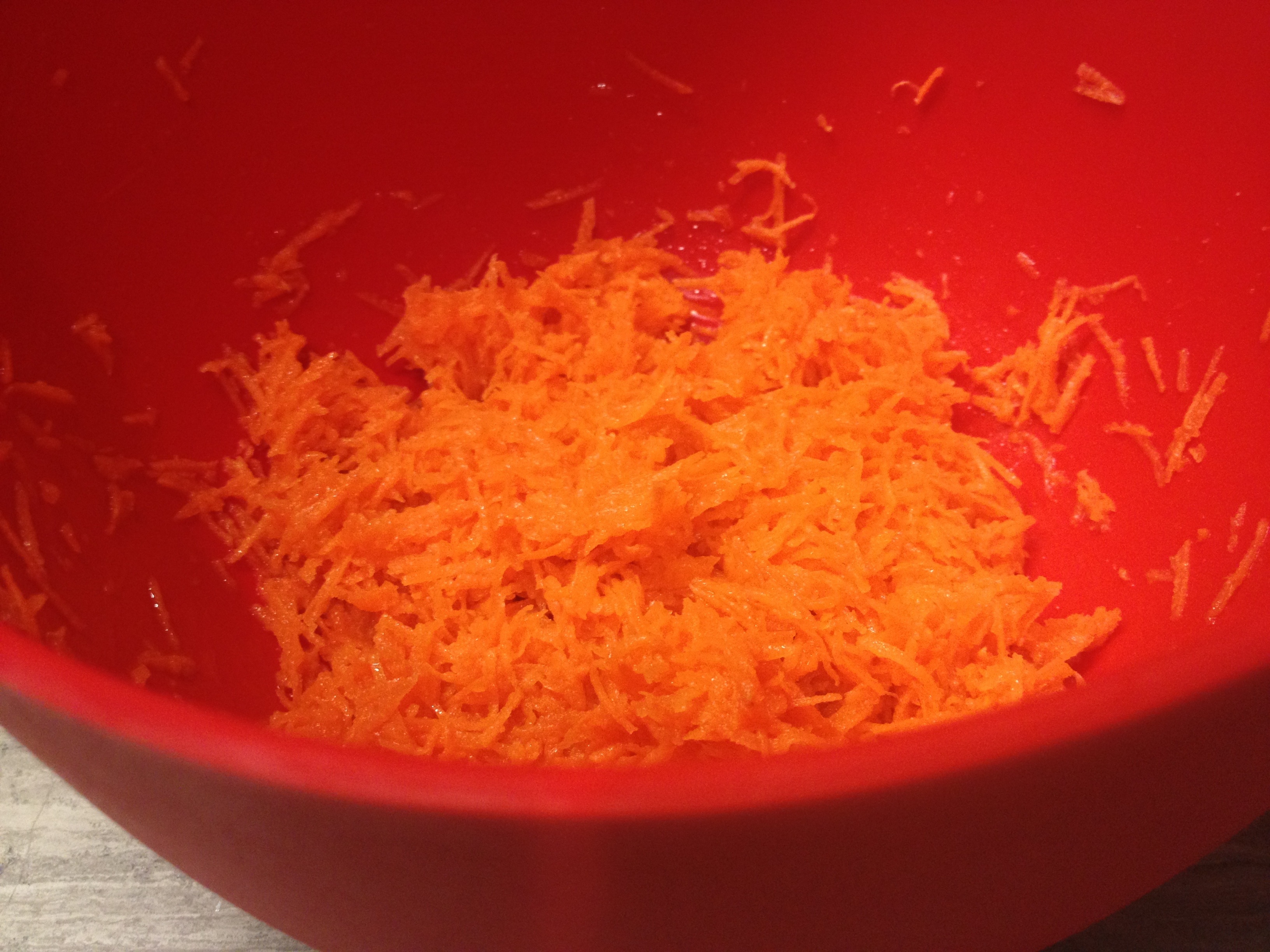
This is what you do. Take carrots (here I took 6 small ones) and grate them using the small teardrop holes of the grater. This is important. The small teardrop holes shred the carrots into fine threads that are juicy but have just a tiny bit of bite to them. The result is a mushy pulp that makes you want to take another bite, and another, and another. I know it’s a pain and that the large holes take less time, but trust me on this one.

20130219-195841.jpg

Put the carrots in a bowl and add a generous splash of good olive oil (for the 6 small carrots I added 1 1/2 tablespoons) and a good amount of lemon juice. None of the bottled stuff. You need real juice from real lemons. And you need more than you probably think (I used 1 tablespoon here). Finally, you need salt (I added 3 good pinches of kosher salt). The result is sweet, sour, salty, and a little fatty, thanks to the oil.

20130219-200325.jpg

It should all end here, and it almost always does. But as I opened the fridge to put the half cut lemon back in, I saw the packet of fresh blueberries I had bought earlier and I though, what the hell. So in they went. And you know what? It worked great. Again, sweet, sour, salty, and fatty. Can’t go wrong. But if you don’t have blueberries, no worries. All you need is carrots, olive oil, lemon juice, and salt. Simple as that.
20130219-200648.jpg